When choosing a pendant for a dining table, people often begin by comparing metal with glass, modern with vintage, or black with white. Once the fixture is installed, however, the most noticeable difference is not simply how the shade looks. It is how light leaves the shade.
An open-bottom pendant allows light to travel directly downward, usually making food and the tabletop easier to see. A diffused pendant sends light through opal glass, frosted glass or another translucent material, softening it and distributing more of it toward faces and the surrounding room.
If the dining room already has recessed lights, sconces or another source of ambient light, an open-bottom pendant can concentrate on the table. If the pendant must support tabletop visibility, facial light and the atmosphere of the whole dining area, a diffused shade is generally more forgiving.
The better choice therefore depends on what the dining table needs to do beyond serving meals.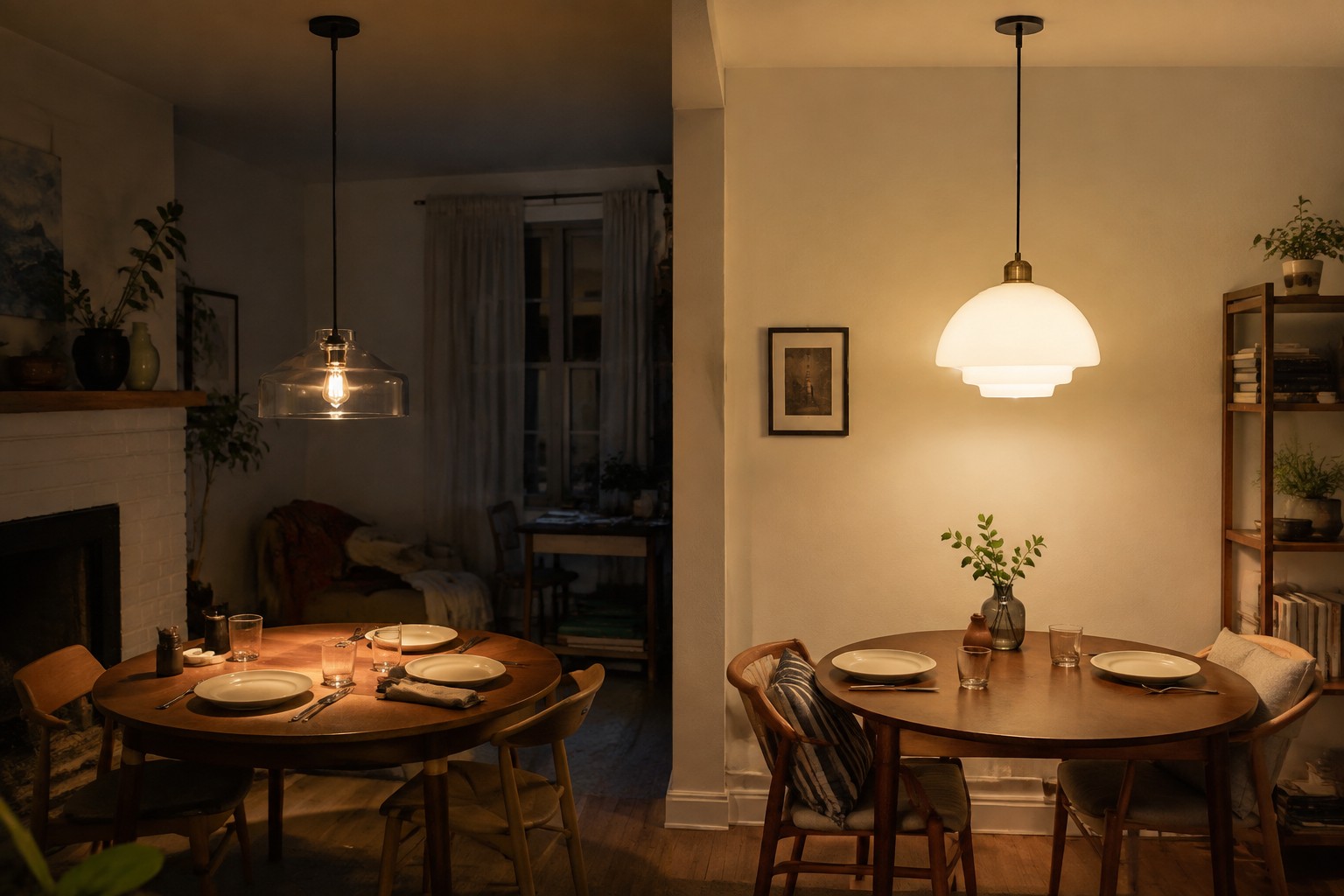
What Is an Open-Bottom Pendant Light?
An open-bottom pendant normally has an opaque or semi-opaque shade without a complete glass or acrylic diffuser across its lower opening.
Common shade materials include:
- Metal;
- Ceramic;
- Concrete;
- Enamel;
- Opaque glass.
The bulb may sit deep inside the shade or remain partially visible from below. Light generally leaves through the lower opening, creating a more clearly defined pool of illumination on the table.
The Hanton Nordic Minimalist Pendant Light is an example of an open-bottom metal pendant. It uses an E26 socket, allowing the owner to adjust the result through bulb brightness, color temperature and a clear or frosted surface.
Regardless of bulb choice, the basic distribution created by the metal shade remains the same: most of the light is directed downward.
What Is a Diffused Pendant Light?
A diffused pendant sends light through a material that scatters it before it enters the room.
Common diffuser materials include:
- Opal glass;
- Frosted glass;
- Acrylic panels;
- Translucent fabric;
- Paper or resin shades.
The diffuser reduces the contrast between the bright source and its surroundings. Instead of seeing one intense bulb, the viewer sees a larger illuminated surface with a softer transition in brightness.
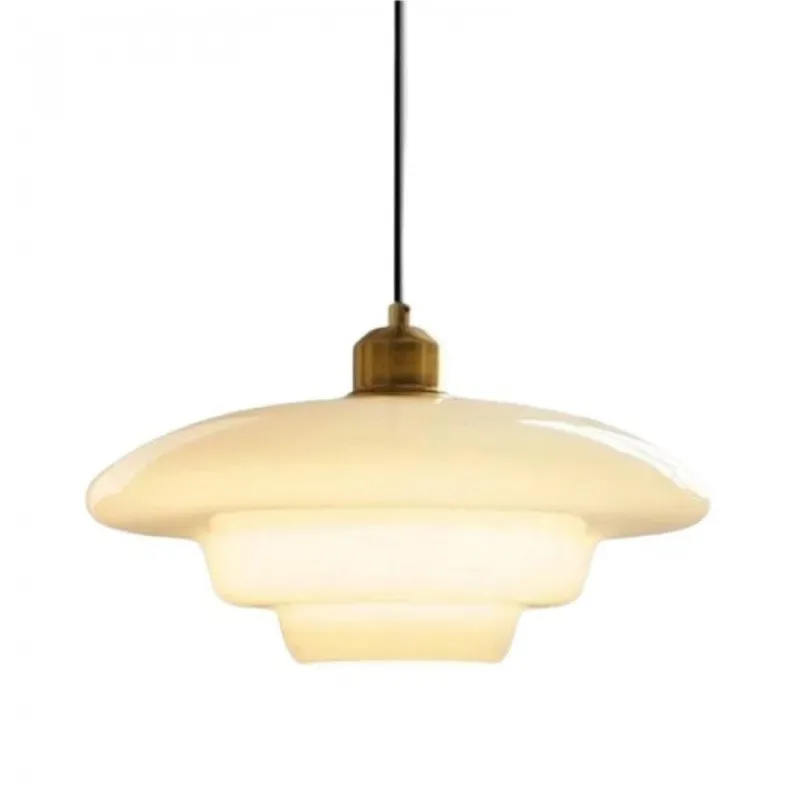
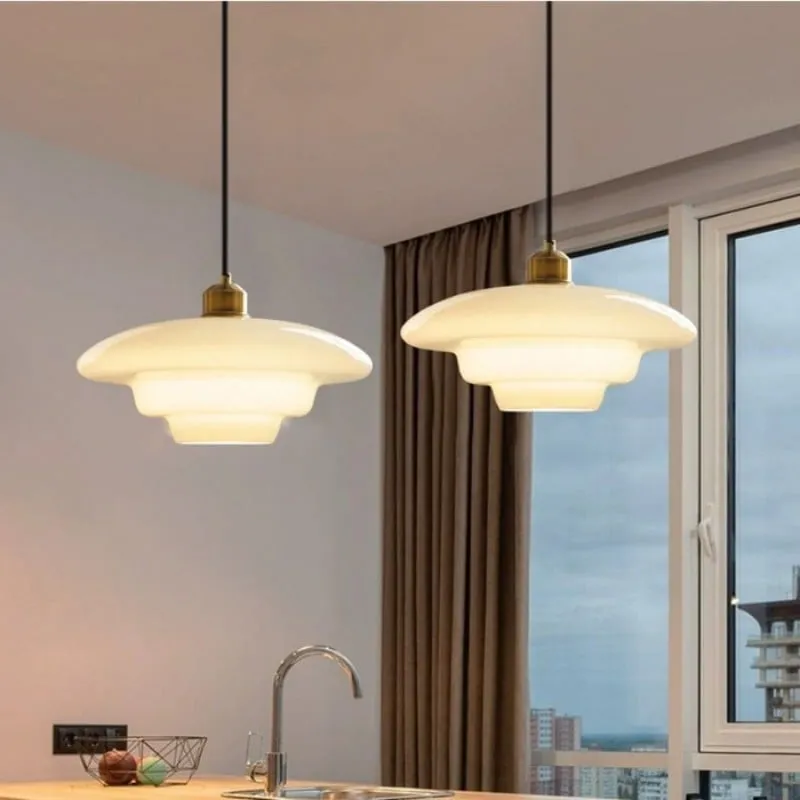
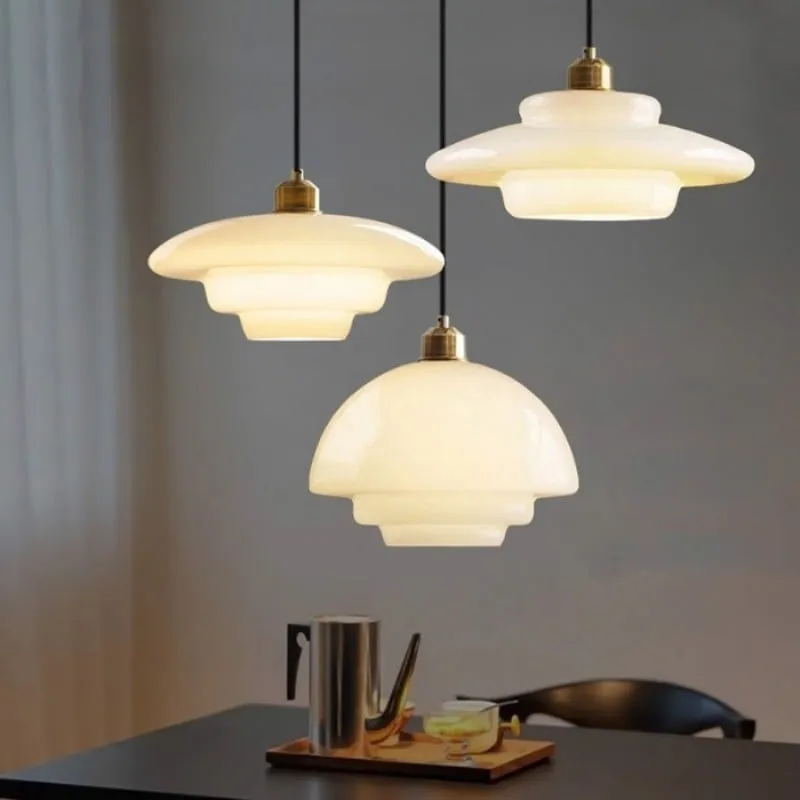
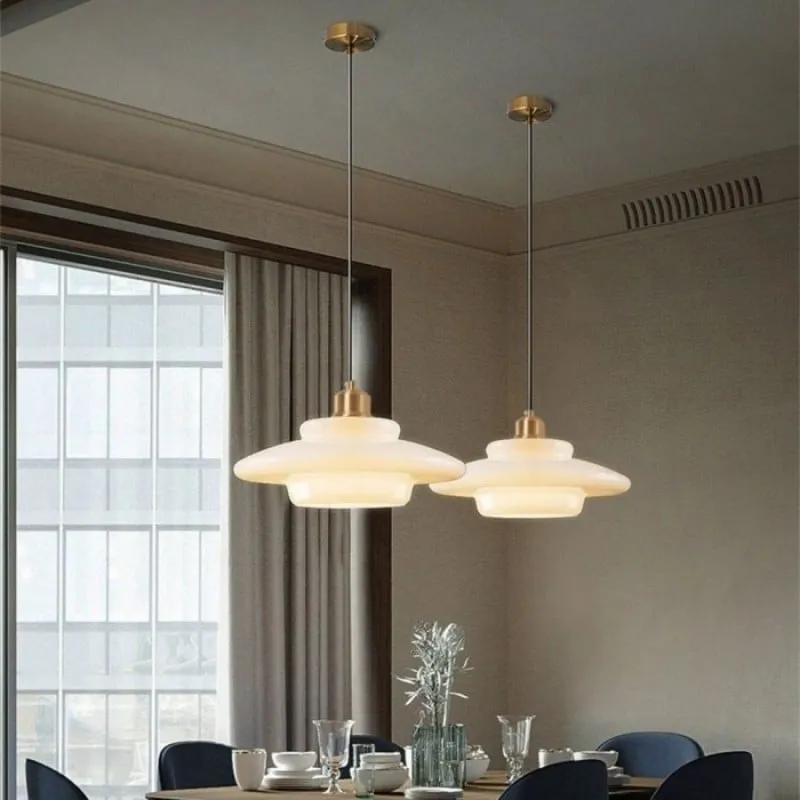
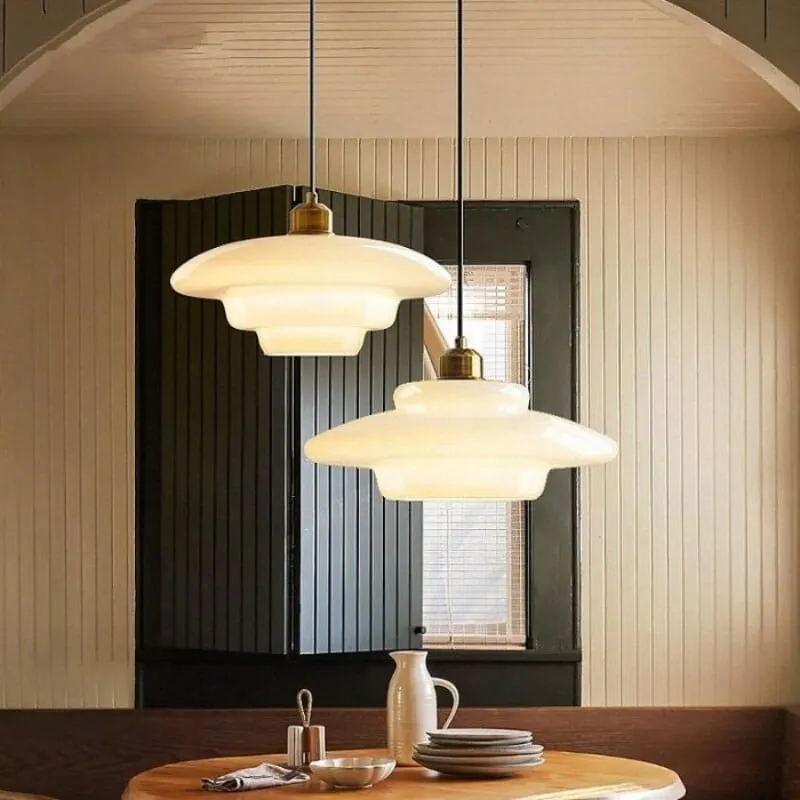
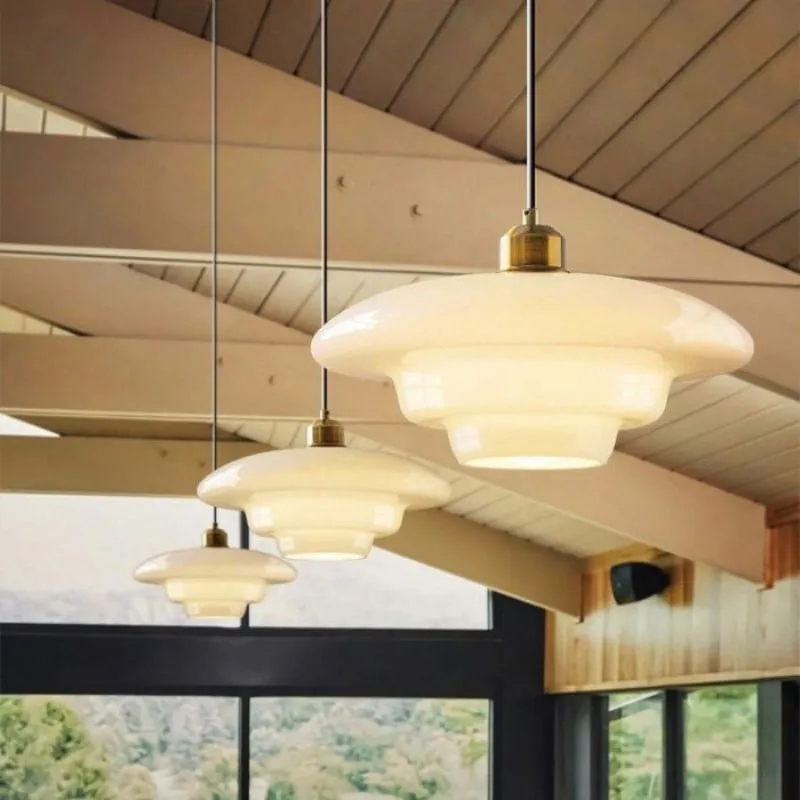
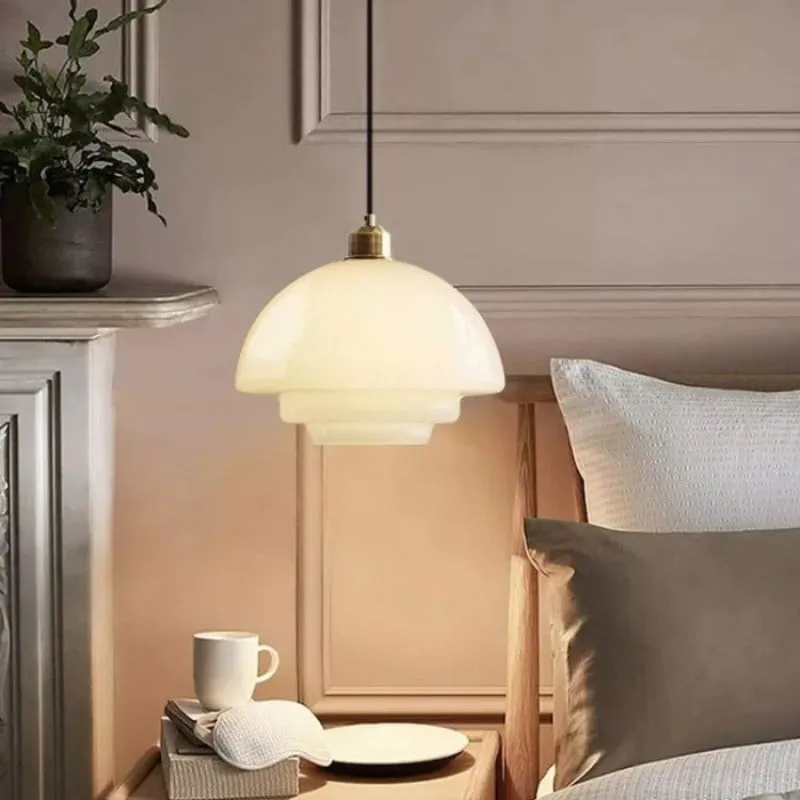
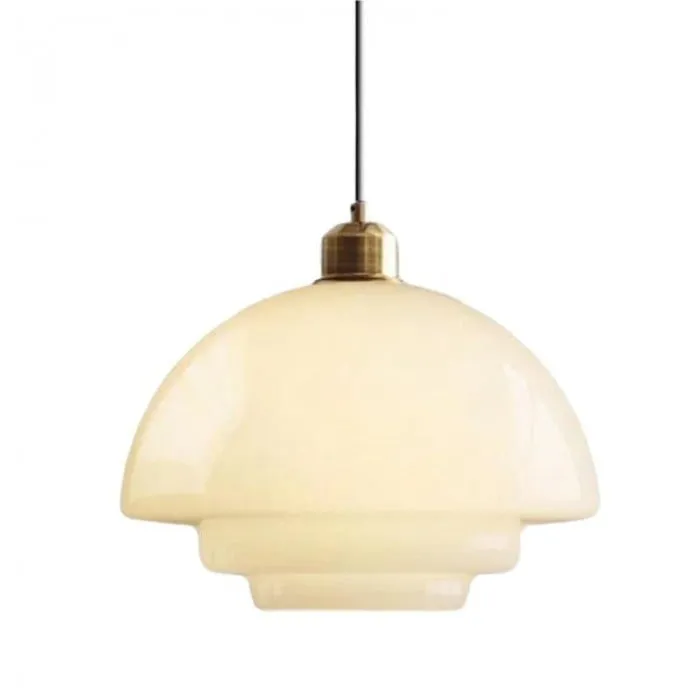
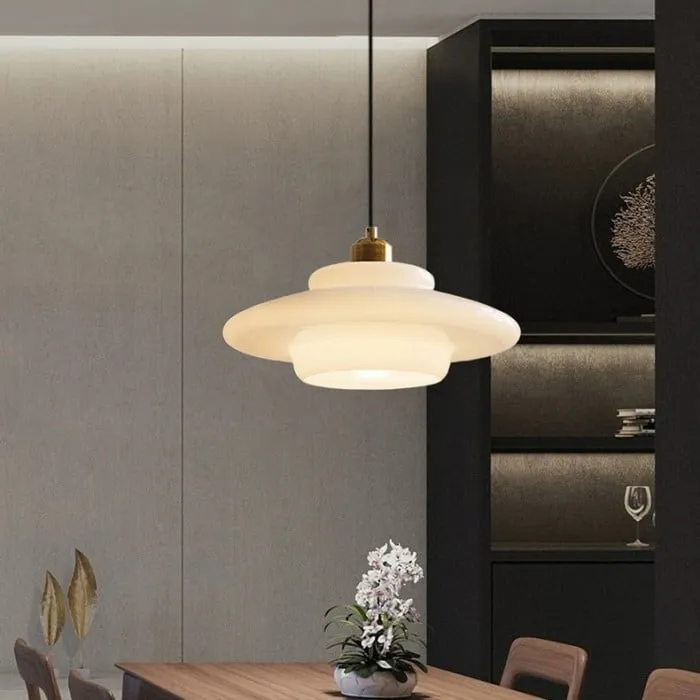
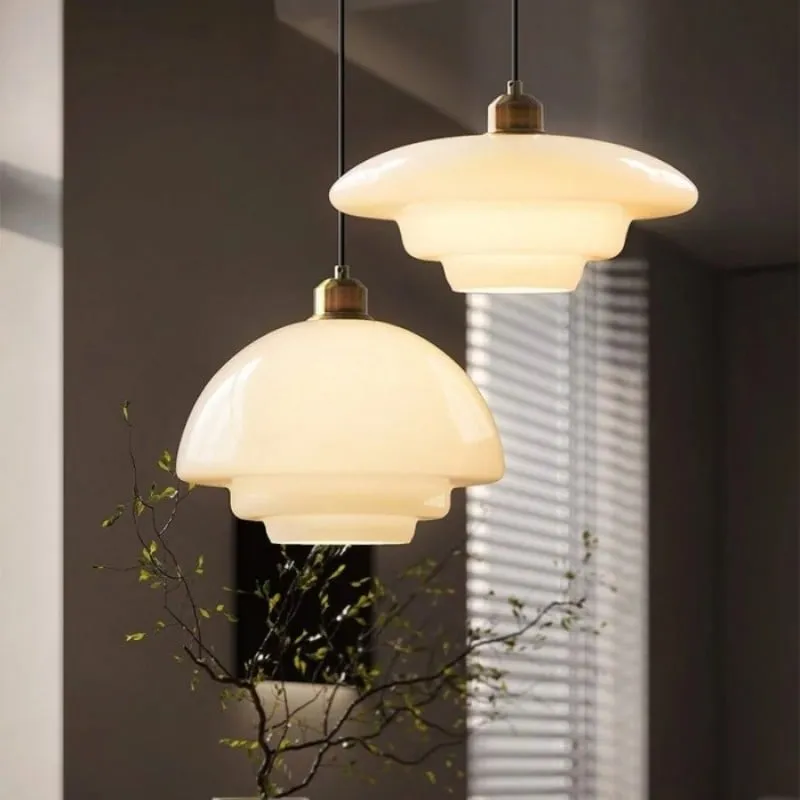
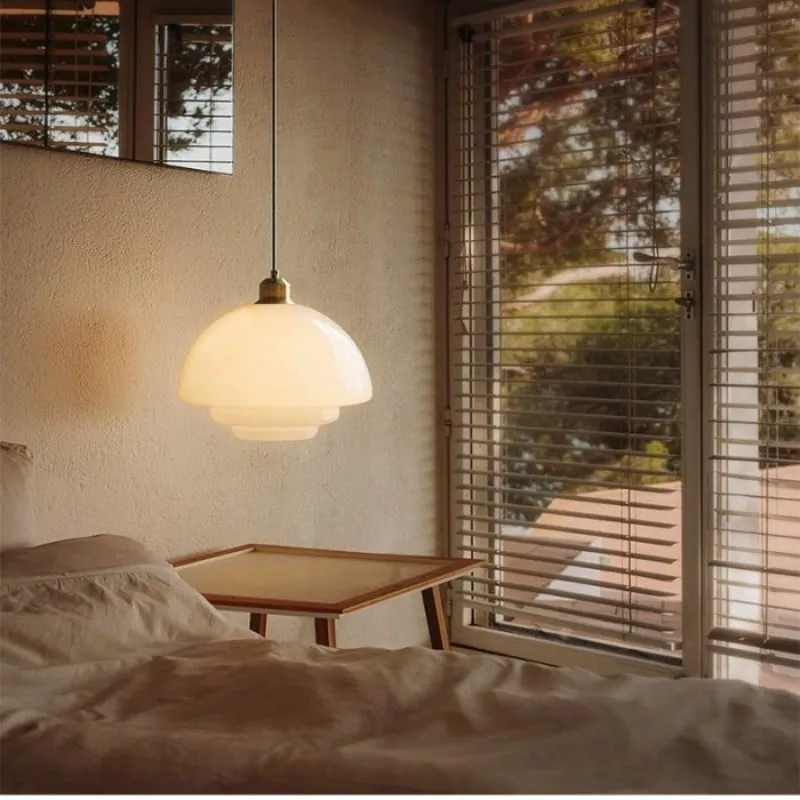
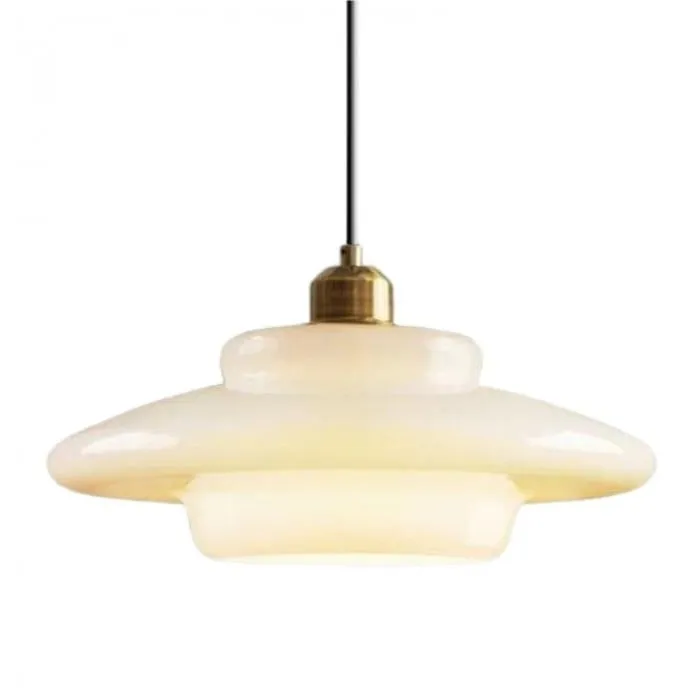
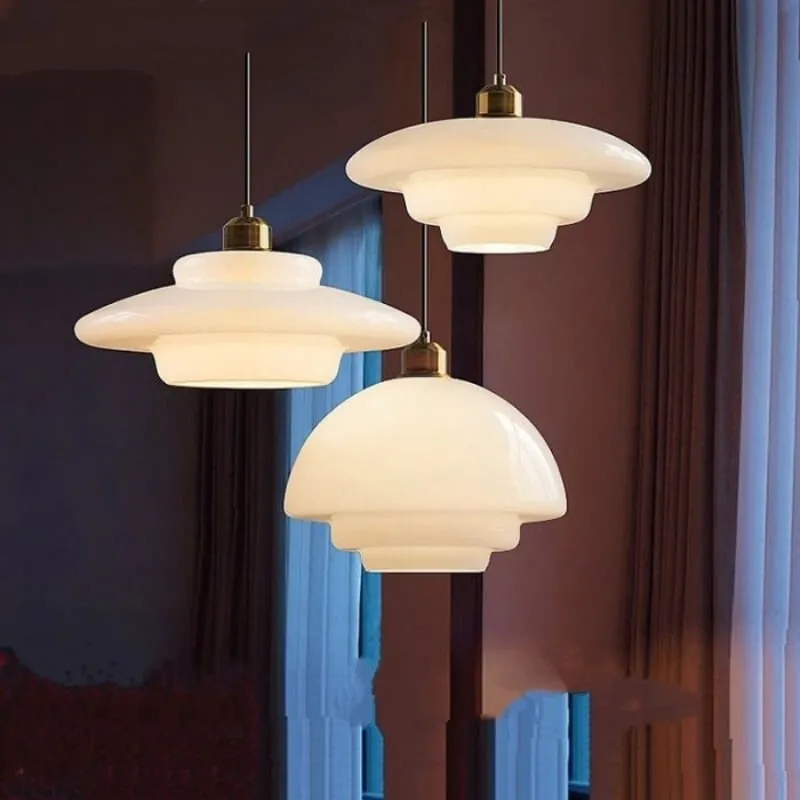
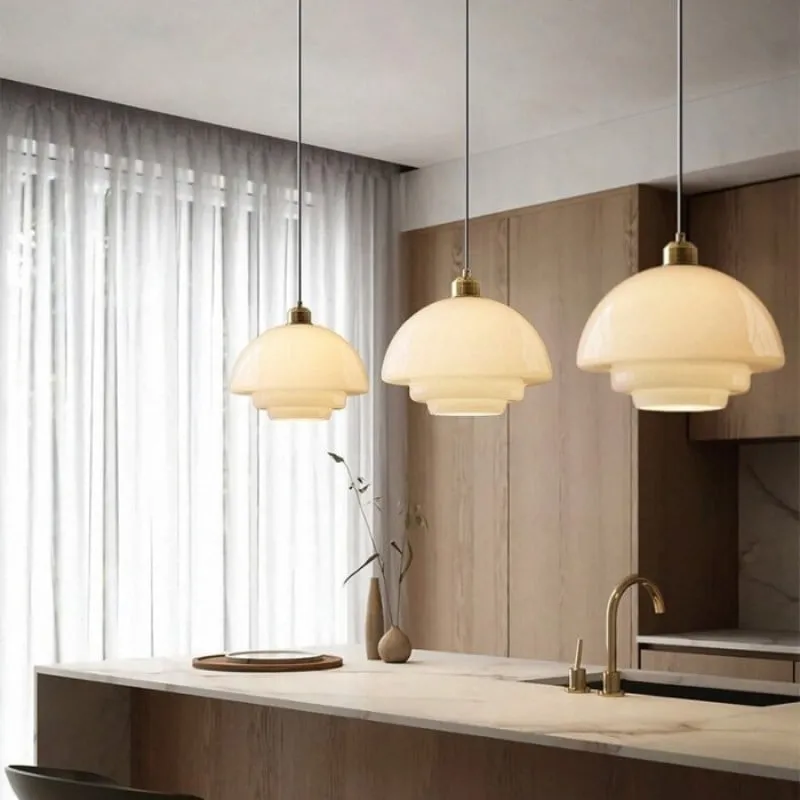
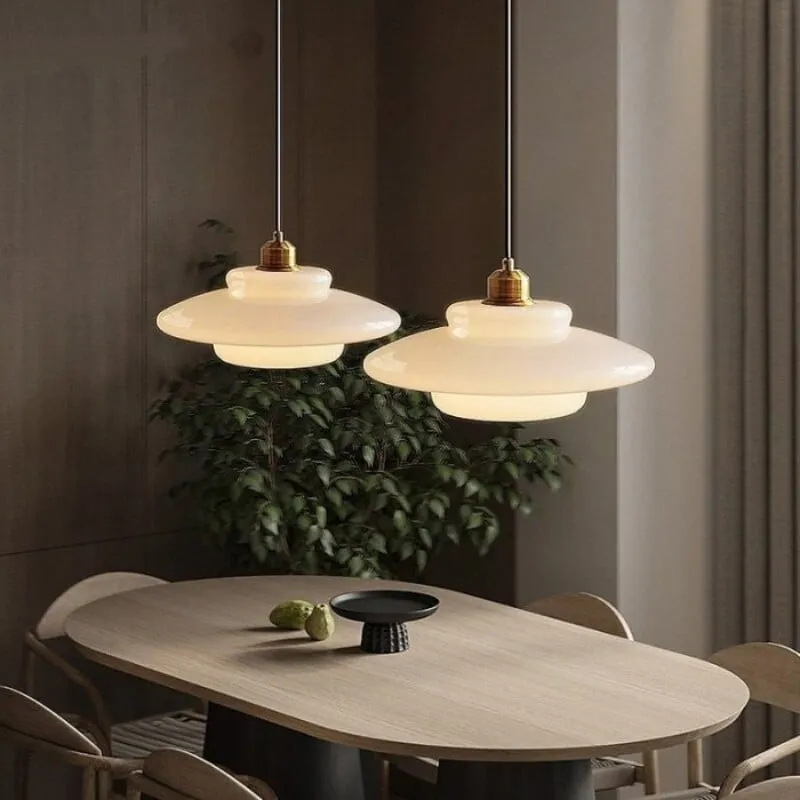
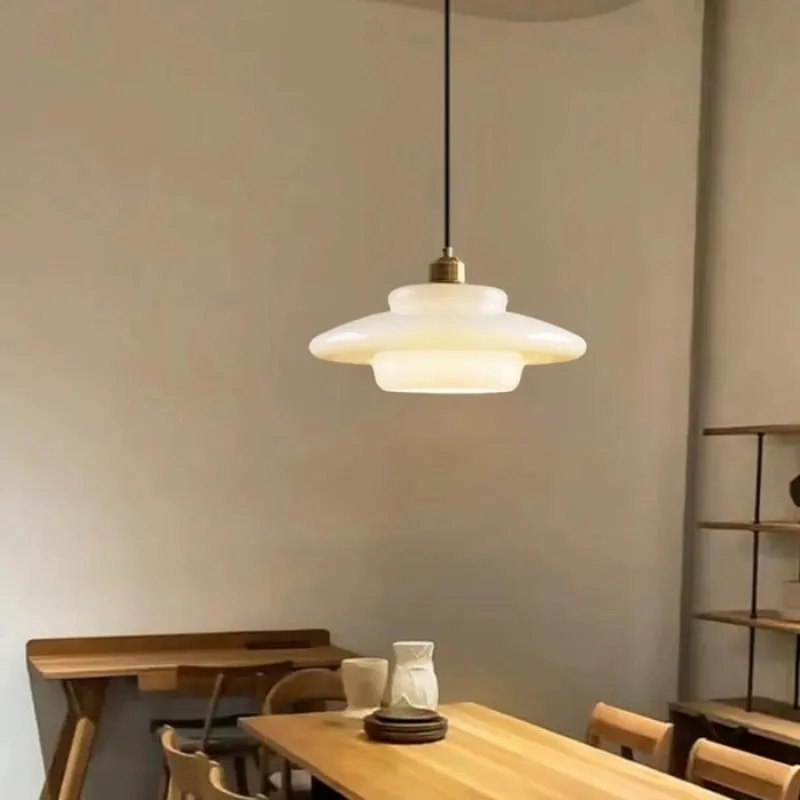
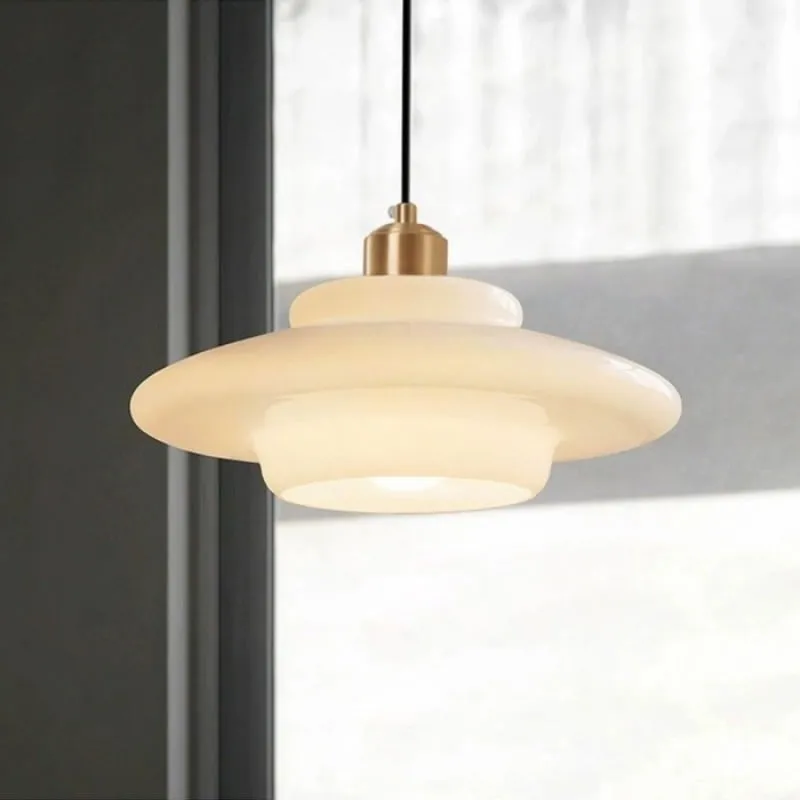
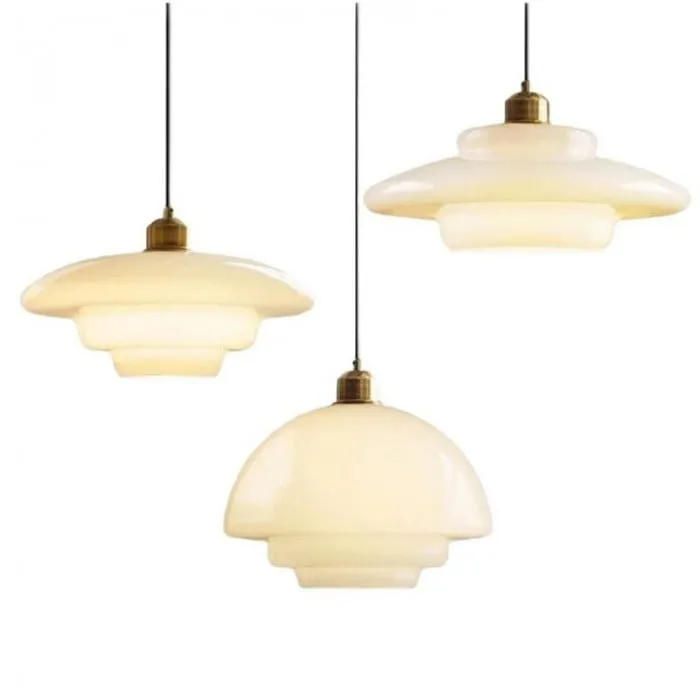
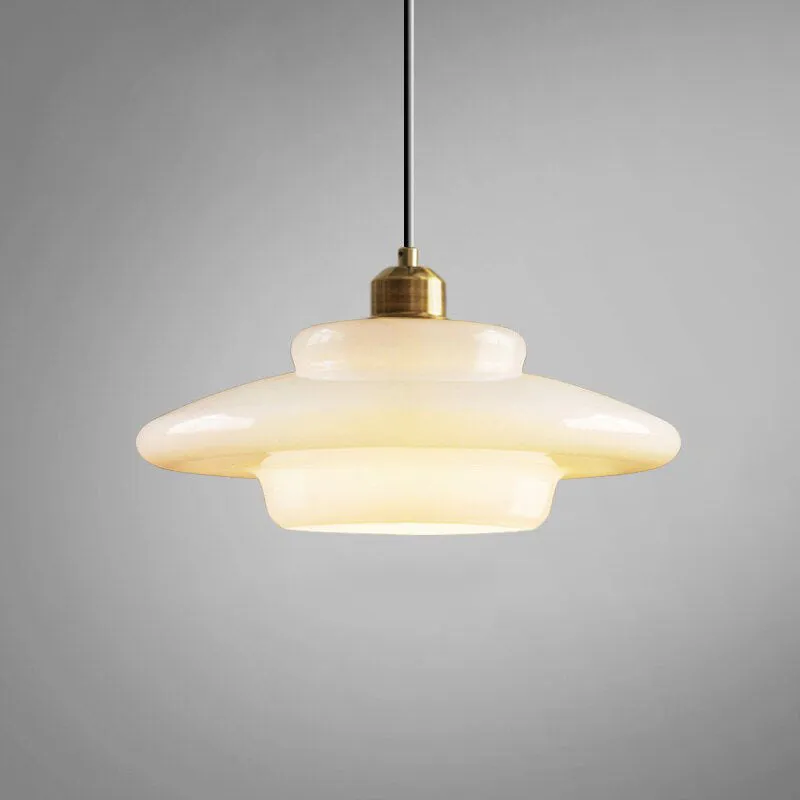
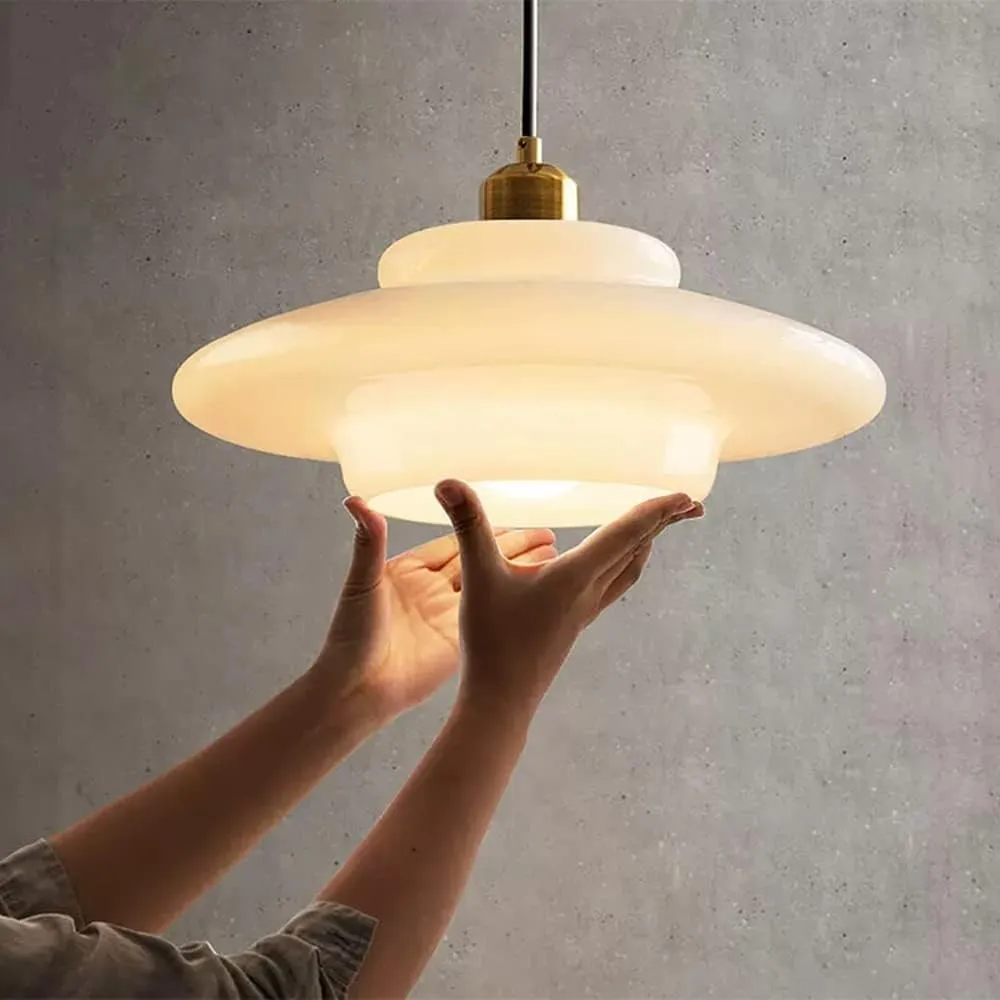
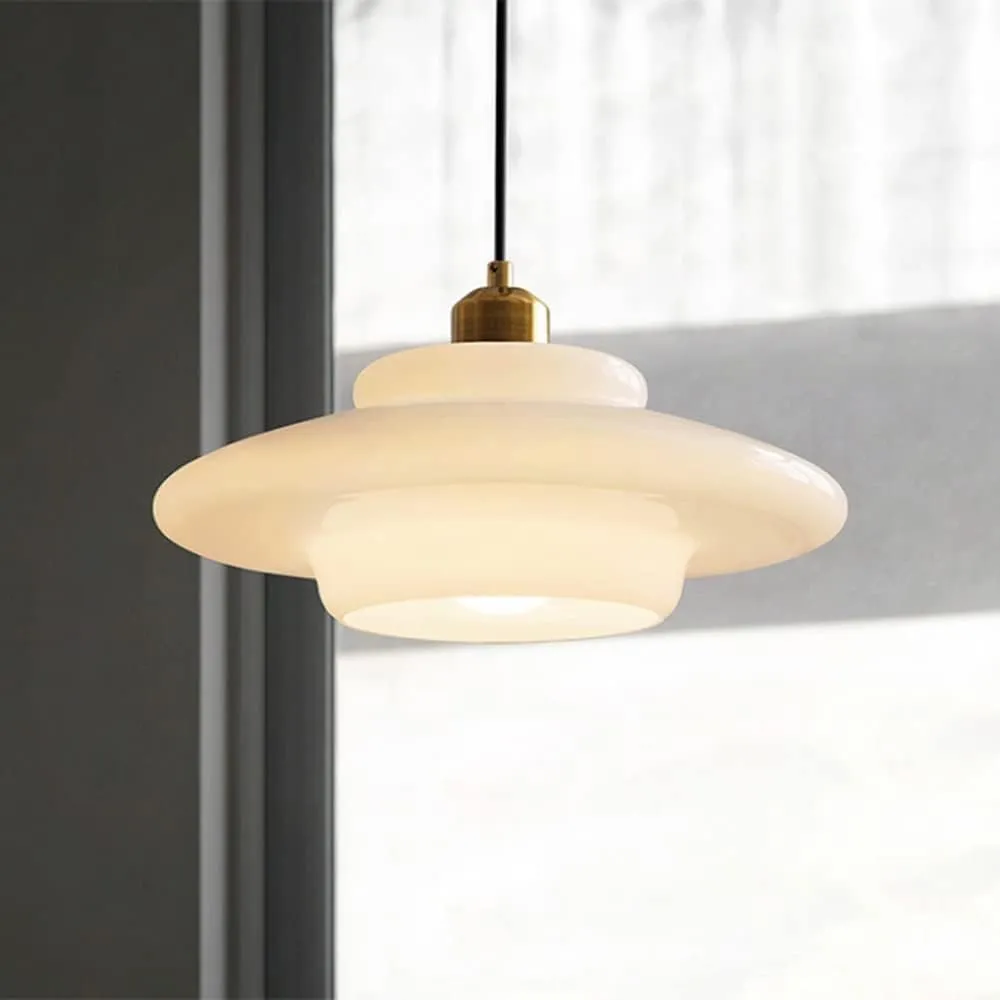
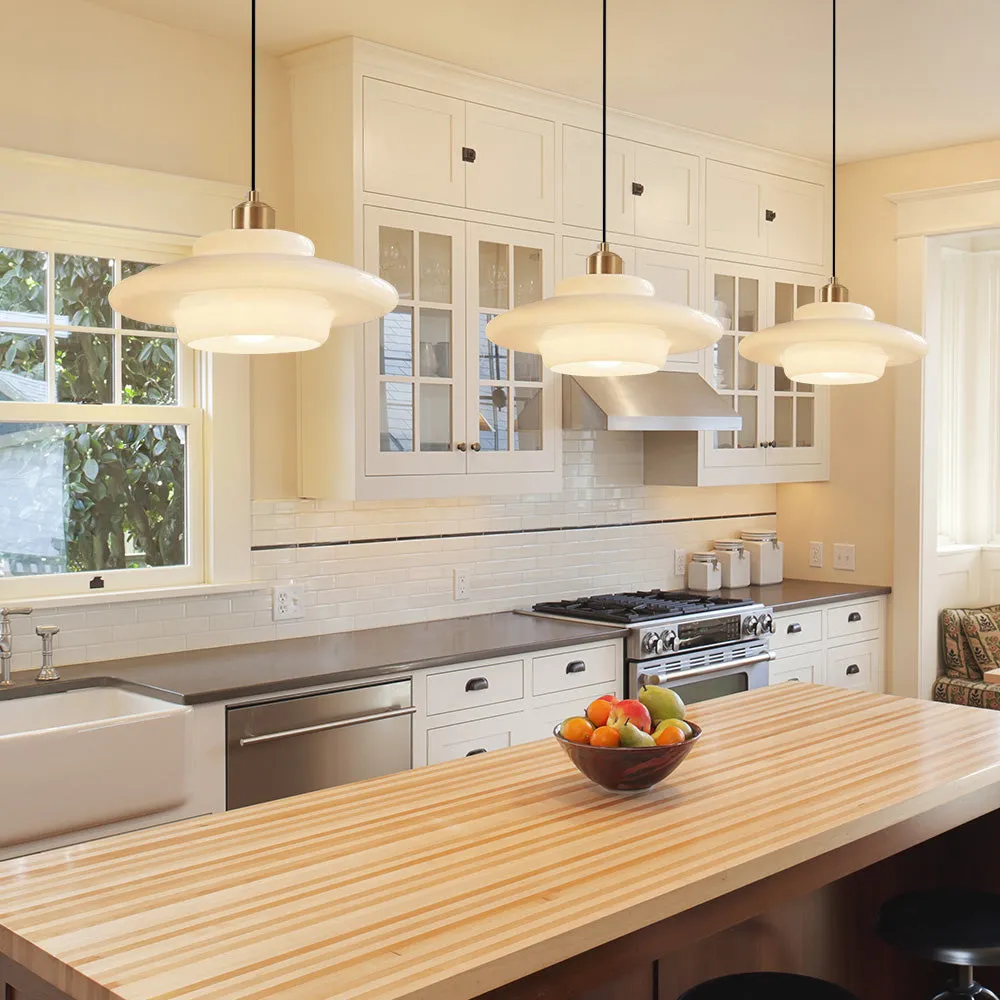
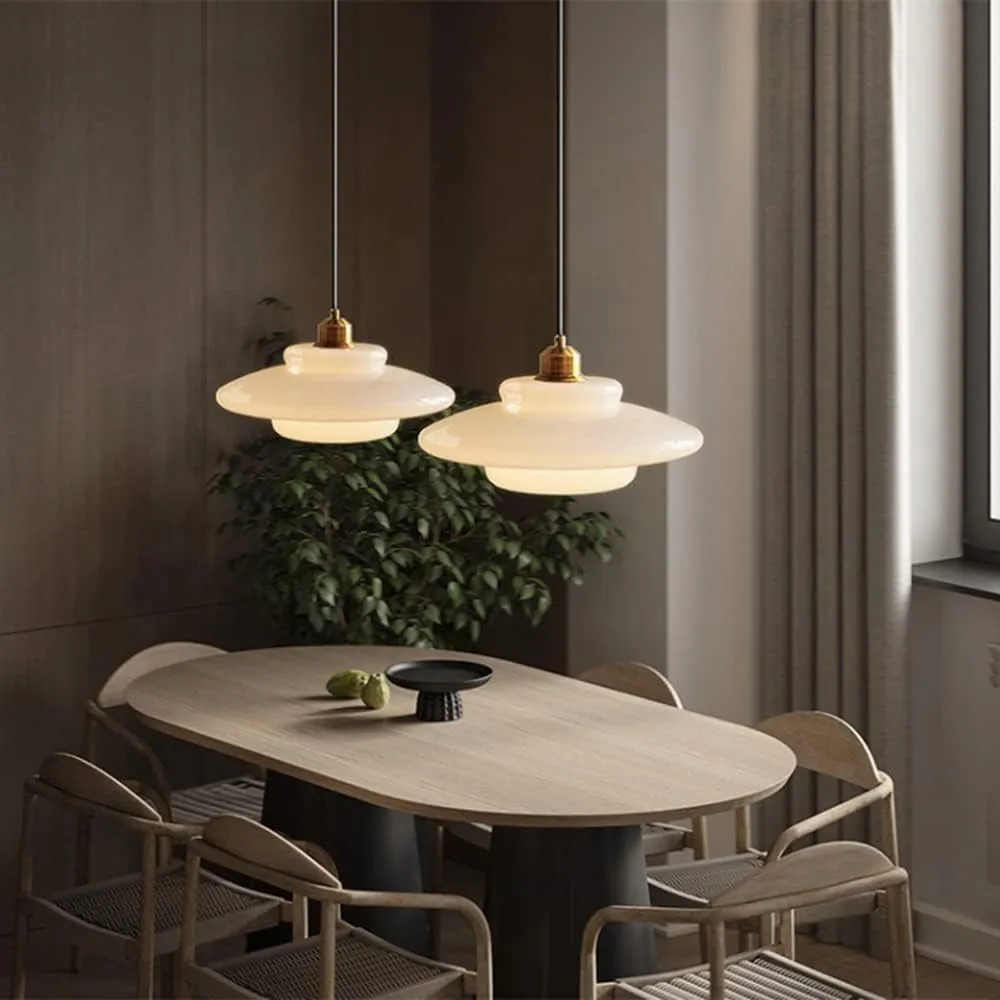
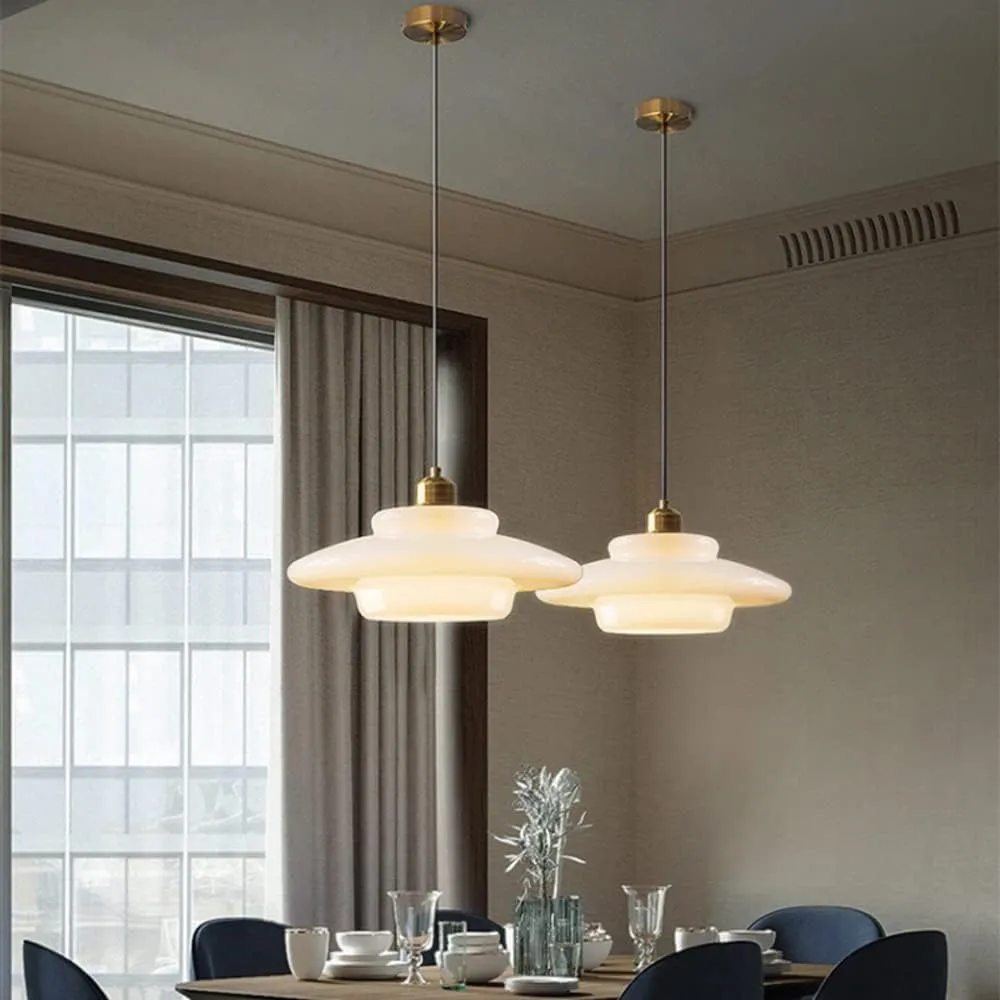
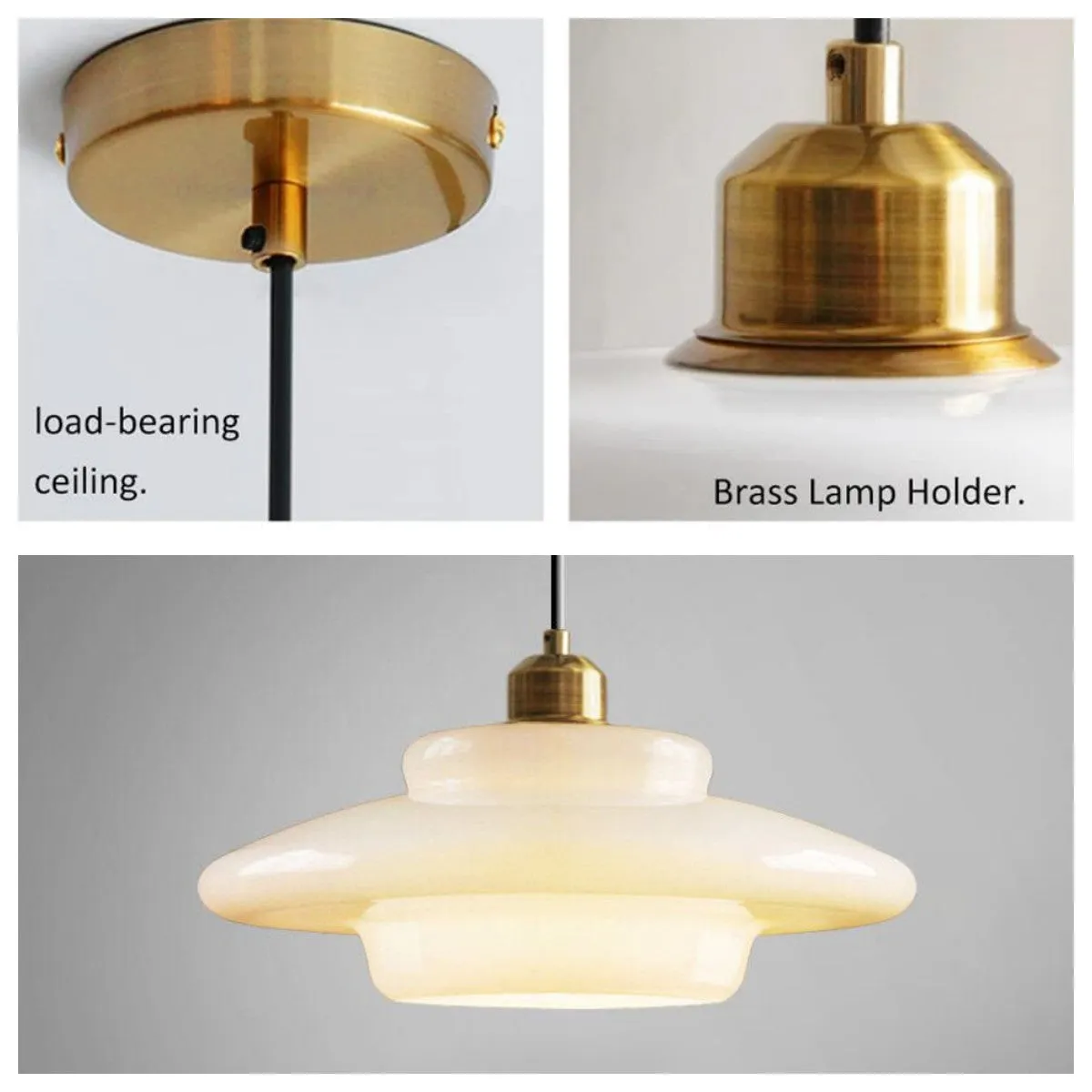
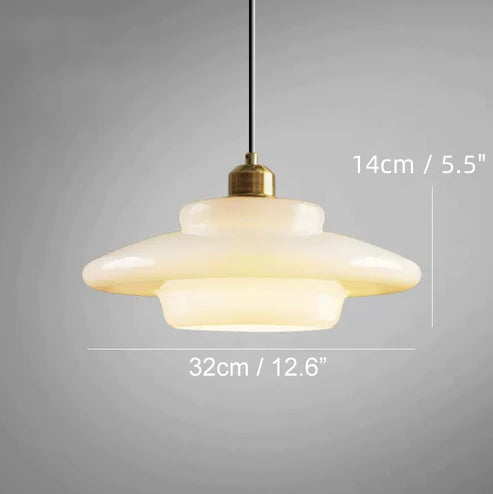
The Art Deco Milk White Glass Pendant Light uses a blown milk-white glass shade. Unlike an open metal shade that directs most of its light downward, the glass conceals the bulb and redistributes light toward the table, faces and surrounding room.
Diffused does not mean completely glare-free. If the bulb inside is too bright, the entire glass shade may become an uncomfortably bright object. Bulb output, diffuser size, glass transmission and installation height still matter.
Open-Bottom vs Diffused Pendant Lights at a Glance
| Consideration | Open-bottom pendant | Diffused pendant |
|---|---|---|
| Tabletop brightness | Usually more concentrated | Usually softer and more even |
| Bulb visibility | May be visible from some angles | Usually concealed |
| Glare risk | More dependent on bulb and height | Generally lower |
| Light on faces | May create stronger downward shadows | Usually produces softer shadows |
| Ambient light | Relatively limited | More light reaches the surrounding room |
| Effect of bulb choice | Highly noticeable | Partly softened by the diffuser |
| Visual character | Defined and directional | Soft and complete |
| Best suited to | Dining rooms with existing ambient light | Dining rooms relying on the pendant for atmosphere |
1. Which One Lights the Dining Table Better?
Good dining-table lighting is not simply the brightest possible light.
Consider whether:
- Food and place settings are clear;
- The edges of the table are too dark;
- Plates and glasses produce harsh reflections;
- Faces have deep shadows;
- People in different seats remain comfortable;
- The table is also used for reading, work or homework.
How an open-bottom pendant lights the table
Because more light travels directly toward the surface, an open shade can offer:
- A brighter center on the table;
- Clearer detail on food and place settings;
- Better support for a dining table used as a workspace;
- Stronger emphasis on wood, stone or other tabletop materials;
- A brighter tabletop from the same bulb output.
Its limitation is directional distribution. In a dining room without other lighting, the table may appear bright while faces and the surrounding space remain comparatively dark.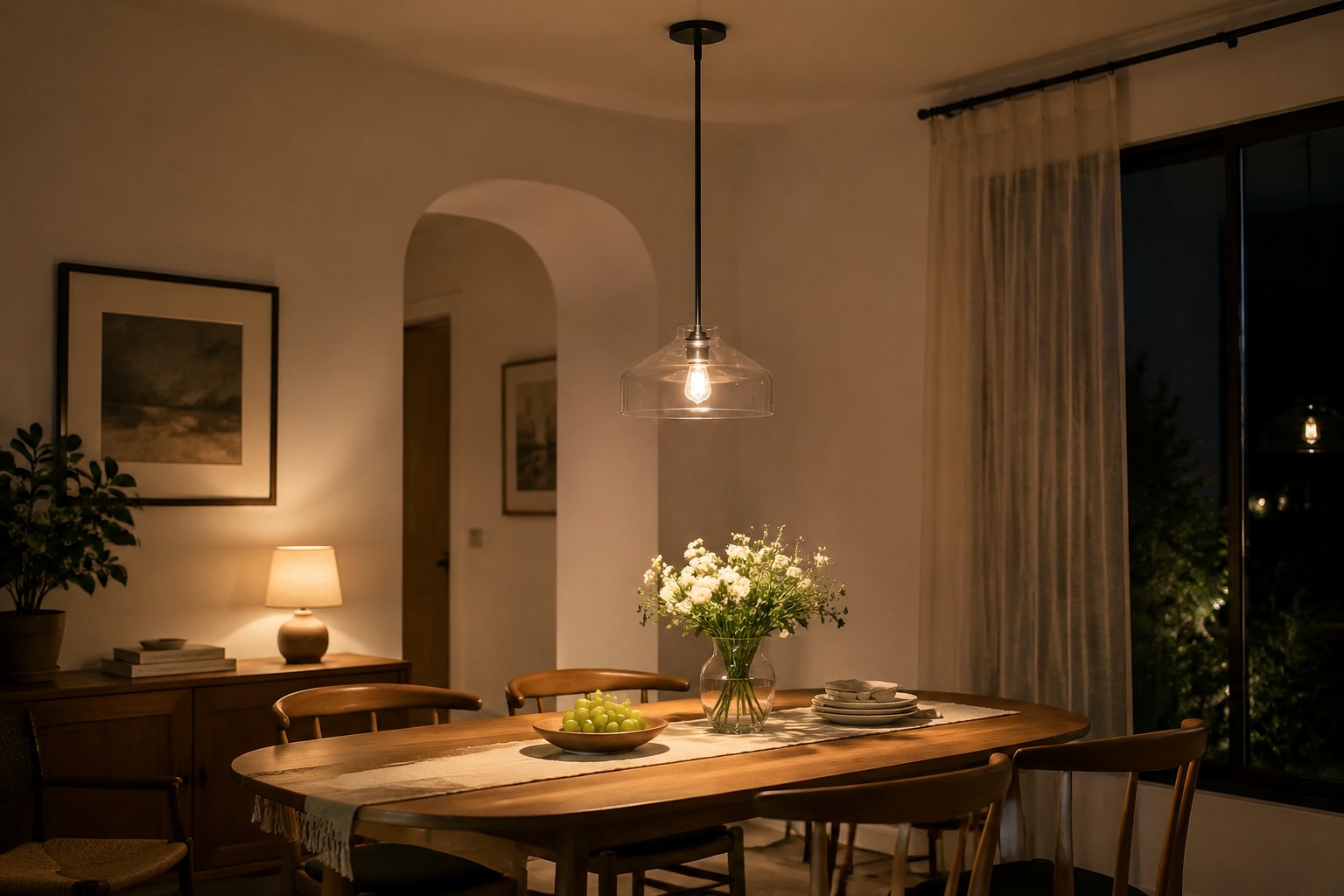
How a diffused pendant lights the table
An opal or frosted shade distributes light over a larger area and can:
- Reduce the difference between the center and edges of the table;
- Send more light toward faces and the surrounding room;
- Create a more balanced dining environment;
- Feel more comfortable during long conversations or gatherings.
Some light is absorbed or redirected by the diffuser. A single diffused pendant may still need support if the table is regularly used for visually demanding tasks.
2. Do Open-Bottom Pendant Lights Cause More Glare?
An open-bottom pendant does not automatically produce severe glare, but it does increase the possibility of seeing the bulb directly from certain angles.
Glare depends on:
- Bulb output;
- Whether the bulb is clear or frosted;
- Whether it extends below the shade;
- Shade depth and opening size;
- Hanging height;
- The viewing angle from a seated position;
- Whether the fixture is centered over the table;
- Background brightness in the room.
A common misconception is that hanging an open pendant higher always reduces glare. If it is raised too far, seated diners may gain a clearer view into the shade and toward the bulb.
When the bulb sits properly inside a deep shade, the pendant is centered over the table and a moderate frosted bulb is used, an open-bottom fixture can still be comfortable.
How a diffuser reduces glare
A diffuser changes a small, intense source into a larger illuminated surface. Instead of seeing one obvious bright point, the eye sees a shade with a more gradual brightness transition.
This is particularly useful when:
- Household members are sensitive to bright light;
- Meals and conversations last a long time;
- The fixture is relatively close to the seated sightline;
- The owner dislikes visible bare bulbs.
A diffuser should still not contain an unnecessarily powerful bulb. Excessive output may turn the whole shade into a bright glowing object.
3. Bulb Choice Matters More in an Open-Bottom Pendant
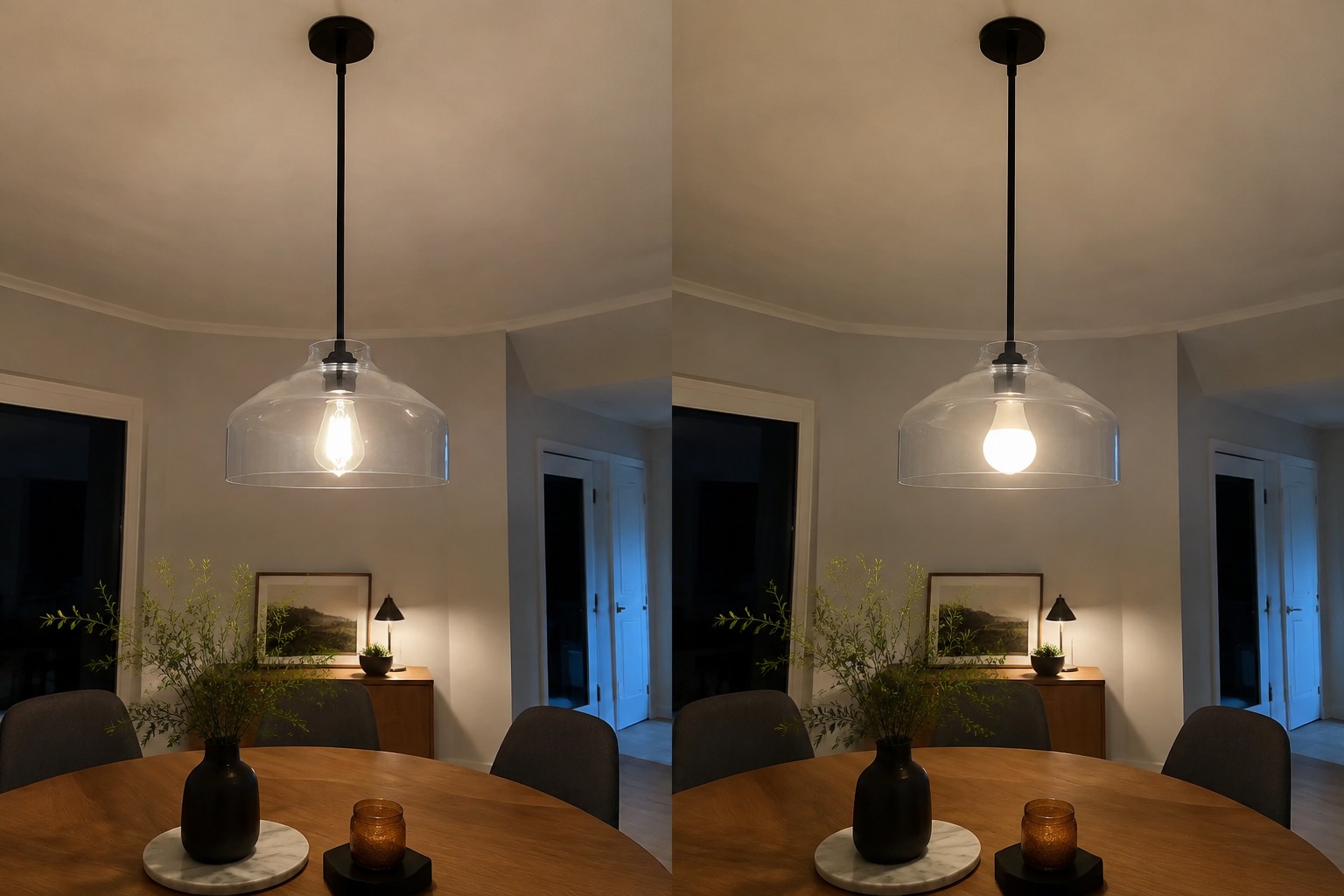
Because an open shade does not fully conceal the bulb, the bulb has a direct effect on both comfort and appearance.
Start with a frosted LED bulb
A frosted bulb can:
- Soften direct light;
- Reduce the visibility of bright LED points or filaments;
- Avoid the intense highlights produced by clear glass;
- Make an open metal shade more comfortable over a dining table.
Match brightness to the activity
If the table is mainly used for eating and conversation, the highest available lumen output is not automatically better. Excessive light can create strong reflections from plates while making the rest of the room appear darker.
If the table frequently supports reading, work or homework, stronger tabletop light may be useful. Dimming or additional ambient lighting can then help create a more relaxed mood during meals.
Use clear bulbs selectively
A clear bulb may work when:
- It sits deep inside the shade;
- A visible filament is part of the desired look;
- Seated diners cannot see the light source directly;
- The output is relatively restrained.
When the shade is shallow, the bulb extends below the opening or household members are sensitive to glare, a frosted bulb is usually the safer choice.
The Hanton’s E26 socket allows the owner to experiment with output, color temperature and bulb finish. That flexibility can improve the result, but it cannot turn an open-bottom shade into a fully diffused fixture.
4. Diffused Light Is Usually Kinder to Faces
Dining lighting should illuminate more than plates. It should also support the people sitting around the table.
When light travels mainly downward from above, it may create shadows beneath:
- The eyebrows;
- The eyes;
- The nose;
- The chin and neck.
The table may look bright while faces appear relatively dark. This can be less flattering during long conversations, family photographs or video calls.
An opal glass shade emits light from a larger surface and sends more of it sideways. Facial shadows are generally softer, and the brightness difference between the table and the diners is reduced.
The milk-white glass structure of the Art Deco pendant is therefore relevant when the fixture needs to support both tabletop visibility and a social dining atmosphere.
A diffused pendant cannot guarantee perfect facial light by itself. Wall colors, shade position, surrounding fixtures and room reflections still affect the result.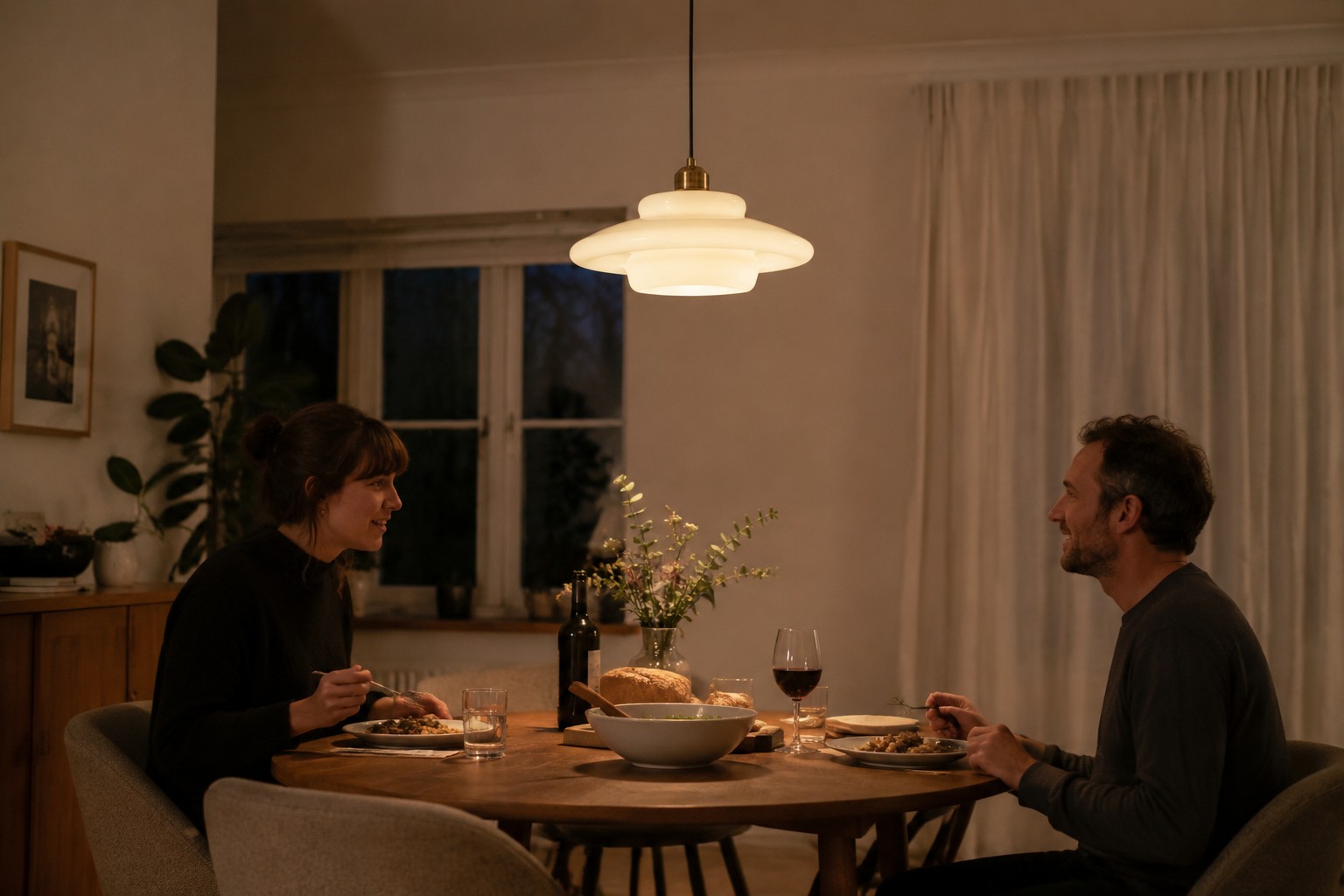
5. Open-Bottom Pendants Work Better with Layered Lighting
An open-bottom pendant can provide excellent table-focused light without being responsible for the entire dining room.
A layered plan may use:
- The pendant for the table;
- Wall sconces for vertical brightness;
- A floor lamp for a dark corner;
- Recessed lights for ambient illumination;
- Indirect lighting to reduce contrast between the table and ceiling.
If the dining room already has adequate ambient light, a pendant such as the Hanton can concentrate on the tabletop without needing to scatter a large amount of light toward the walls.
If the pendant is the only or primary source in the dining area, a diffused shade is usually more forgiving. It sends more light toward faces, walls and the surrounding room, reducing the effect of a bright table floating in a dark space.
6. Will a Diffused Shade Make the Table Too Dim?
A diffuser changes the way light is transmitted, but milk-white glass does not automatically make a dining table too dark.
The result depends on:
- Glass transmission;
- Glass thickness;
- Bulb lumen output;
- Shade size;
- Number of fixtures;
- Table size and color;
- Hanging height;
- Reflectance of walls and ceilings.
Installing an excessively bright bulb simply to compensate for the diffuser is not ideal. The glass may become uncomfortable to look at without producing balanced light across the table.
A better approach is to:
- Follow the fixture’s bulb specifications;
- Match the number and size of pendants to the table;
- Use compatible dimming where available;
- Add ambient light from another source;
- Avoid making one pendant responsible for every lighting need.
7. Maintenance Is Different, Not Necessarily Easier
Both shade types require maintenance, but their inconvenient areas are different.
Open-bottom metal shade
Possible advantages include:
- A relatively easy-to-wipe exterior;
- Direct access to the bulb;
- No complete glass globe to remove during bulb replacement;
- A visually straightforward internal structure.
Points to consider include:
- Dust can settle inside the shade;
- Cooking residue may collect when used near a kitchen;
- The bulb and socket may remain visible from below;
- Dark metal may show pale dust more clearly.
Milk-white glass diffuser
Possible advantages include:
- The bulb and some internal dust remain concealed;
- The fixture looks visually complete when illuminated;
- The light source is not directly exposed to view.
Points to consider include:
- Glass may show fingerprints;
- Cleaning requires careful handling;
- Some enclosed shades must be removed to reach the bulb;
- Watermarks or wiping streaks may become visible when illuminated.
A diffuser is therefore not necessarily easier to clean. It is better at concealing the bulb, while an open-bottom shade is usually easier to access internally.
8. A Dining Table and Kitchen Island Do Not Need the Same Light
A kitchen island may be used for food preparation, recipe reading and cleaning. It generally places a higher priority on clear task illumination.
A dining table also supports conversation and social activity, so it needs a balance between tabletop visibility, facial light and atmosphere.
| Setting | Main requirement | Likely preference |
|---|---|---|
| Food preparation at a kitchen island | Focused task light | Open bottom |
| Everyday family dining | Balance of clarity and comfort | Either |
| Long conversations and gatherings | Soft facial and ambient light | Diffused shade |
| Dining table used as a desk | Stronger tabletop illumination | Open bottom or layered lighting |
| Pendant is the only light source | Wider light distribution | Diffused shade |
A pendant that works well over a kitchen island is not automatically the best choice over a dining table.
Hanton vs Art Deco Milk White Glass Pendant
| Consideration | Hanton | Art Deco Milk White Glass Pendant |
|---|---|---|
| Shade structure | Open-bottom metal shade | Milk-white glass diffuser |
| Bulb system | E26 | E26 or E27 |
| Main light direction | Concentrated downward | Distributed toward the table and room |
| Tabletop lighting | More clearly focused | Softer and more even |
| Bulb visibility | May be visible from some angles | Usually concealed by glass |
| Glare control | Depends strongly on bulb and installation | Generally more forgiving |
| Light adjustment | Different E26 bulbs can be installed | A compatible bulb can be replaced |
| Visual character | Defined and directional | Soft and complete |
| Best suited to | Existing ambient light and focused table lighting | Whole dining-area illumination and atmosphere |
Choose the Hanton if you:
- Already have other ambient light;
- Want food and the tabletop to become the lighting focus;
- Want to select your own E26 bulb;
- Prefer a metal shade;
- Are willing to control glare through a frosted bulb and suitable height.
Choose the Art Deco Milk White Glass Pendant if you:
- Do not want to see the bulb directly;
- Are sensitive to bright light;
- Want the pendant to illuminate both the table and faces;
- Depend on the pendant to shape the atmosphere of the dining area;
- Prefer the complete glow of milk-white glass.
Decide with Five Questions
1. Does the dining room already have ambient light?
If it does, an open-bottom pendant can focus on the table. If not, a diffuser generally provides a more balanced result across the dining area.
2. Do you mind seeing the bulb while seated?
If you strongly dislike it, prioritize a diffused shade. If you do not mind, continue by comparing bulb choice, hanging height and shade depth.
3. Is the table frequently used for reading or work?
If it is, an open-bottom pendant can provide more concentrated tabletop light. If the table is mainly used for dining and conversation, diffused light may be more comfortable.
4. Do you want to adjust the bulb later?
If you want to change lumen output, color temperature or bulb appearance, the Hanton’s E26 structure offers useful flexibility. The milk-white pendant also accepts a replaceable bulb, but its glass will continue to soften and redistribute the result.
5. Is anyone in the household sensitive to glare?
If so, a diffuser is usually the safer choice. With an open-bottom pendant, prioritize a frosted bulb and carefully consider hanging height.
Final Verdict
An open-bottom pendant is usually better when the dining table needs focused light and the room already has another source of ambient illumination.
A diffused pendant is usually better when the fixture needs to illuminate the table, faces and surrounding room, and visual comfort matters more than concentrated tabletop brightness.
The Hanton provides a more defined pool of light and gives the owner control over the E26 bulb. The Art Deco Milk White Glass Pendant conceals the light source and creates a softer, more evenly illuminated dining area.
Neither shade structure is universally better. The correct choice is the one that allows the pendant to perform the role it handles best while other lighting fills the remaining gaps.
FAQ
Do open-bottom pendant lights always cause glare?
No. Glare depends on bulb output, bulb finish, shade depth, hanging height and the viewing angle from a seated position. A frosted bulb and suitable installation can substantially improve comfort.
What bulb is best for an open-bottom pendant?
A frosted LED bulb that meets the fixture’s wattage and size requirements is usually a practical starting point. Lumen output and color temperature should then be selected according to the table size, activities and surrounding light.
Is frosted or milk glass bright enough for a dining table?
It can be, but the result depends on glass transmission, bulb output, the number of fixtures, table size and surrounding illumination. A large table may require multiple pendants or supporting light.
Should a dining pendant illuminate people or only the table?
Ideally, it should support both the table and the people around it. If the pendant mainly directs light downward, sconces, recessed lights or another source of ambient illumination can help light faces and the room.
Is an open-bottom pendant better for a kitchen island?
It is often useful for the focused task lighting required at an island, but the bulb and hanging position should still be selected to control glare.
Which pendant type is better for a low ceiling?
Shade structure alone does not answer the question. Compare fixture height, minimum suspension length, table height and the sightline from a seated position.