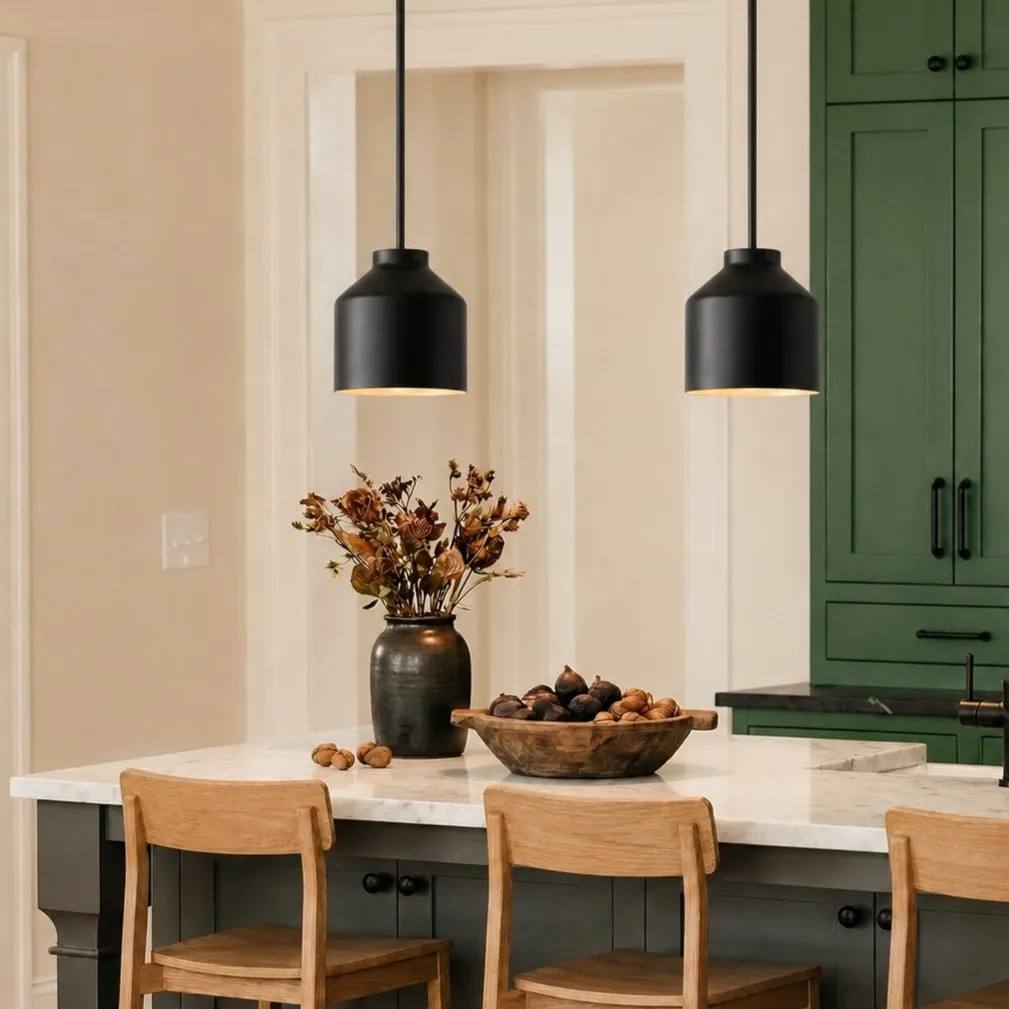
Should Your Pendant Light Blend In or Become the Focal Point?
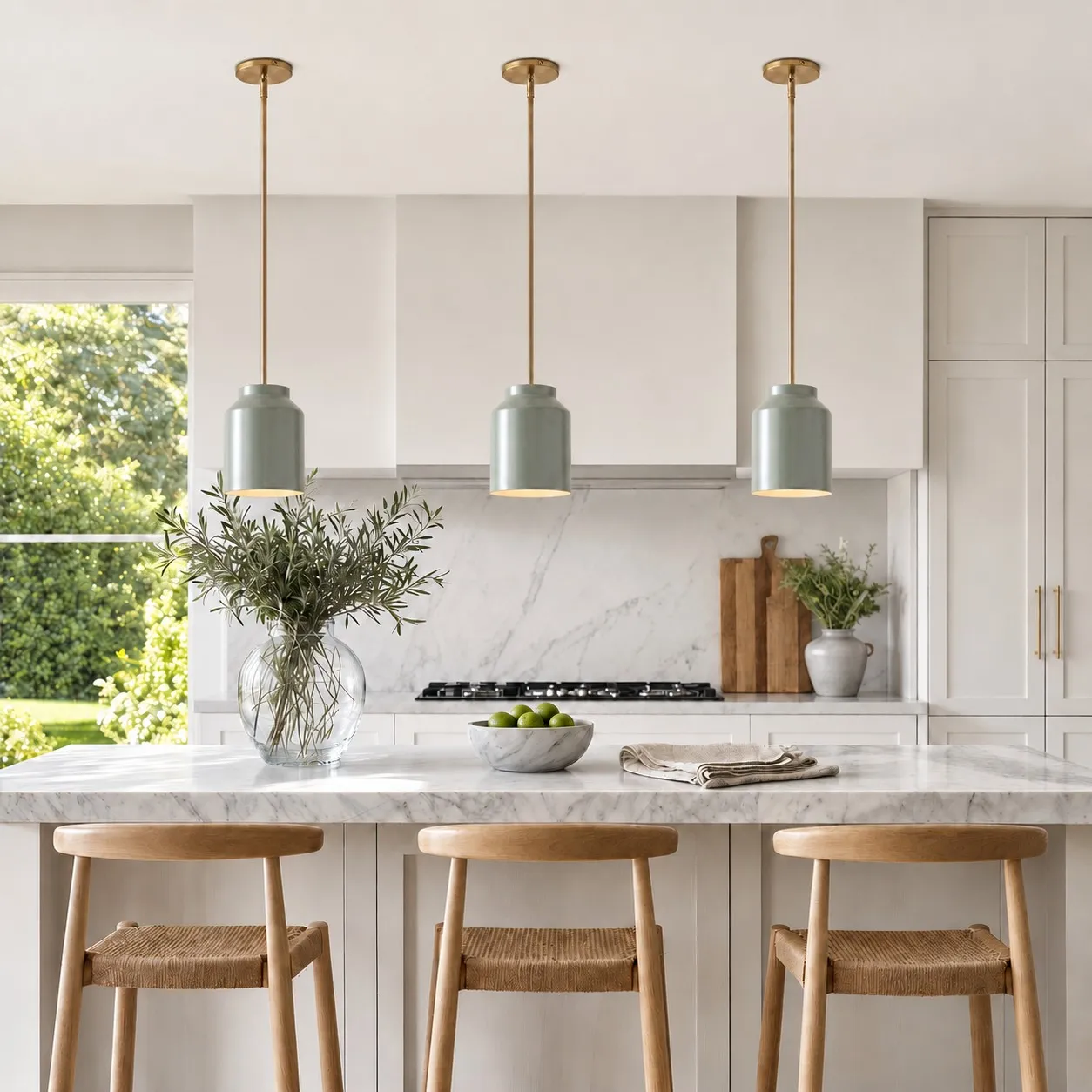
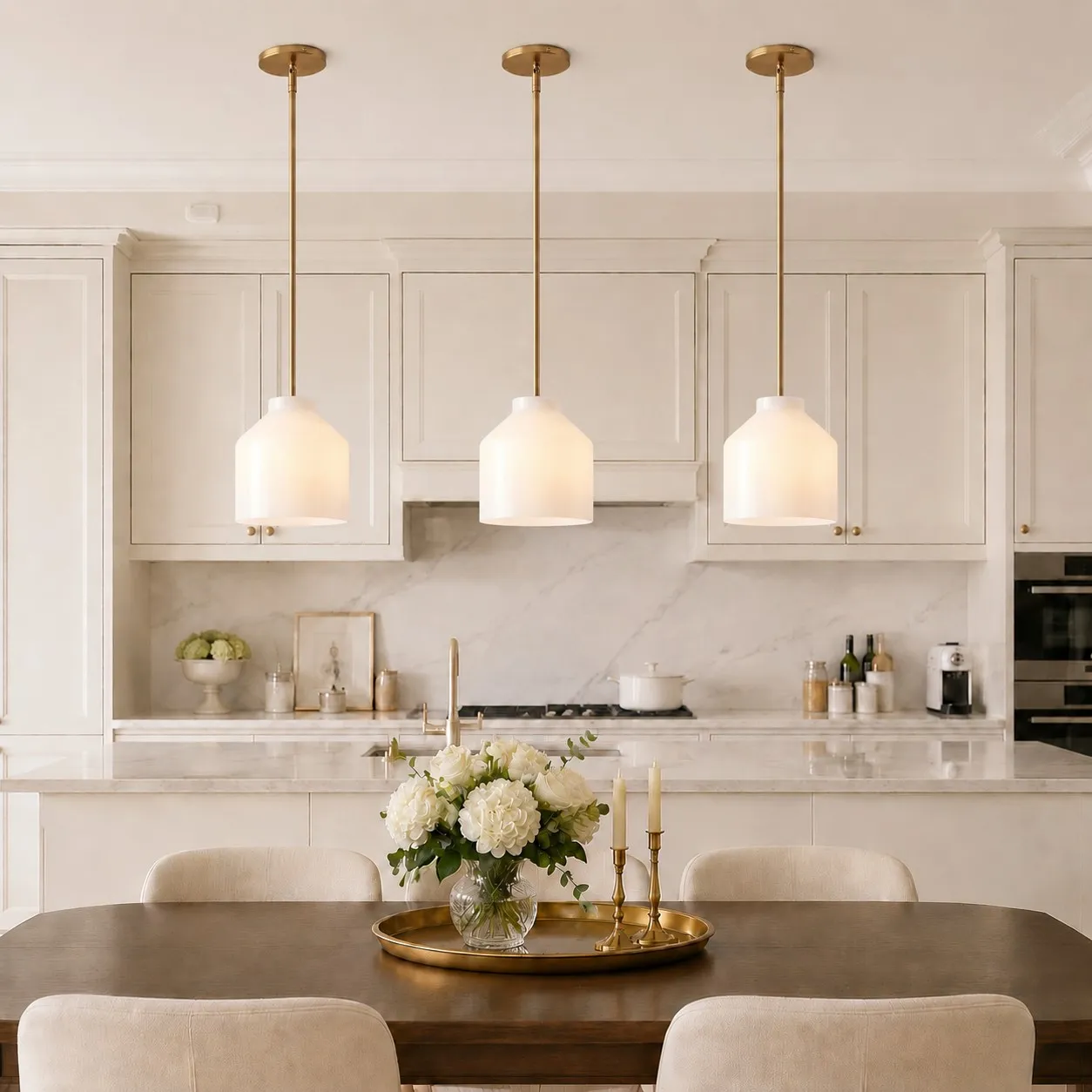
A pendant does not have to shout to matter. Over a kitchen island, its role is to help the room make sense: either mark the island as a visual destination or support a focal point that already exists. Decide which role the room needs before choosing a dramatic shade.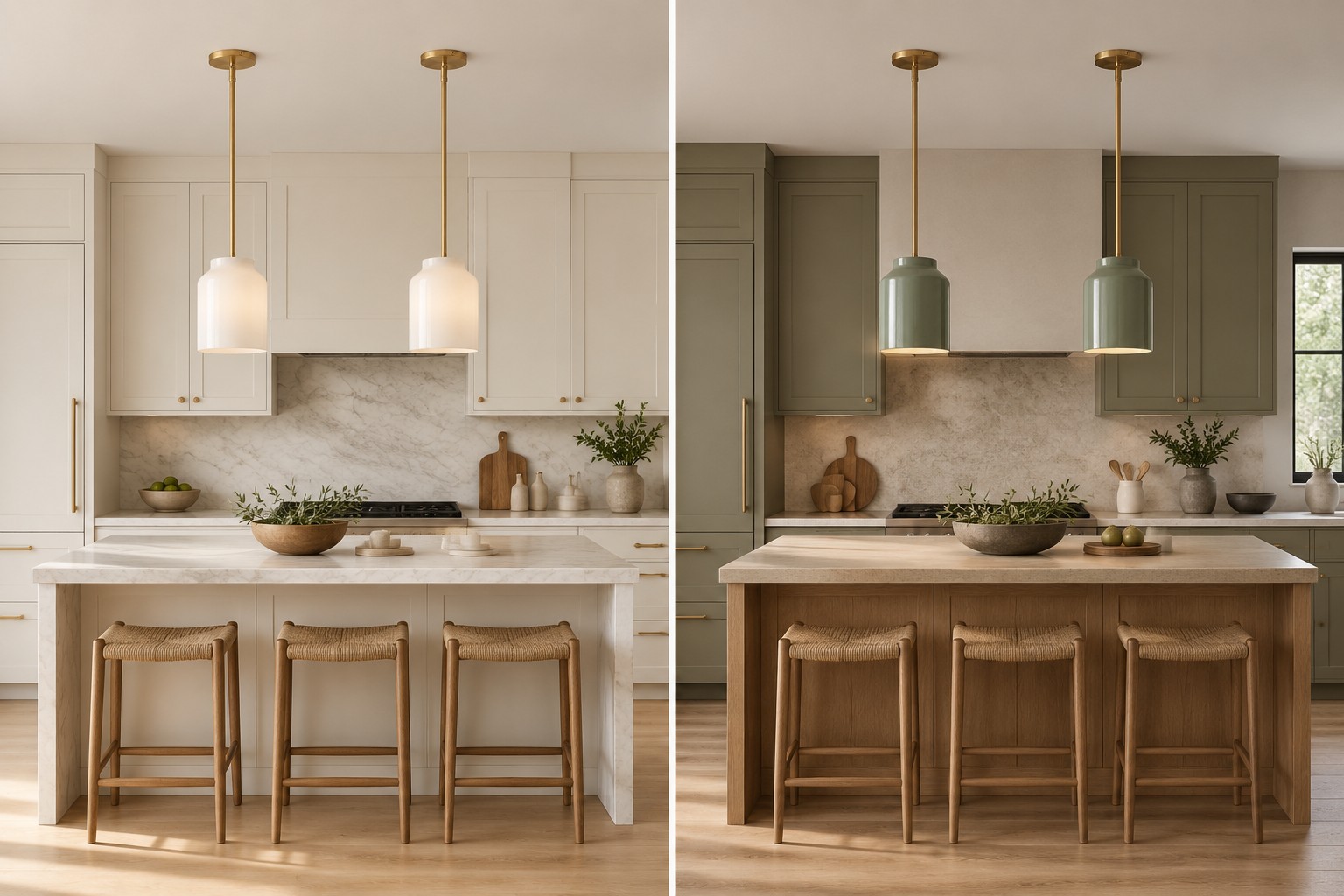
Find the focal point you already have
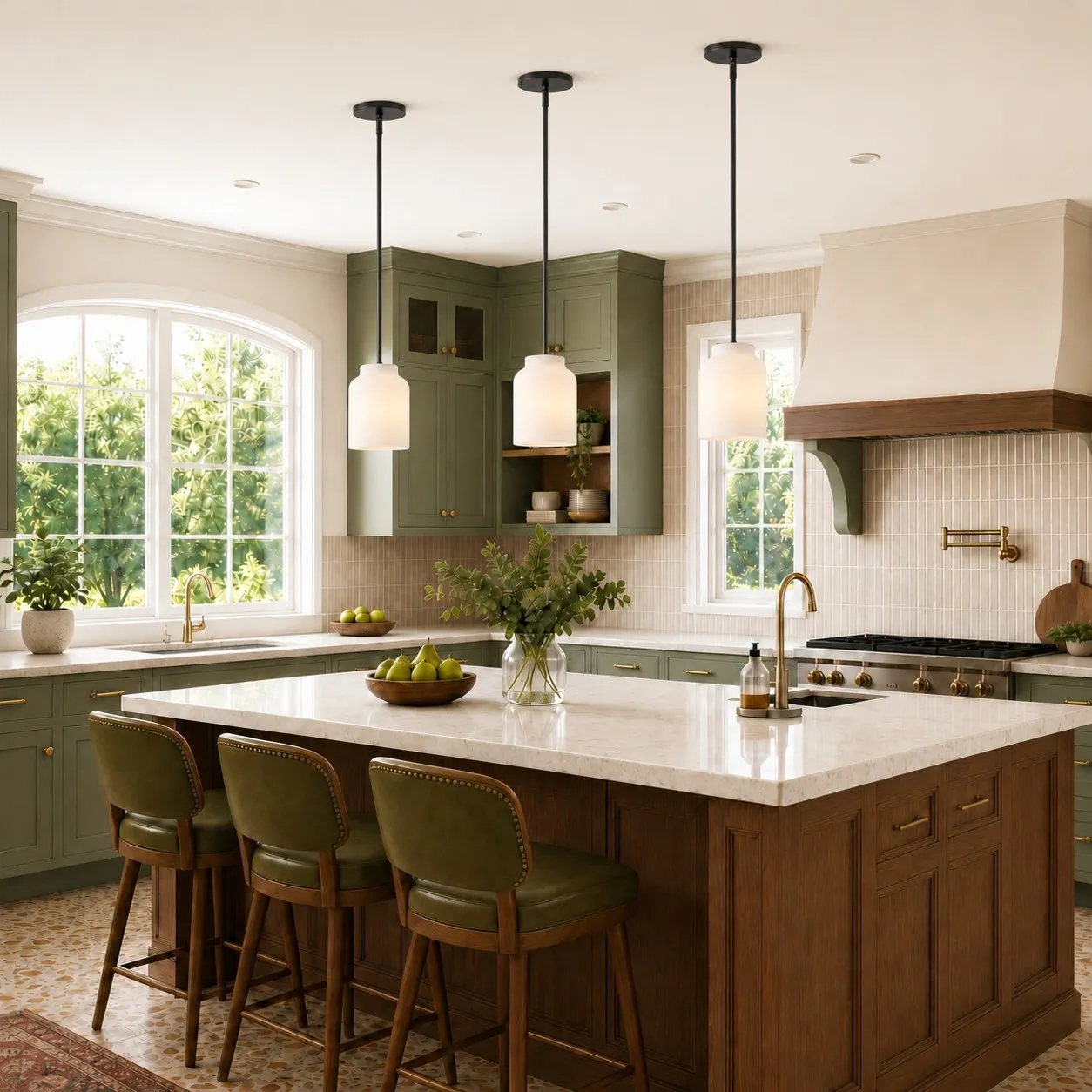
Walk into the kitchen and notice what you see first. It might be a veined stone island, a strong backsplash, colored cabinets, or a large window. If one of these already leads the room, a quieter pendant can give it space. If the kitchen feels visually flat, the pendant can create a center without asking the rest of the room to change.
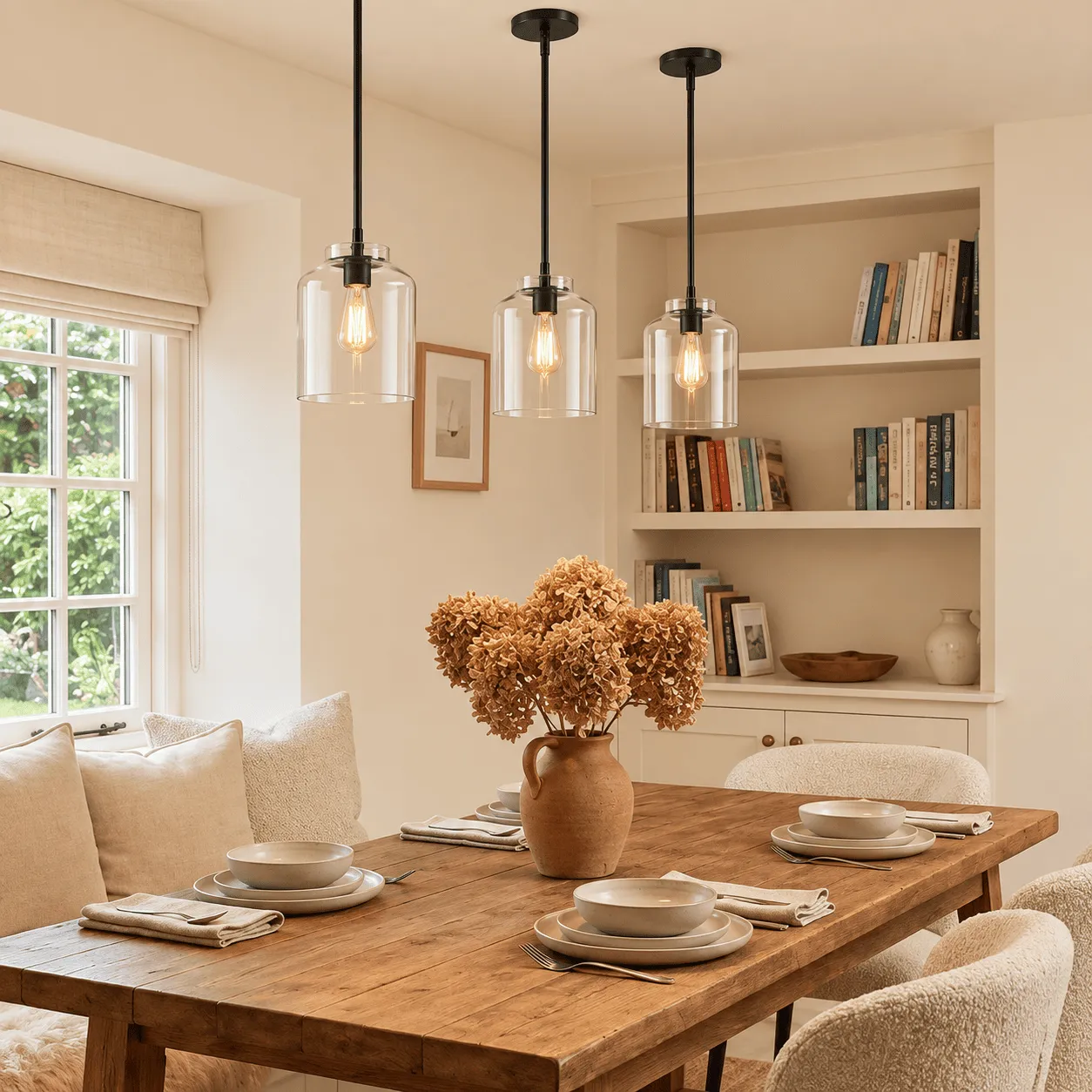
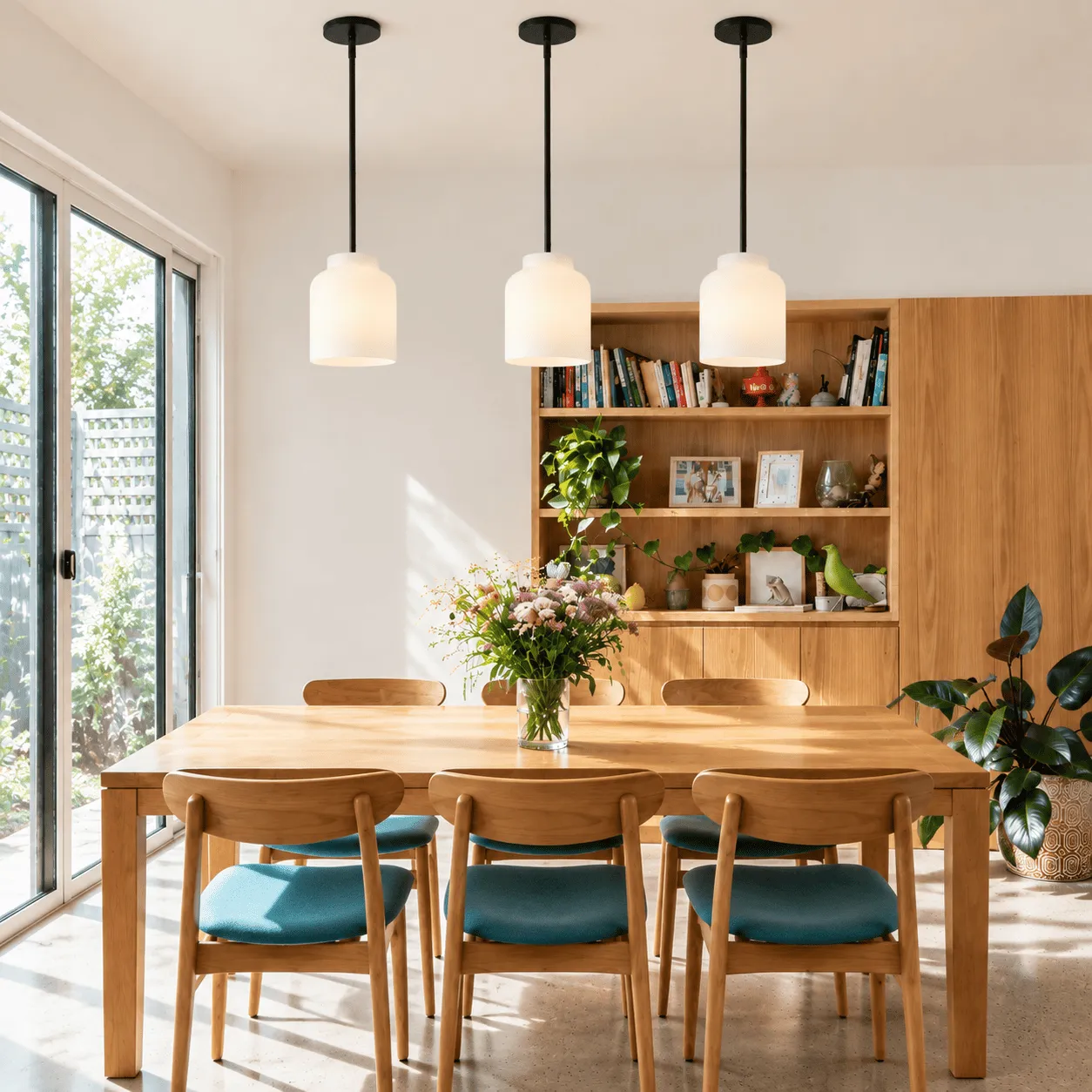
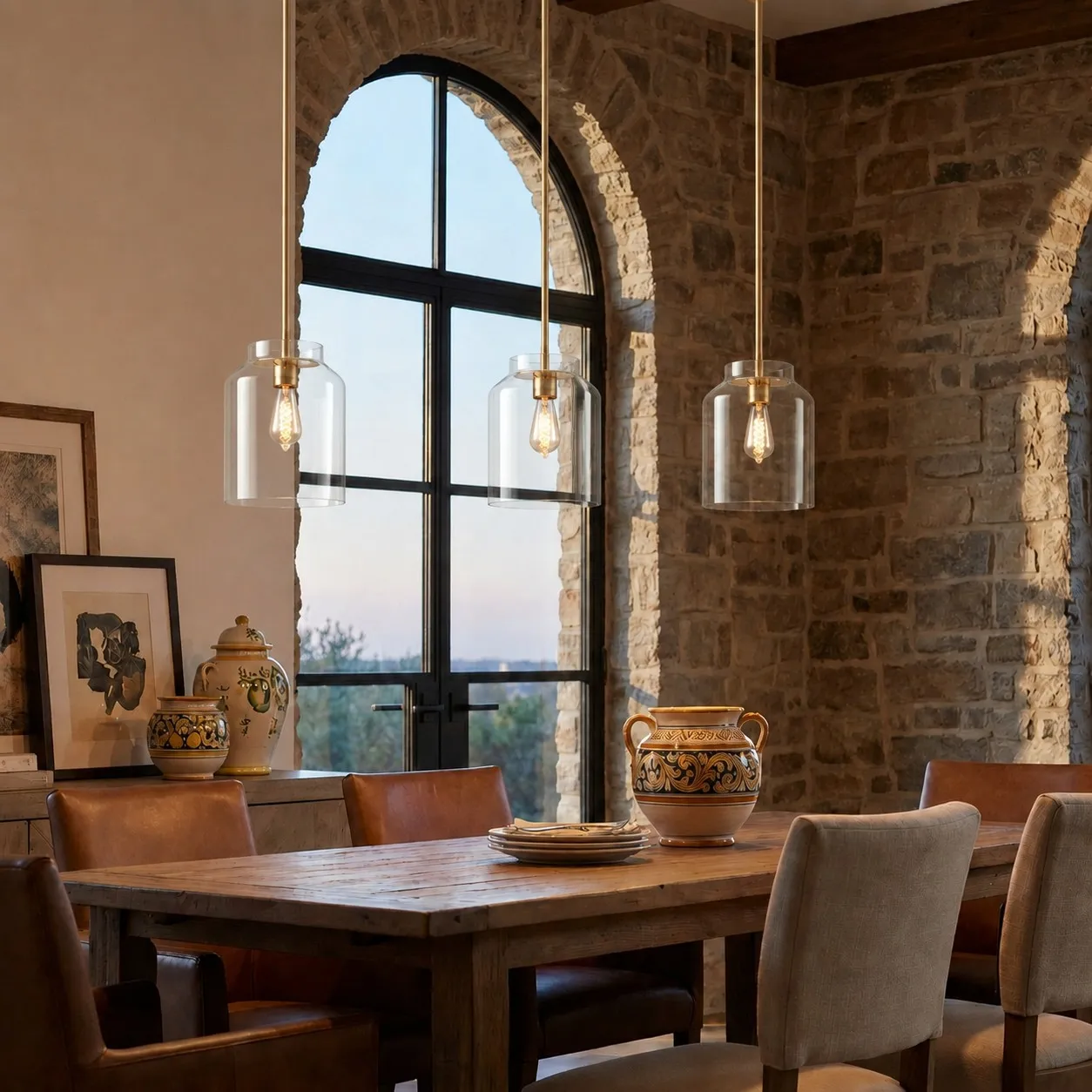
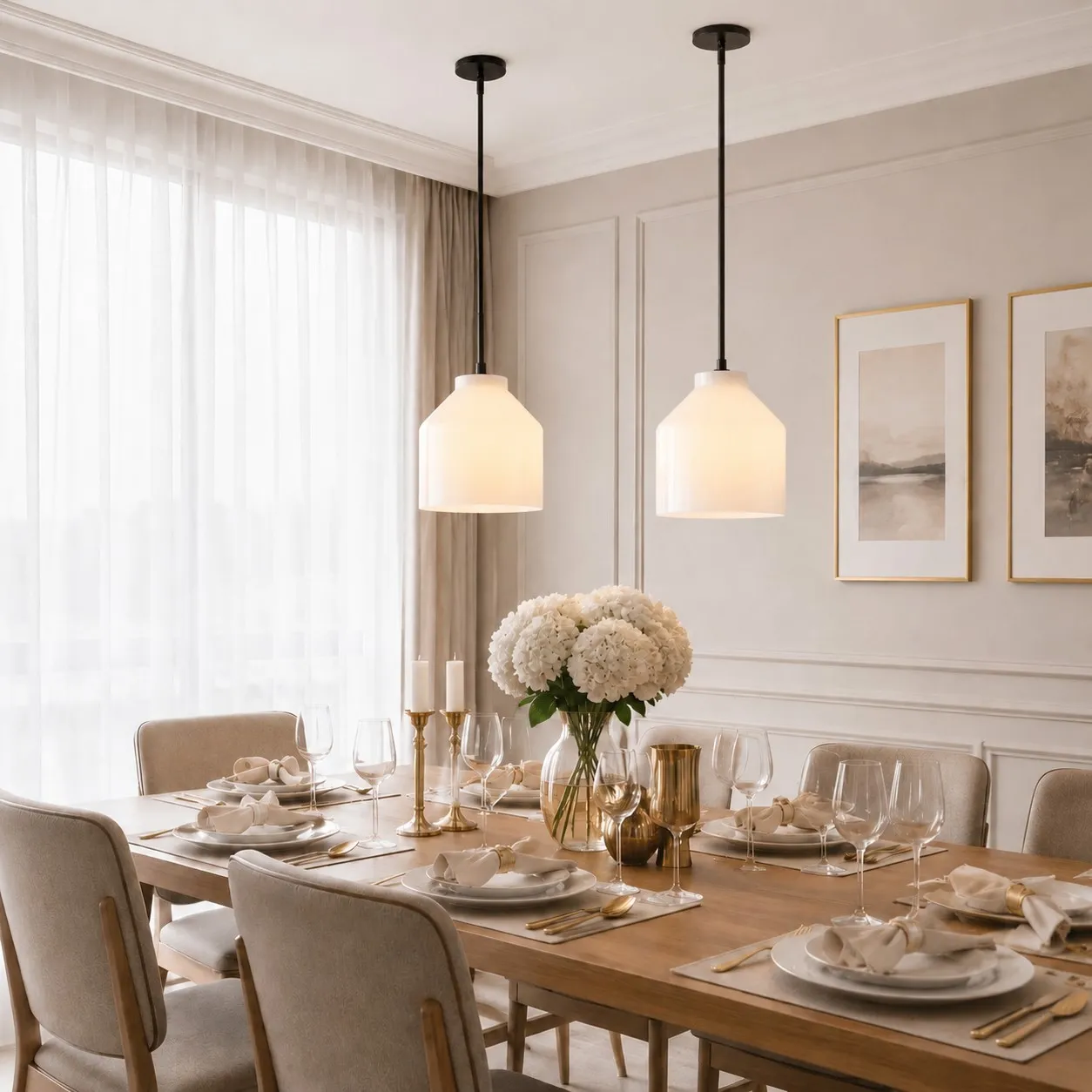
An open-plan room may have another contender: a dining table fixture. Two strong light fixtures in the same sightline can compete, especially if they are close together. Decide which zone should lead when you see both at once.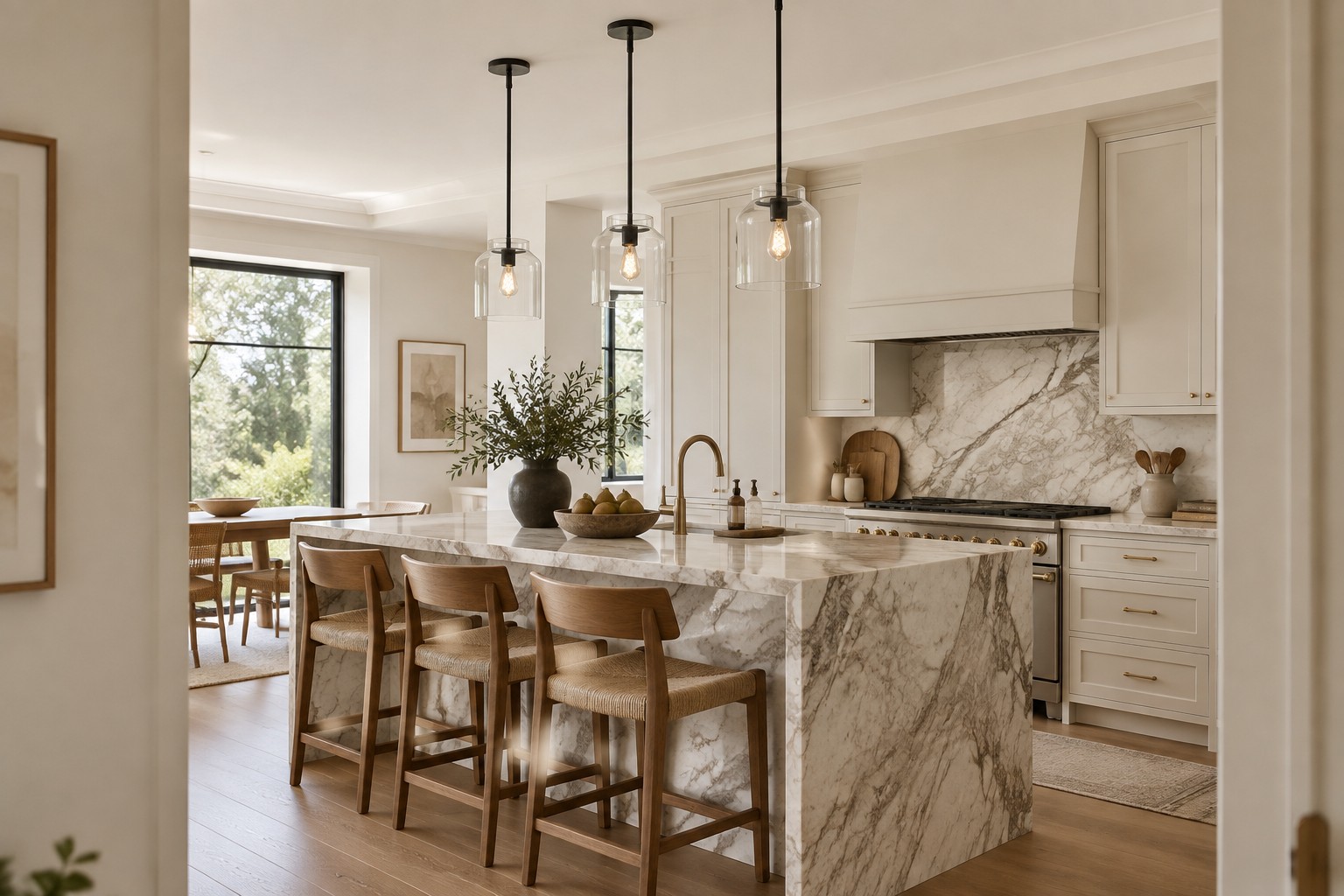
What makes a pendant blend in?
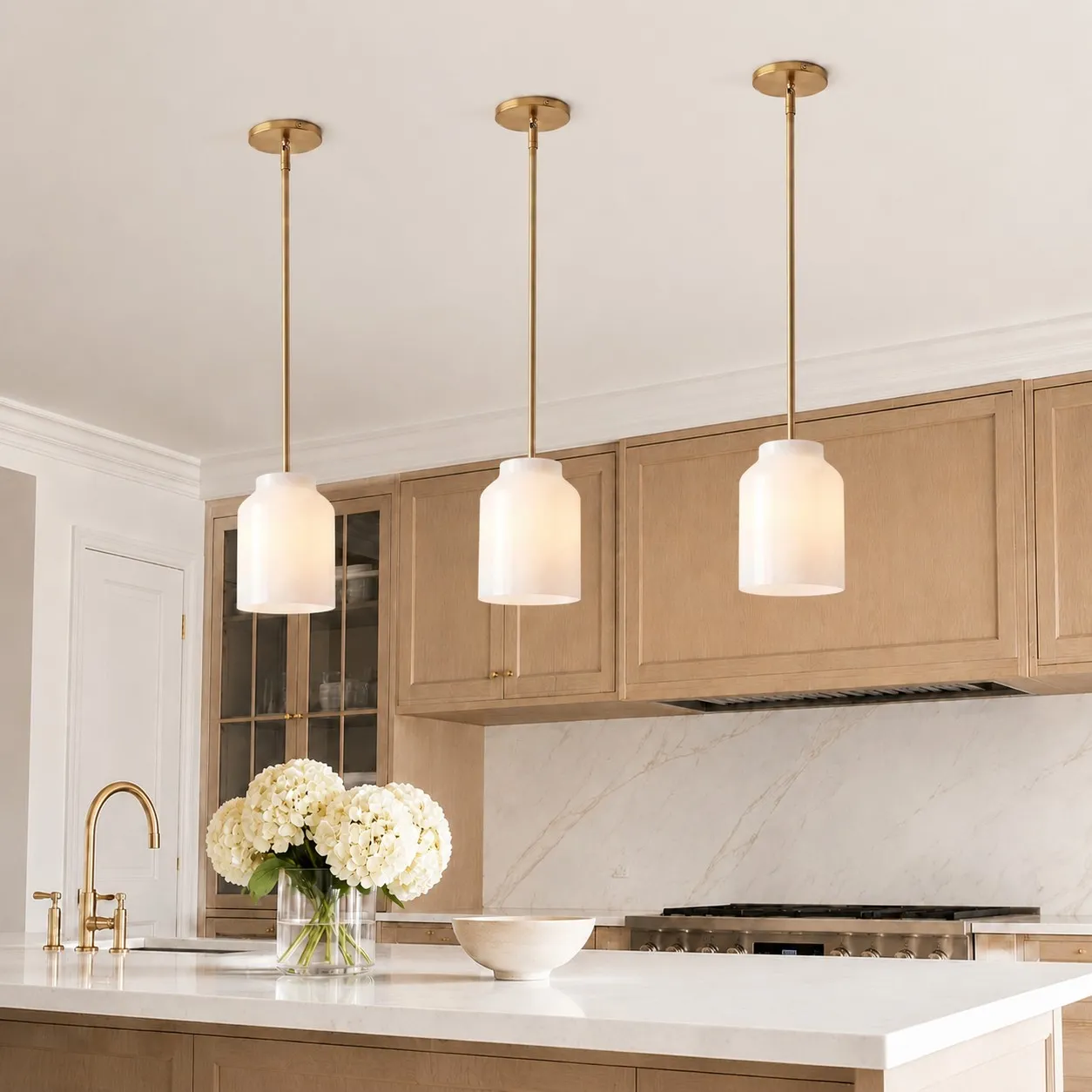
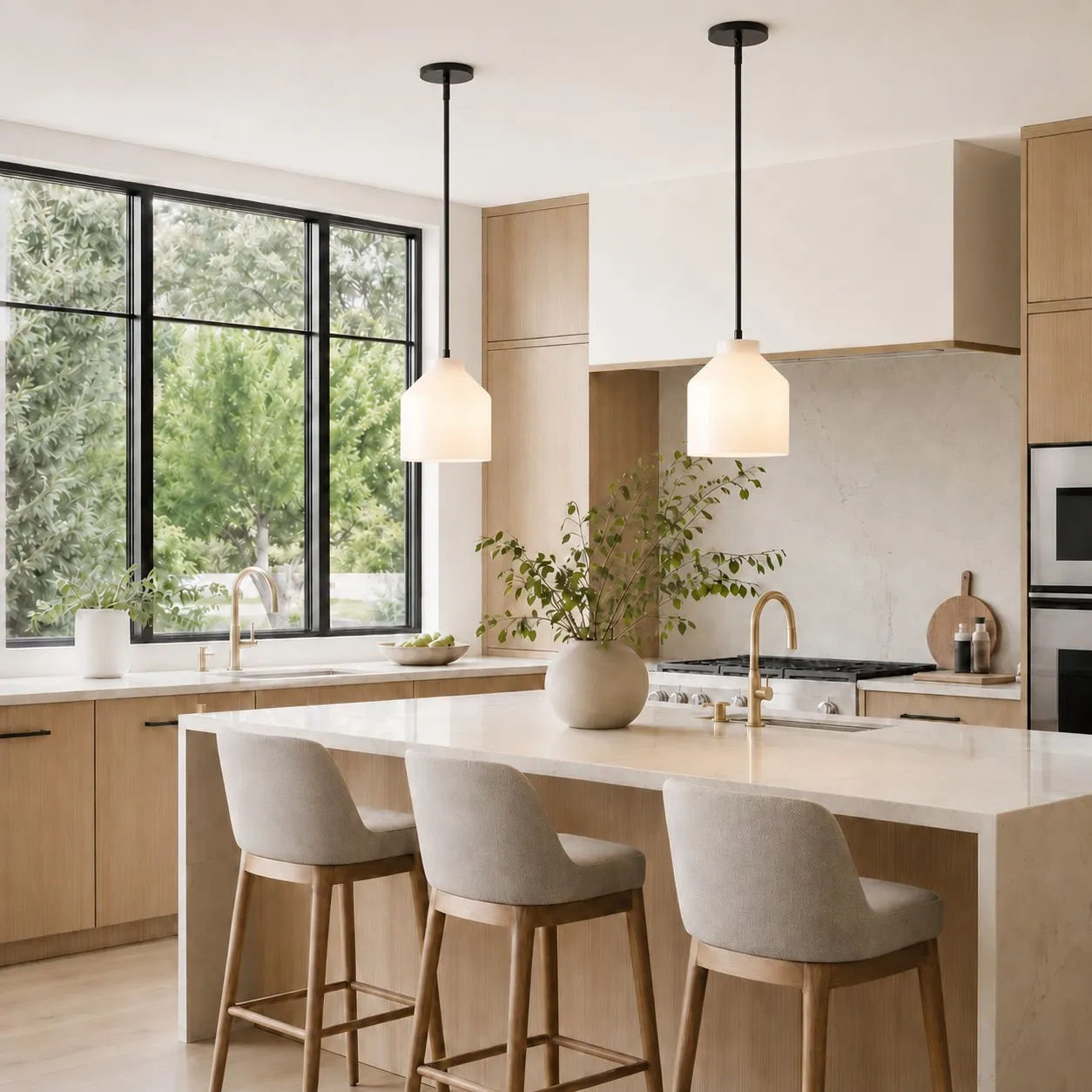
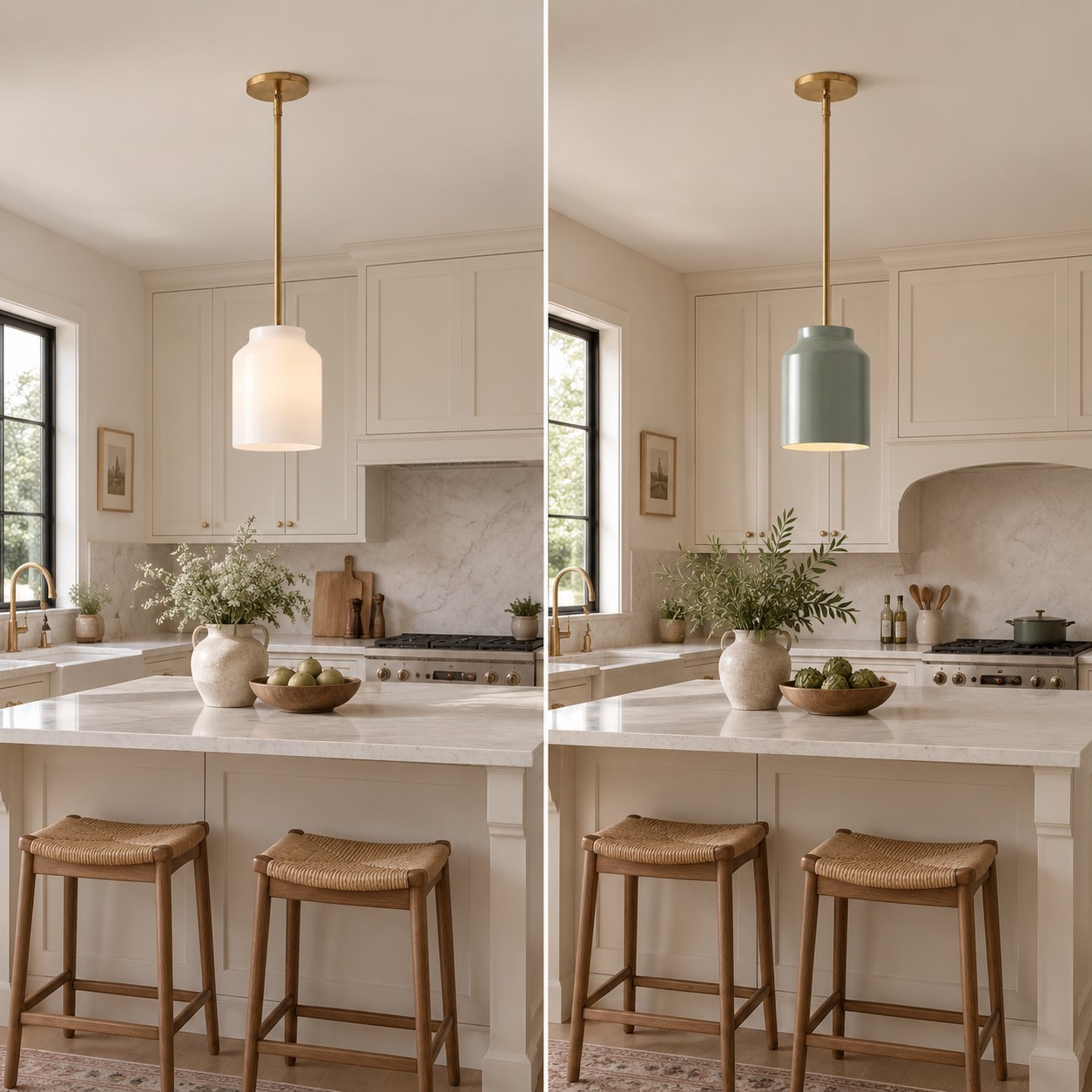
Similar tones, a lighter-looking silhouette, and lower contrast help a pendant settle into the architecture. Blending in does not mean choosing the smallest fixture you can find. It means giving the island enough definition without making the shade the first thing you notice from every angle.
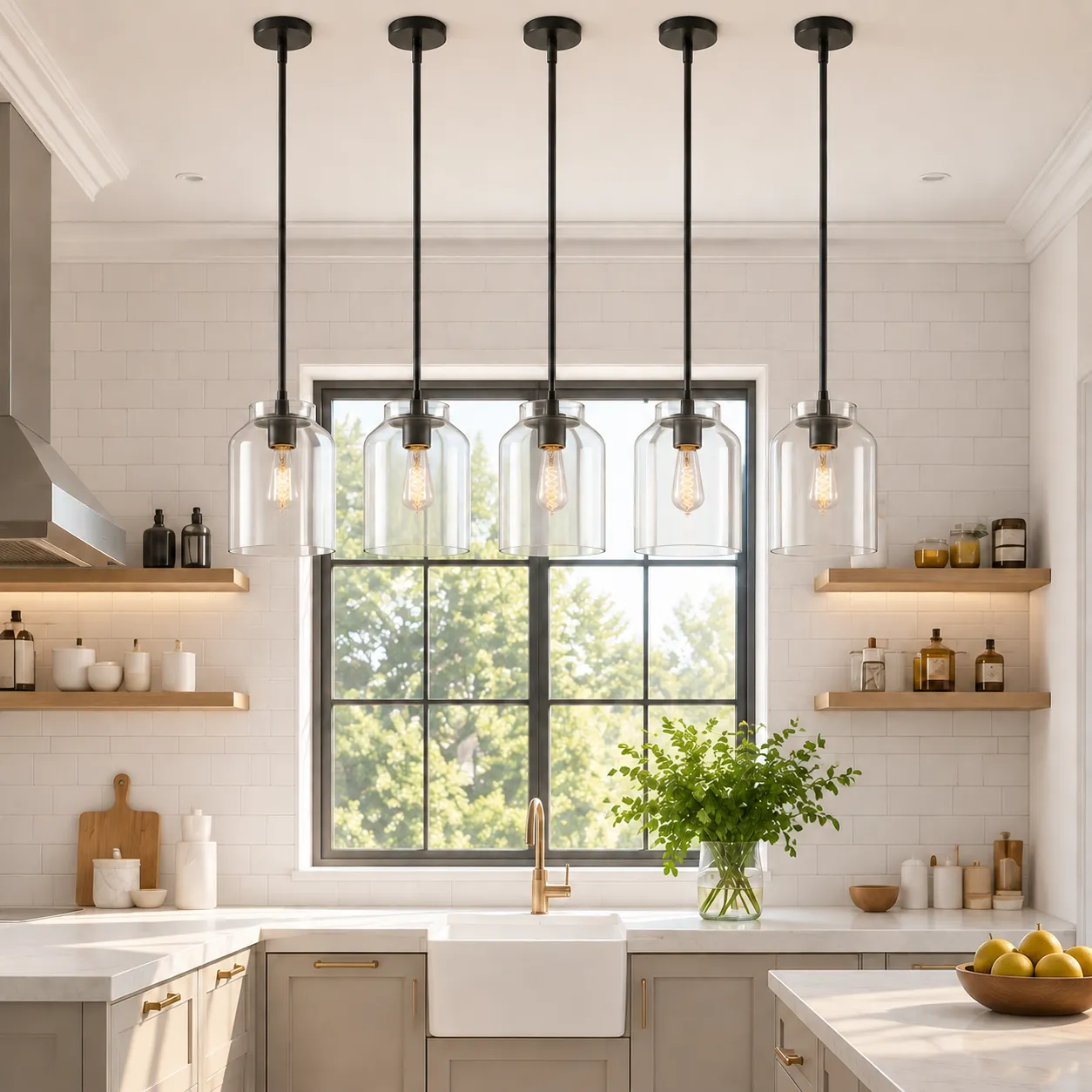
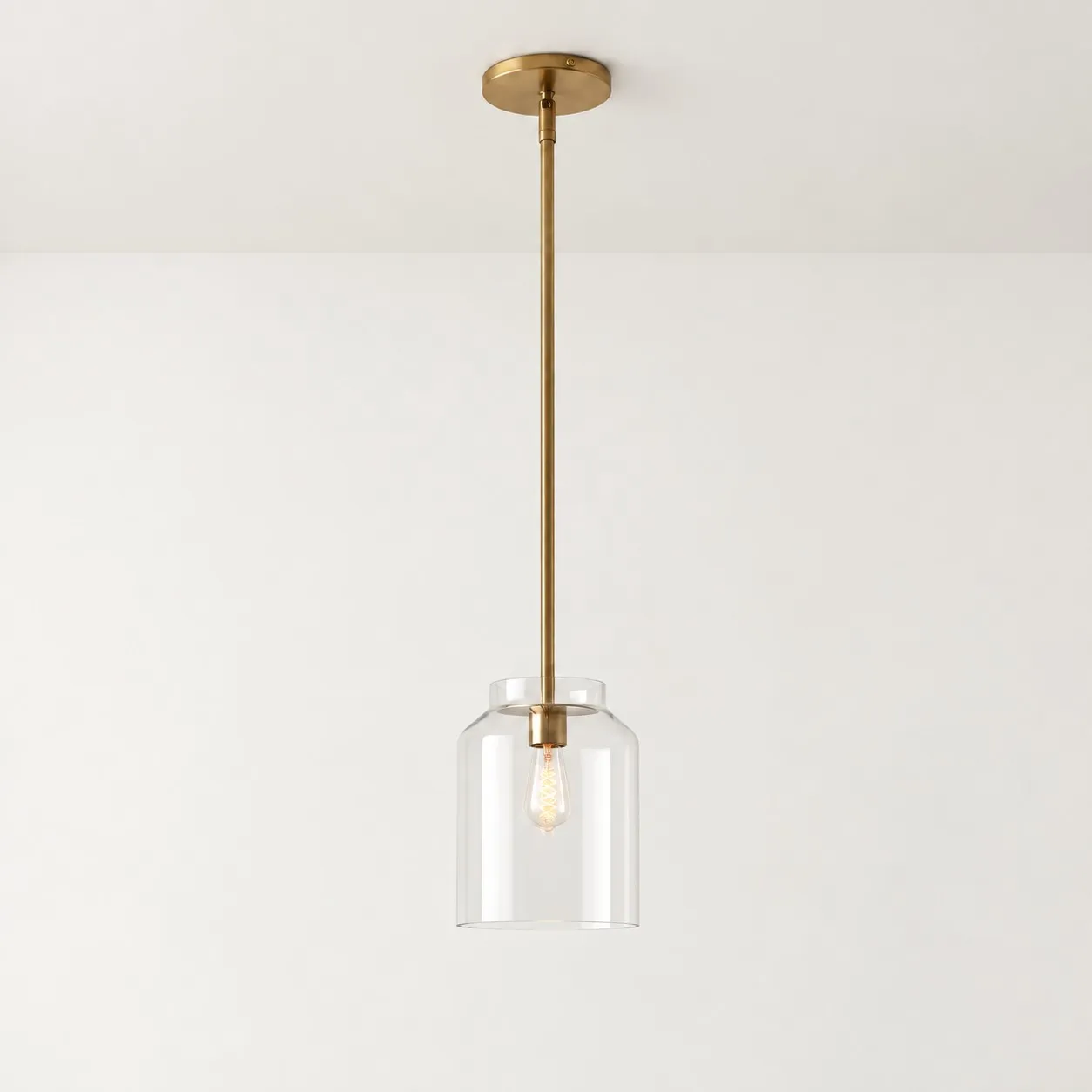
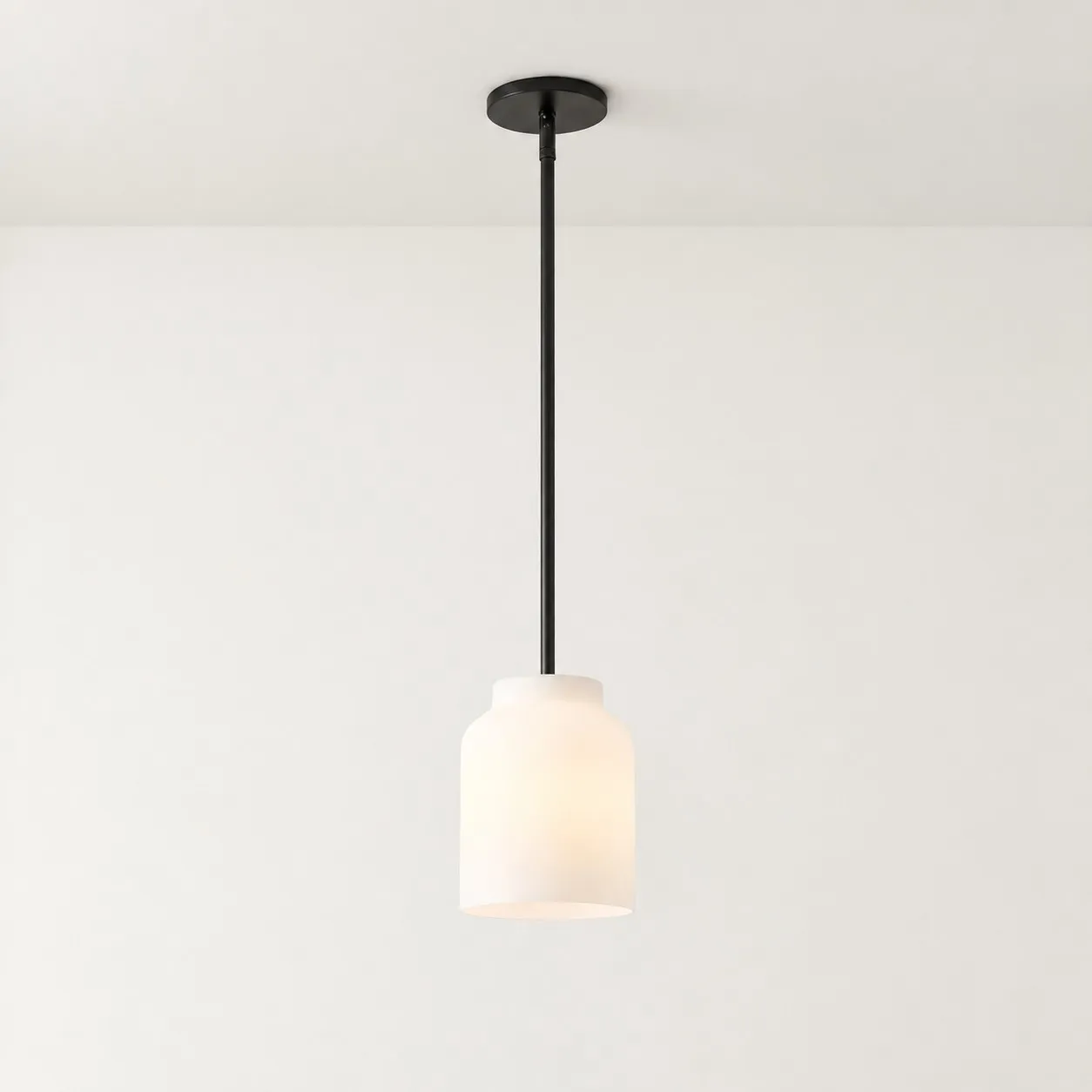
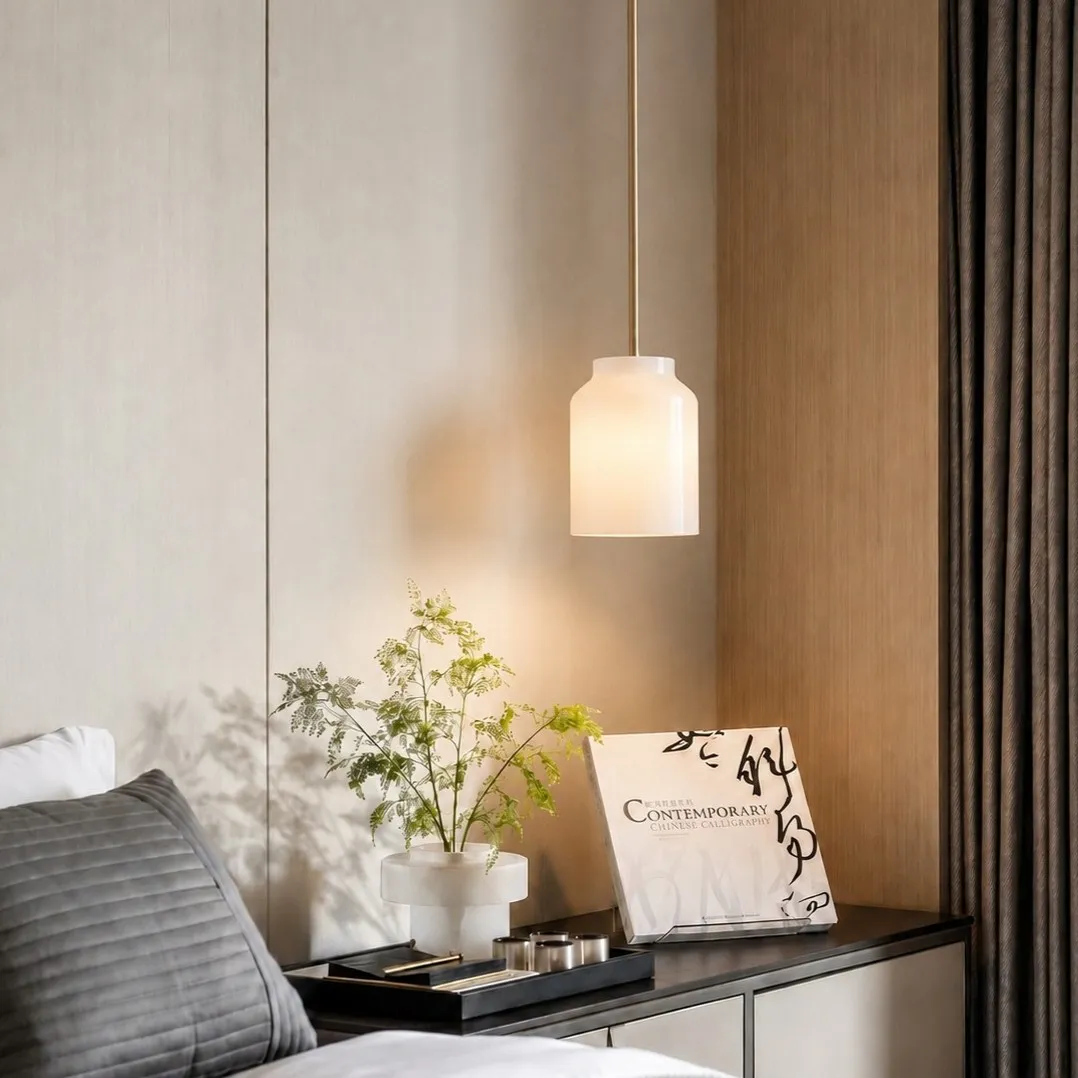
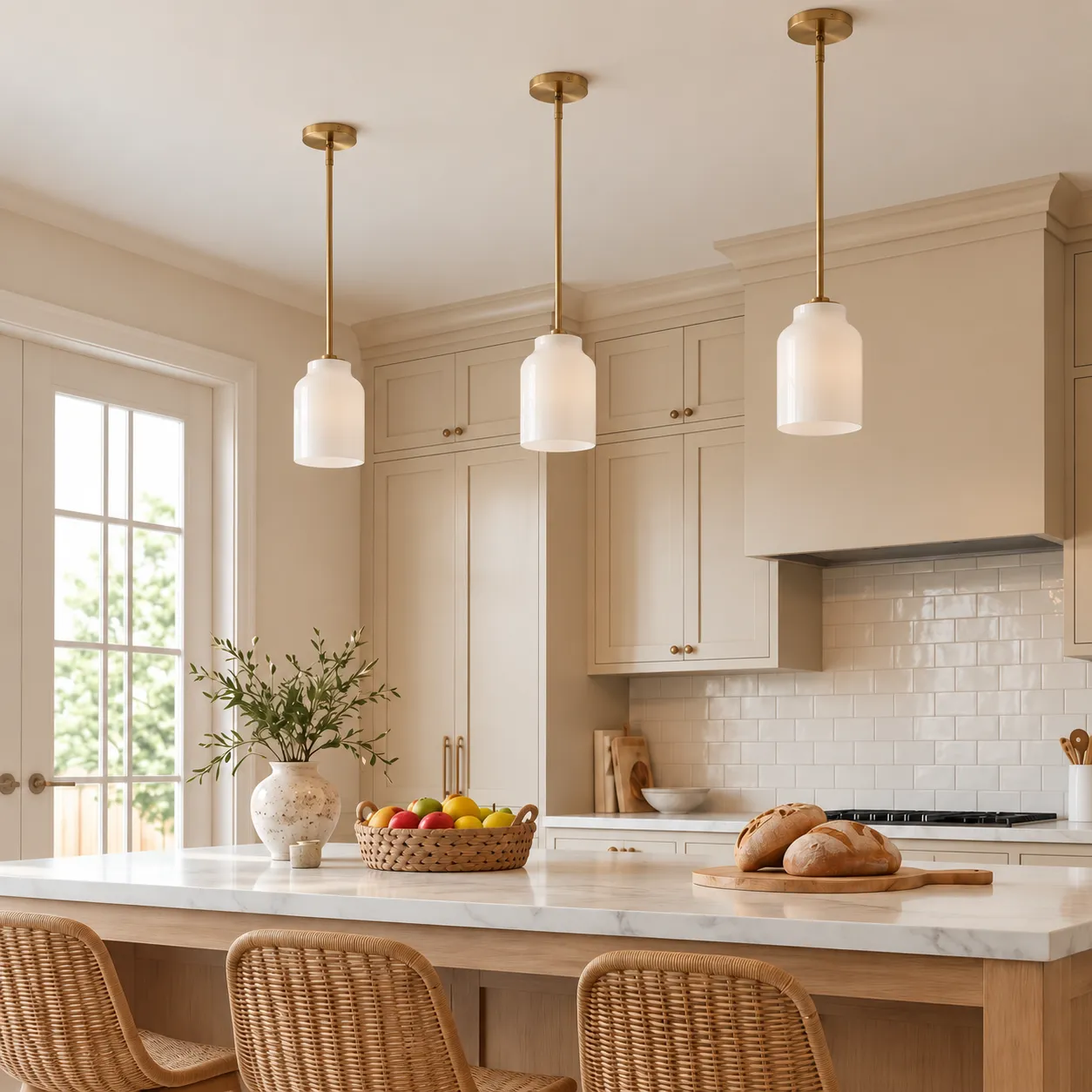
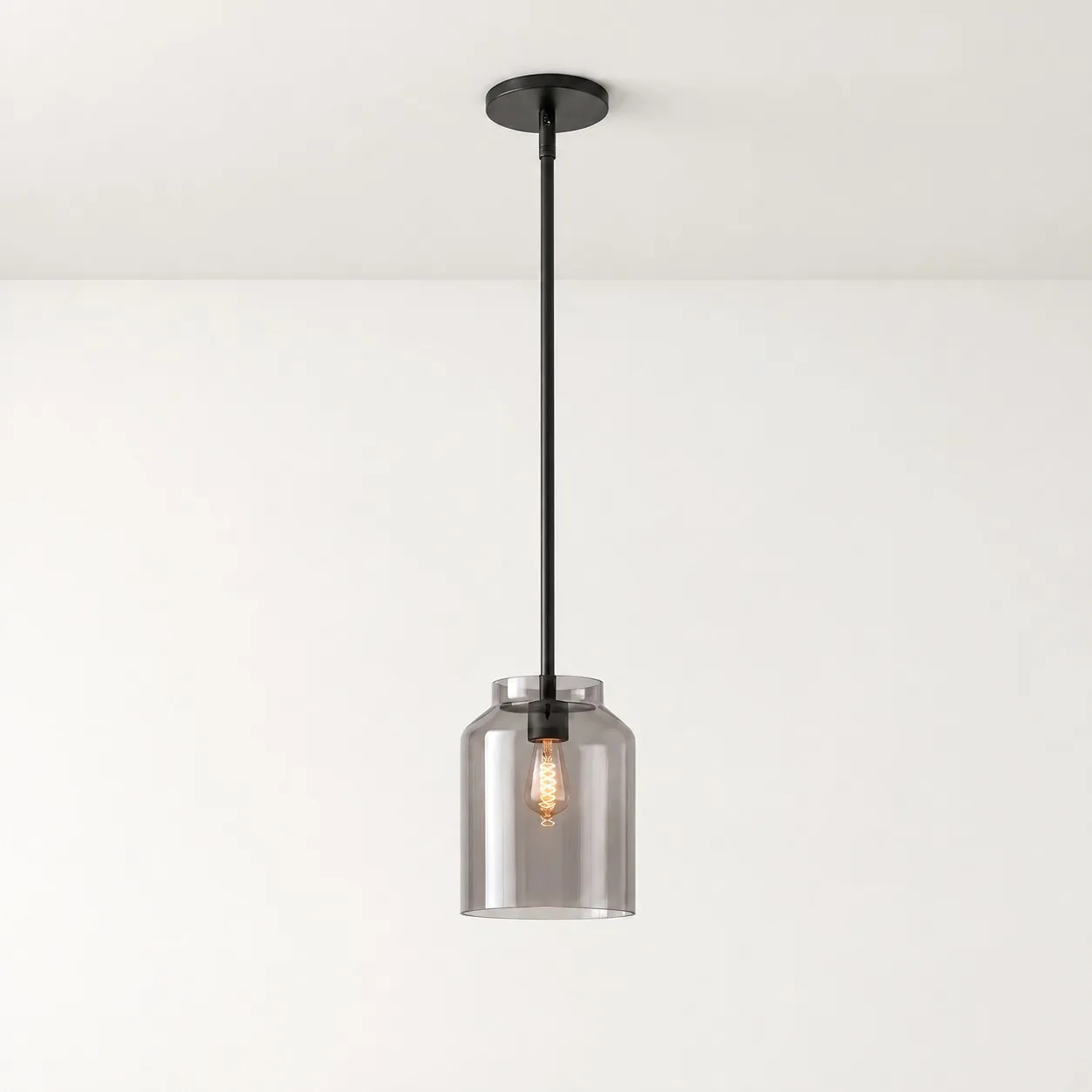
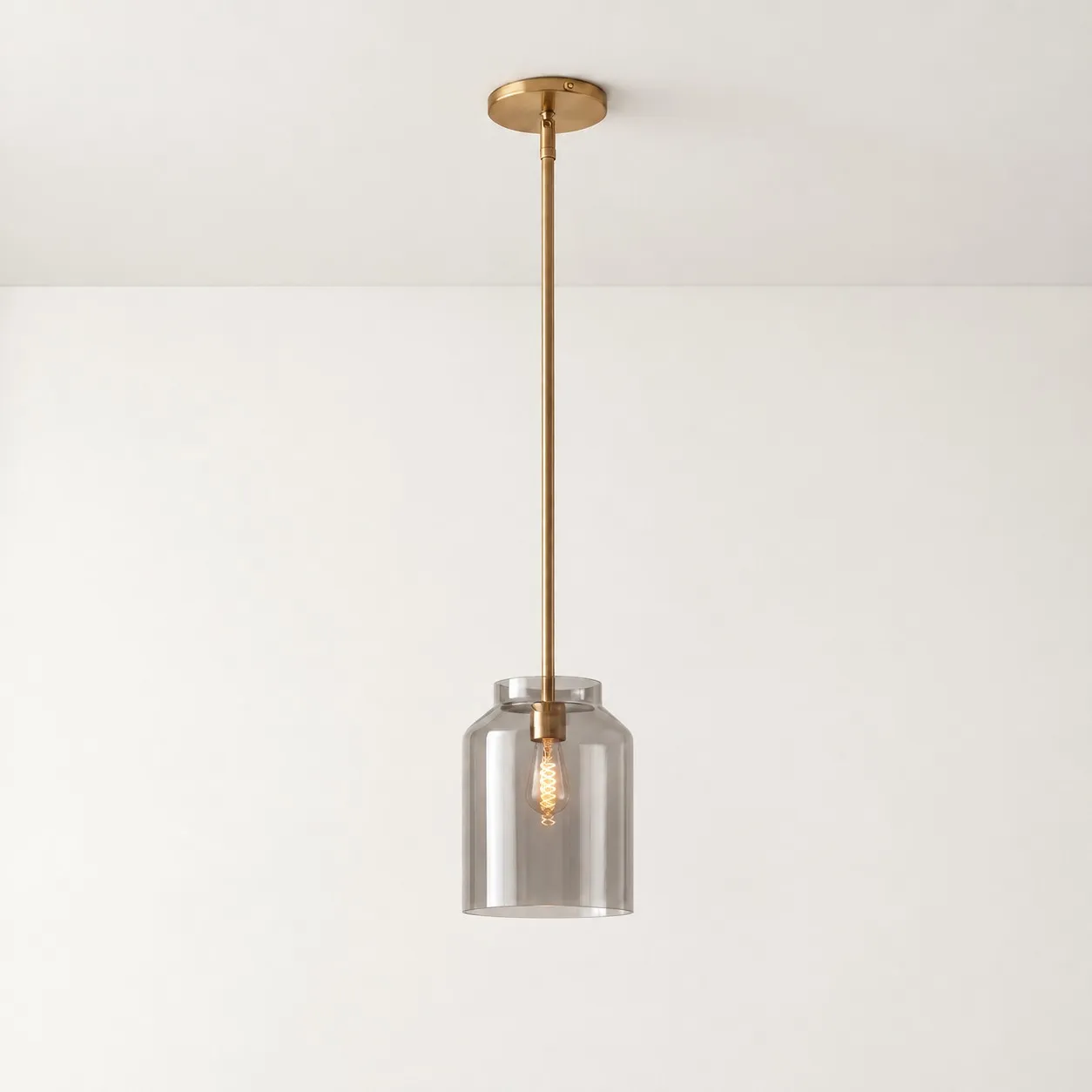
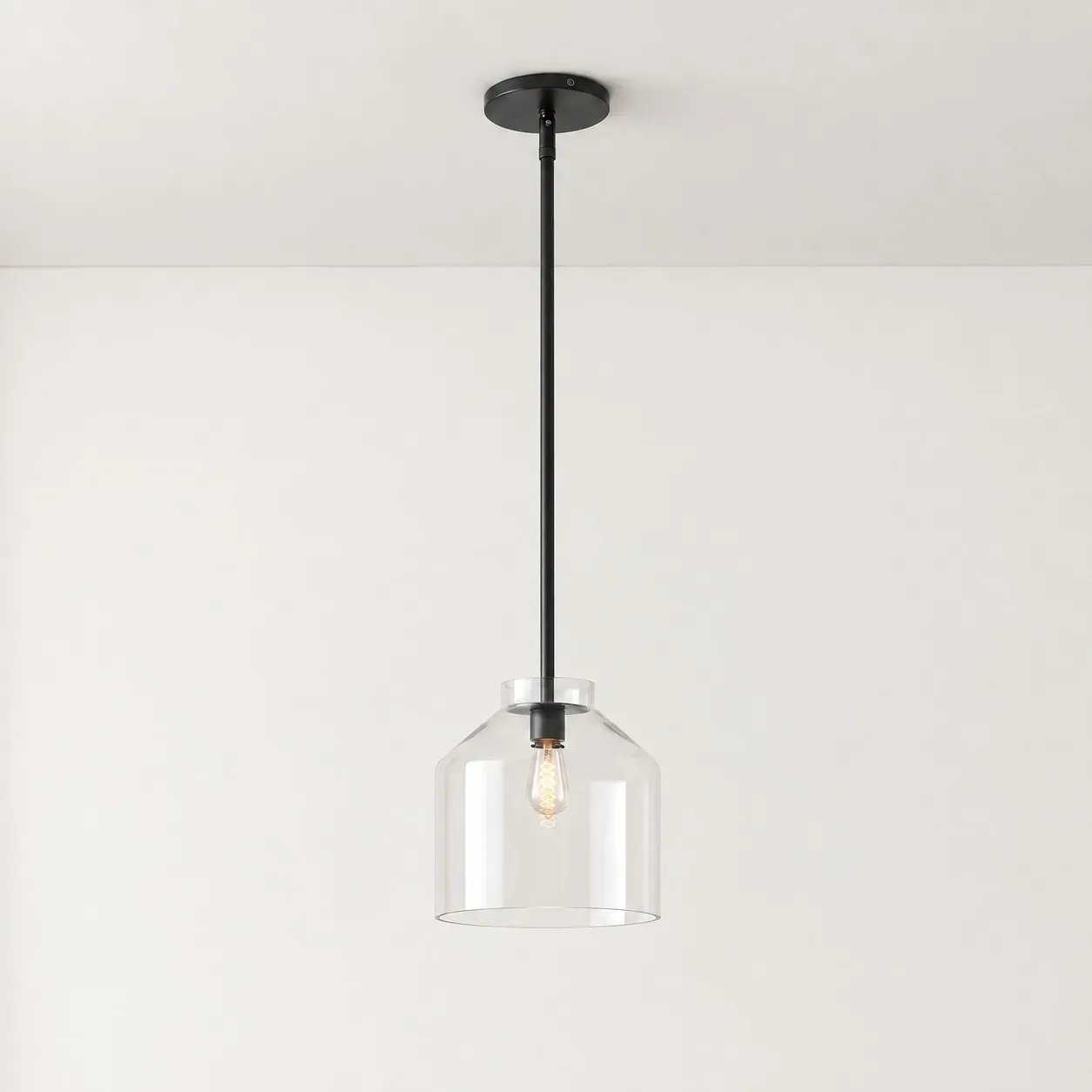
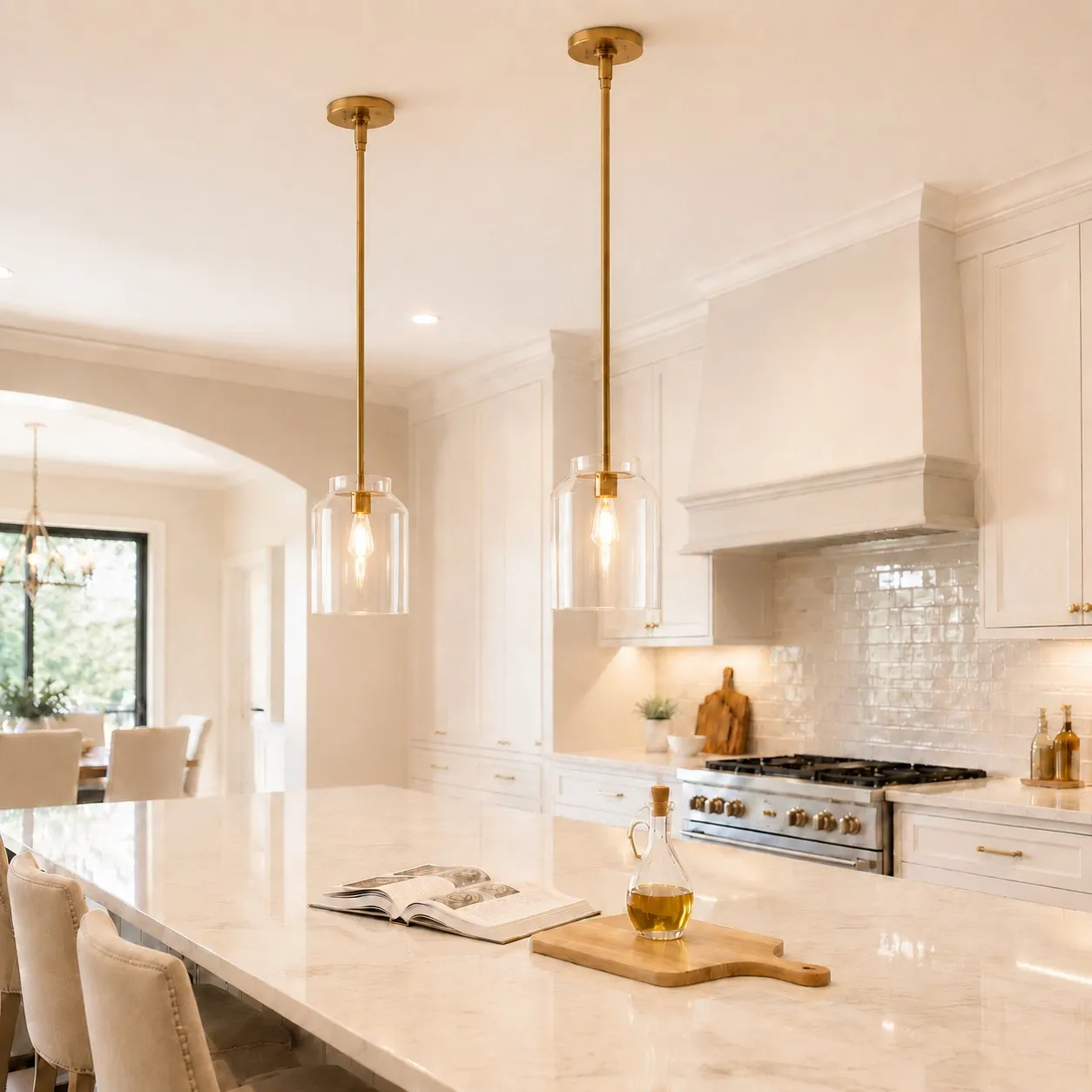
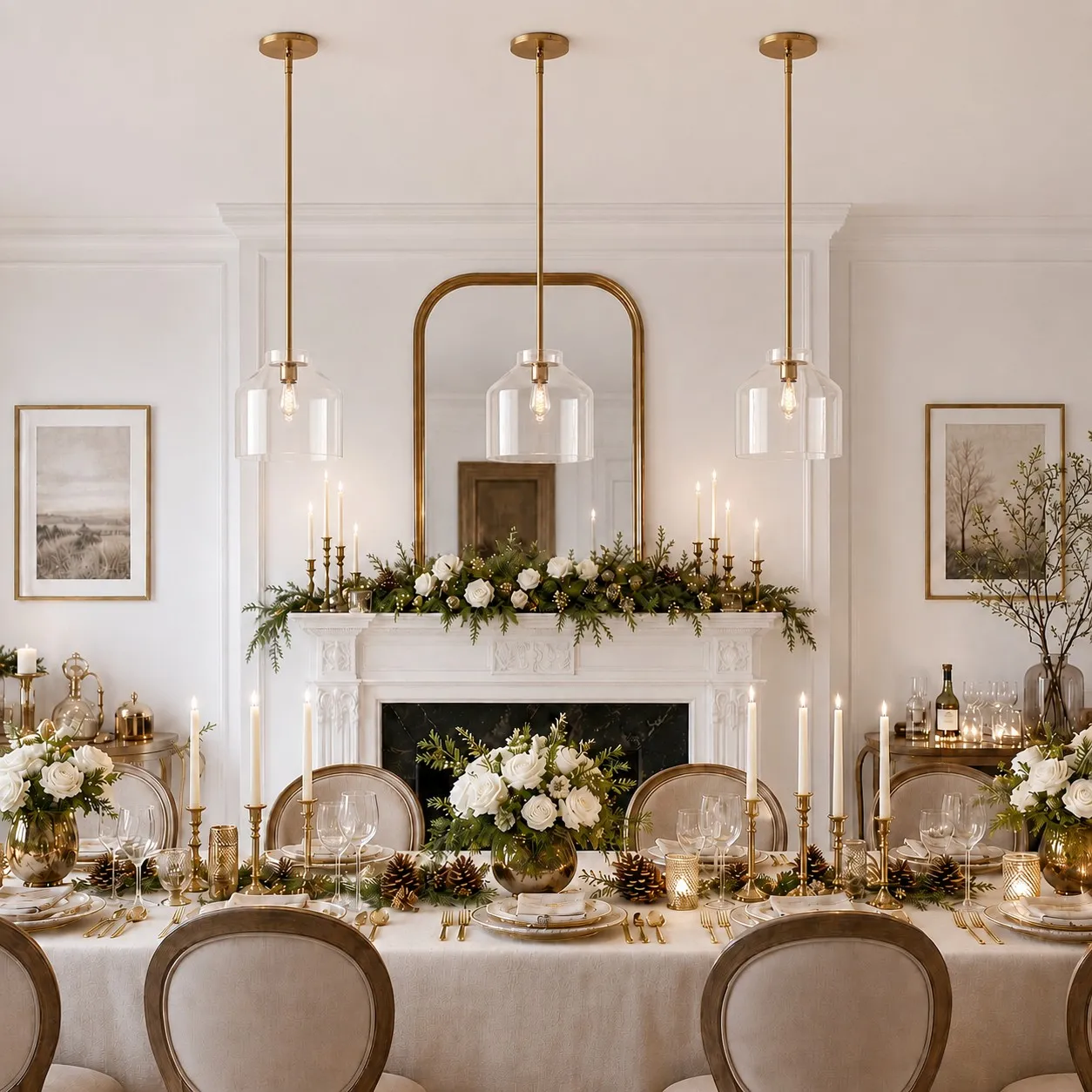
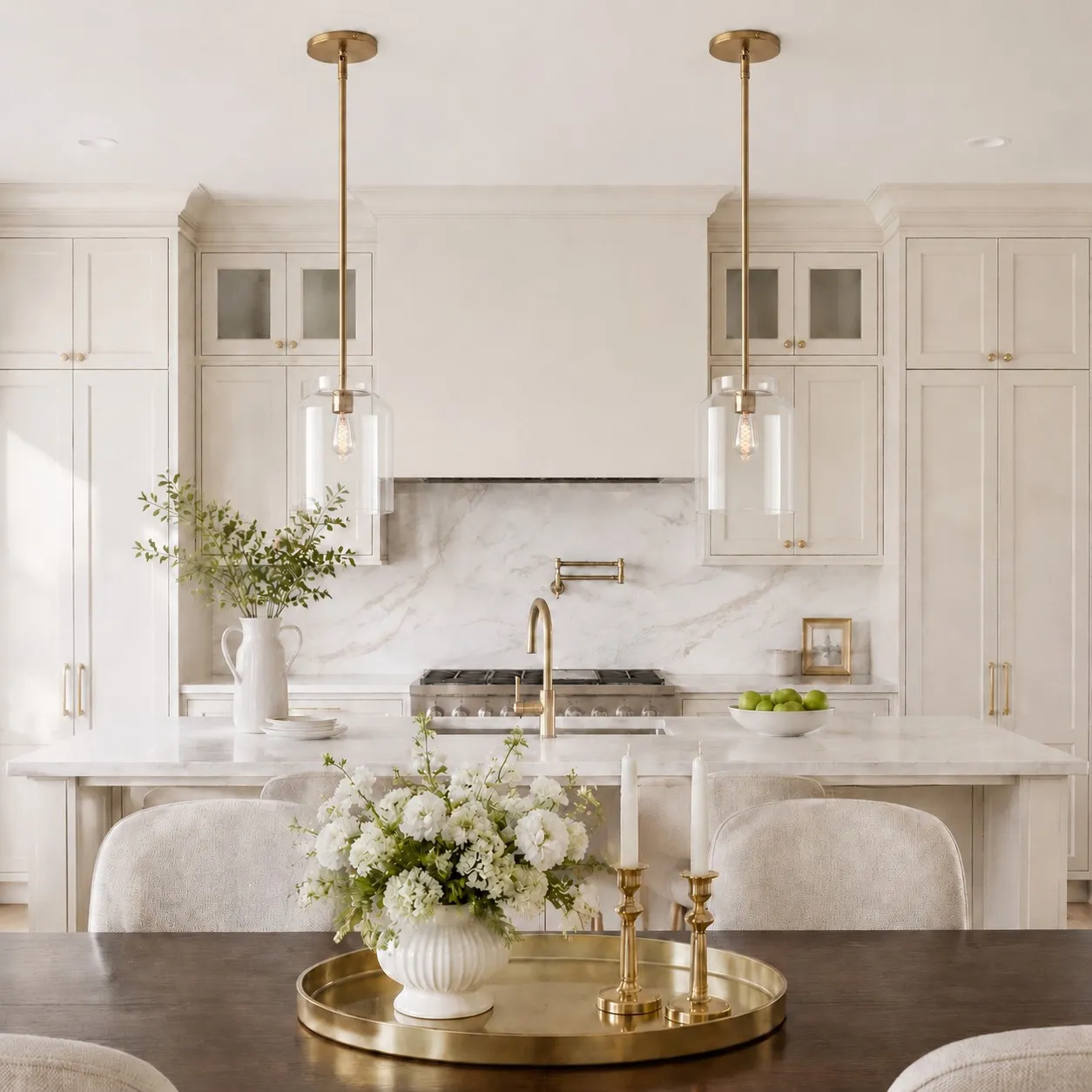
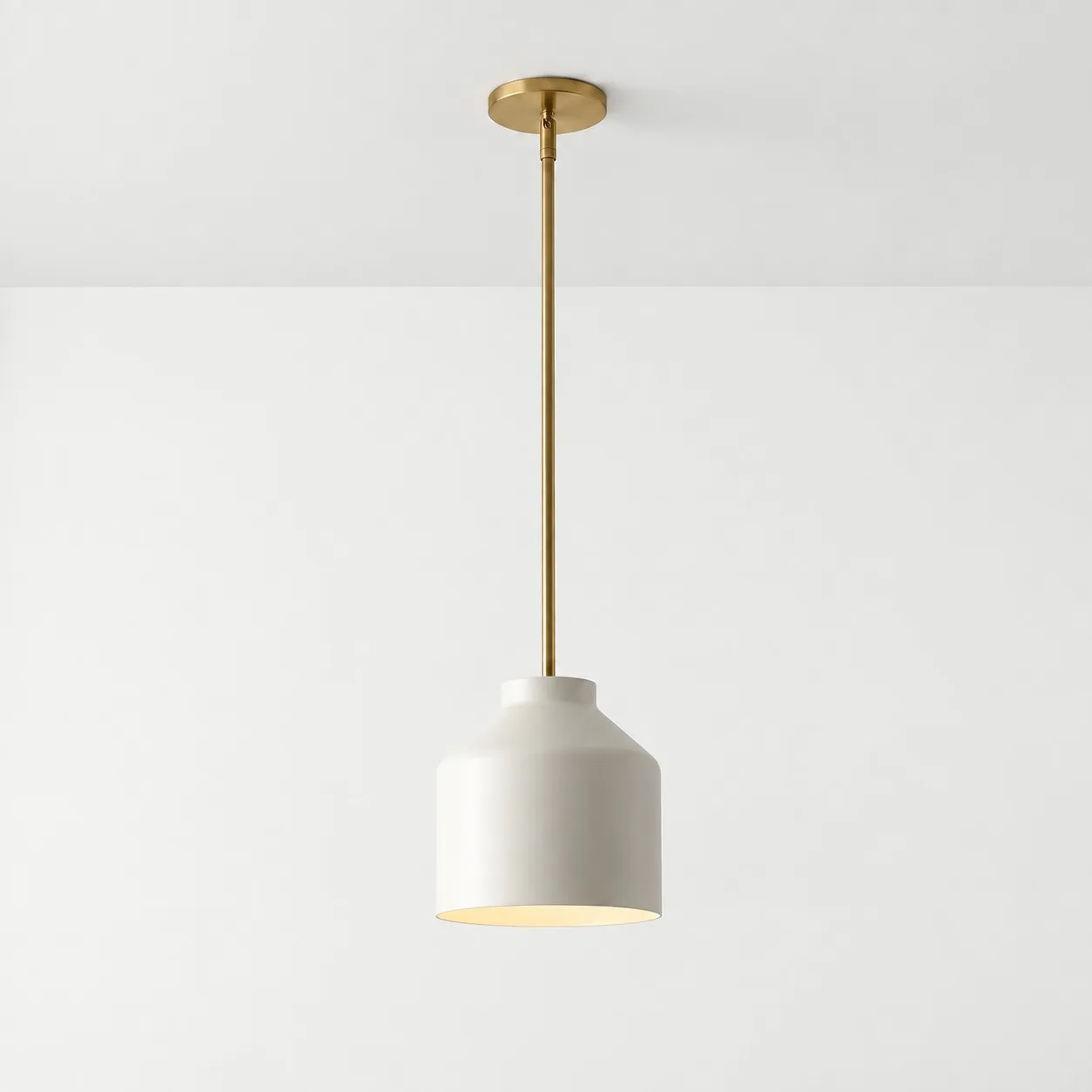
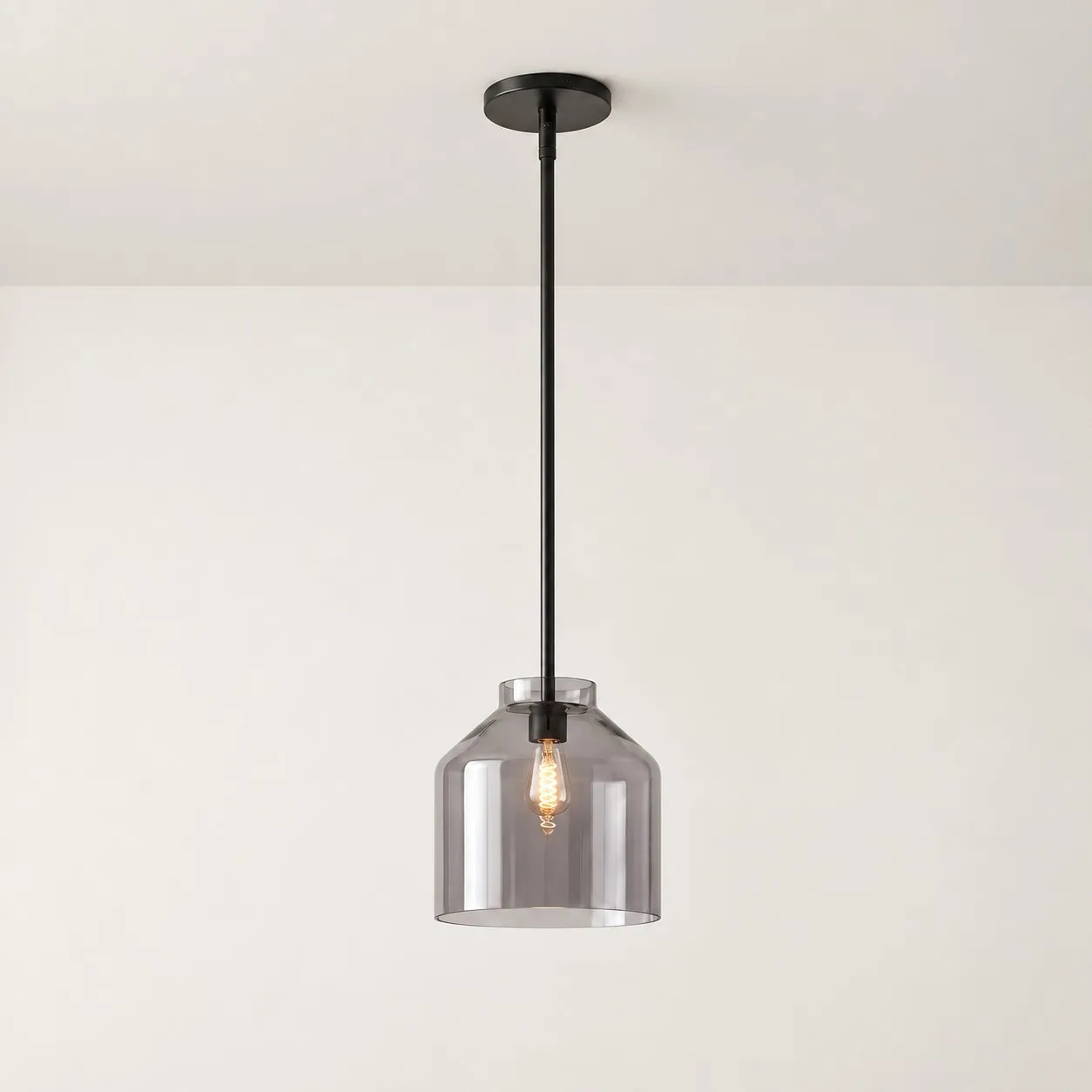
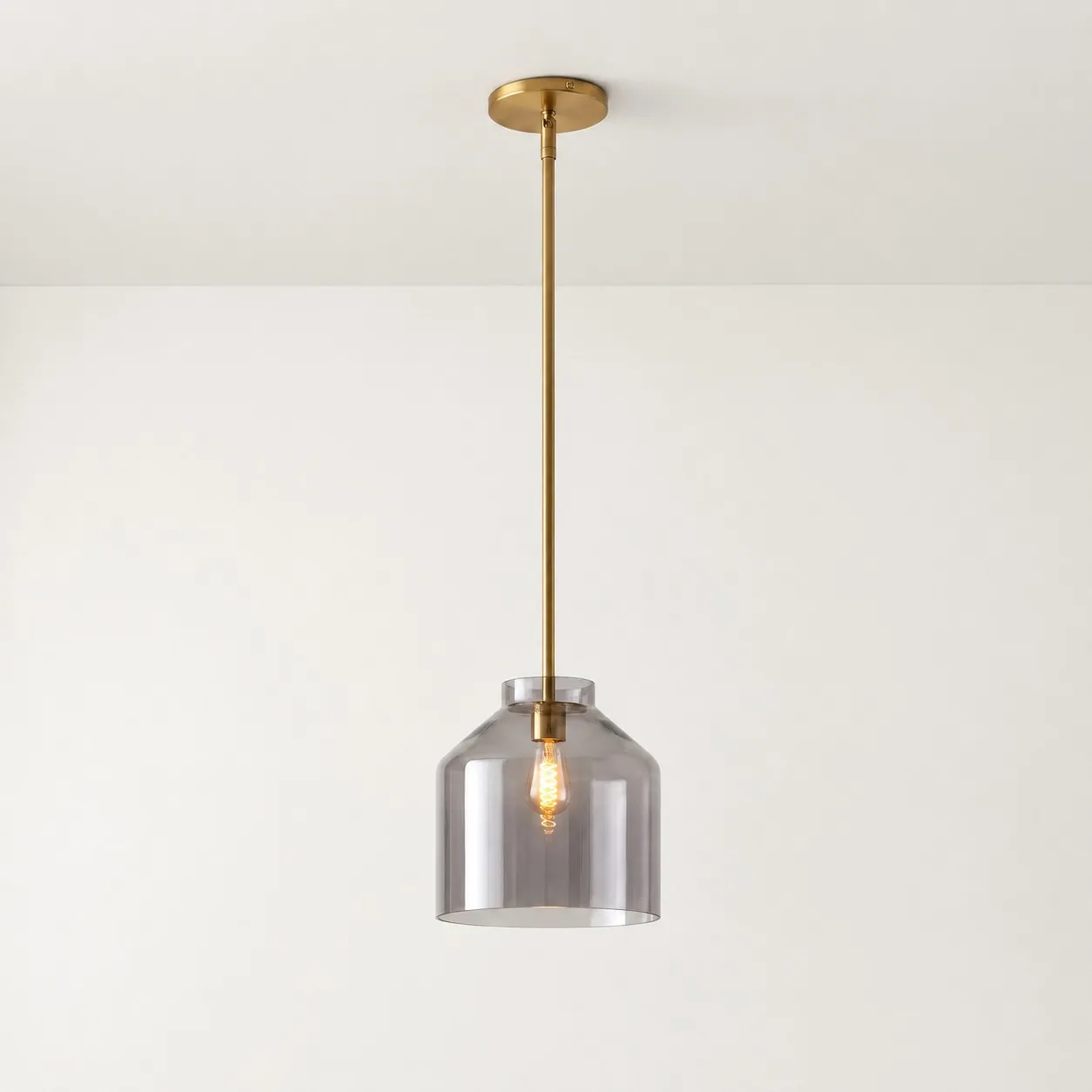
For example, a warm ivory pendant against pale cabinetry may look calm even though its outline remains visible. A clear-glass shade can feel visually light when off, but the exposed lamp may draw much more attention after dark. Evaluate both states.
What makes a pendant a focal point?
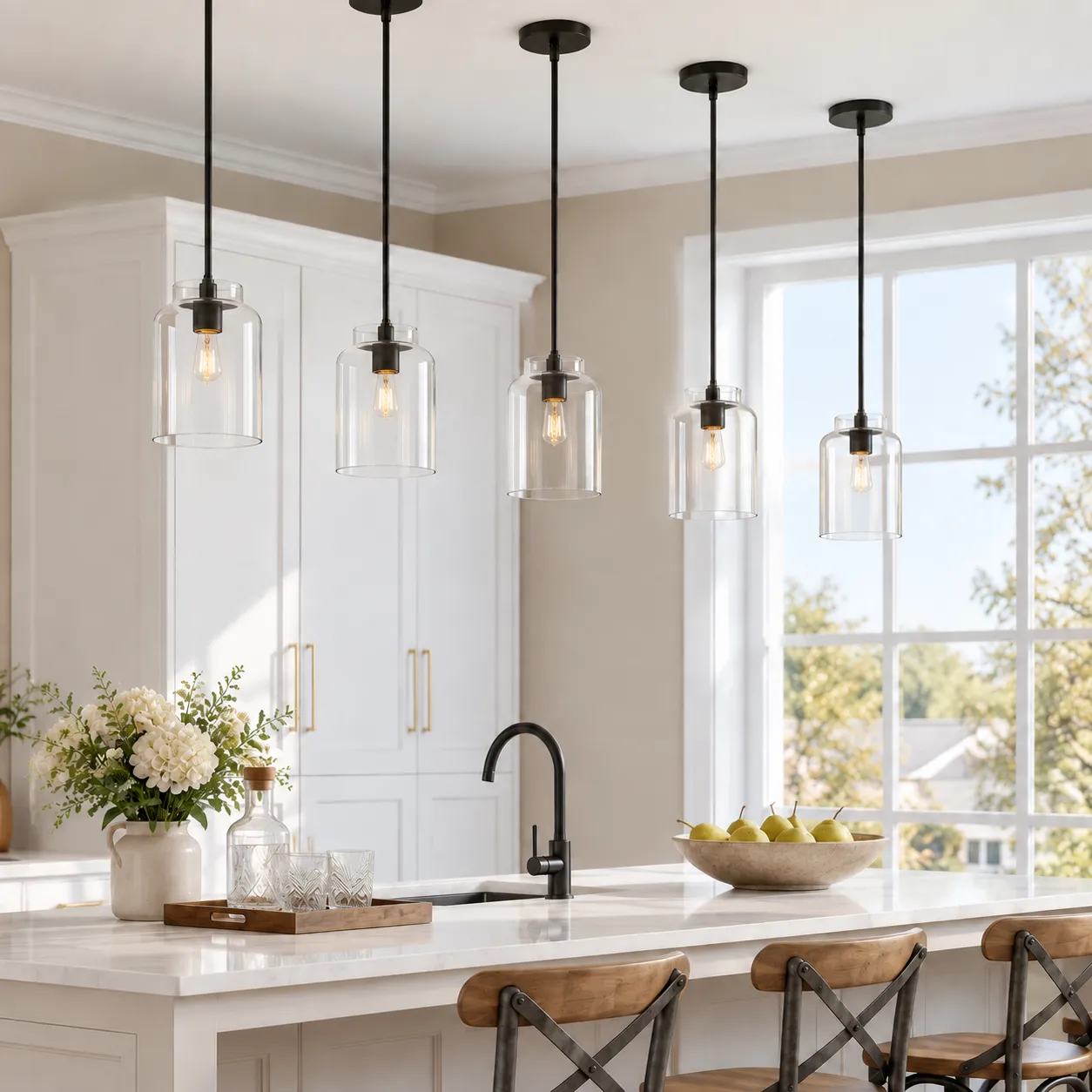
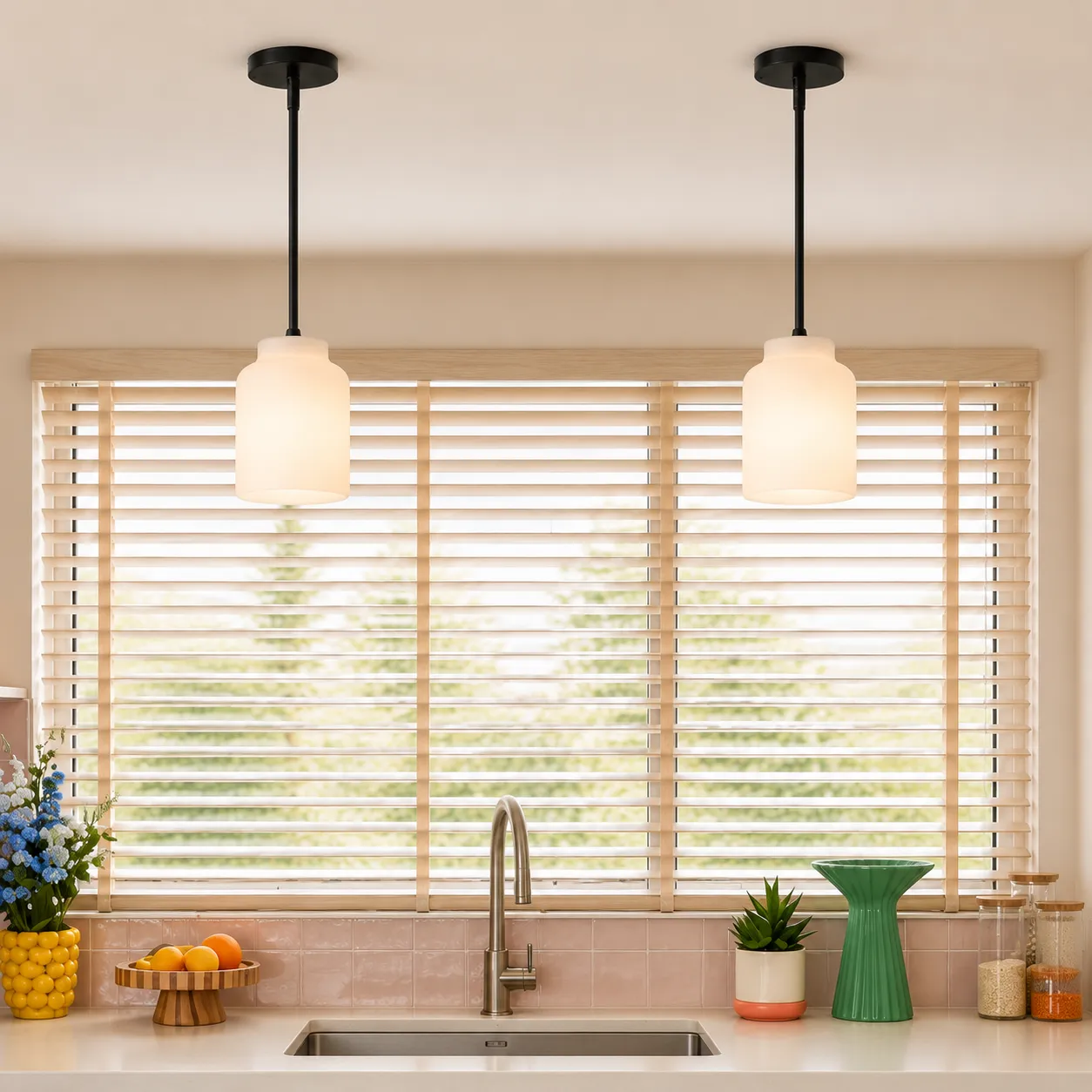
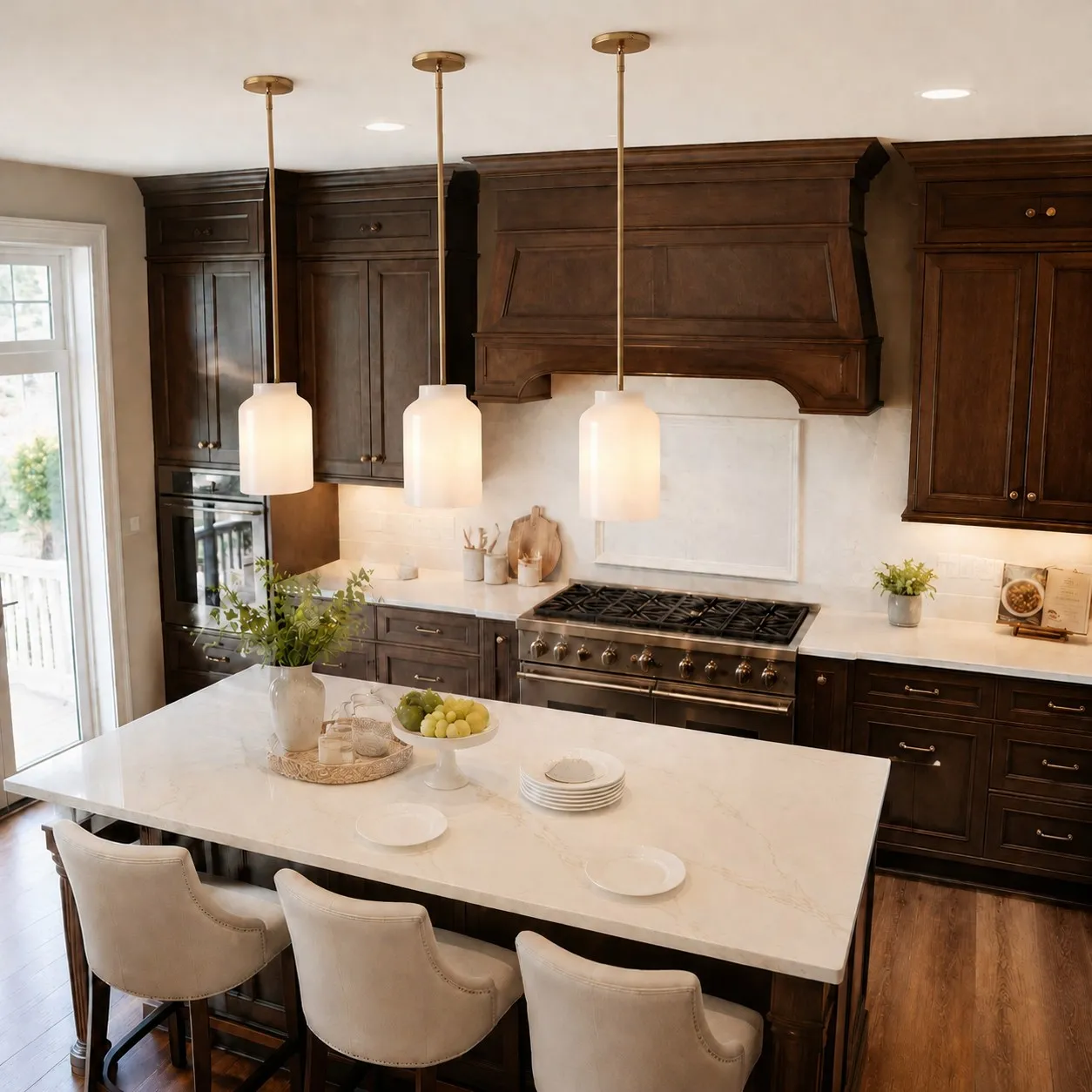
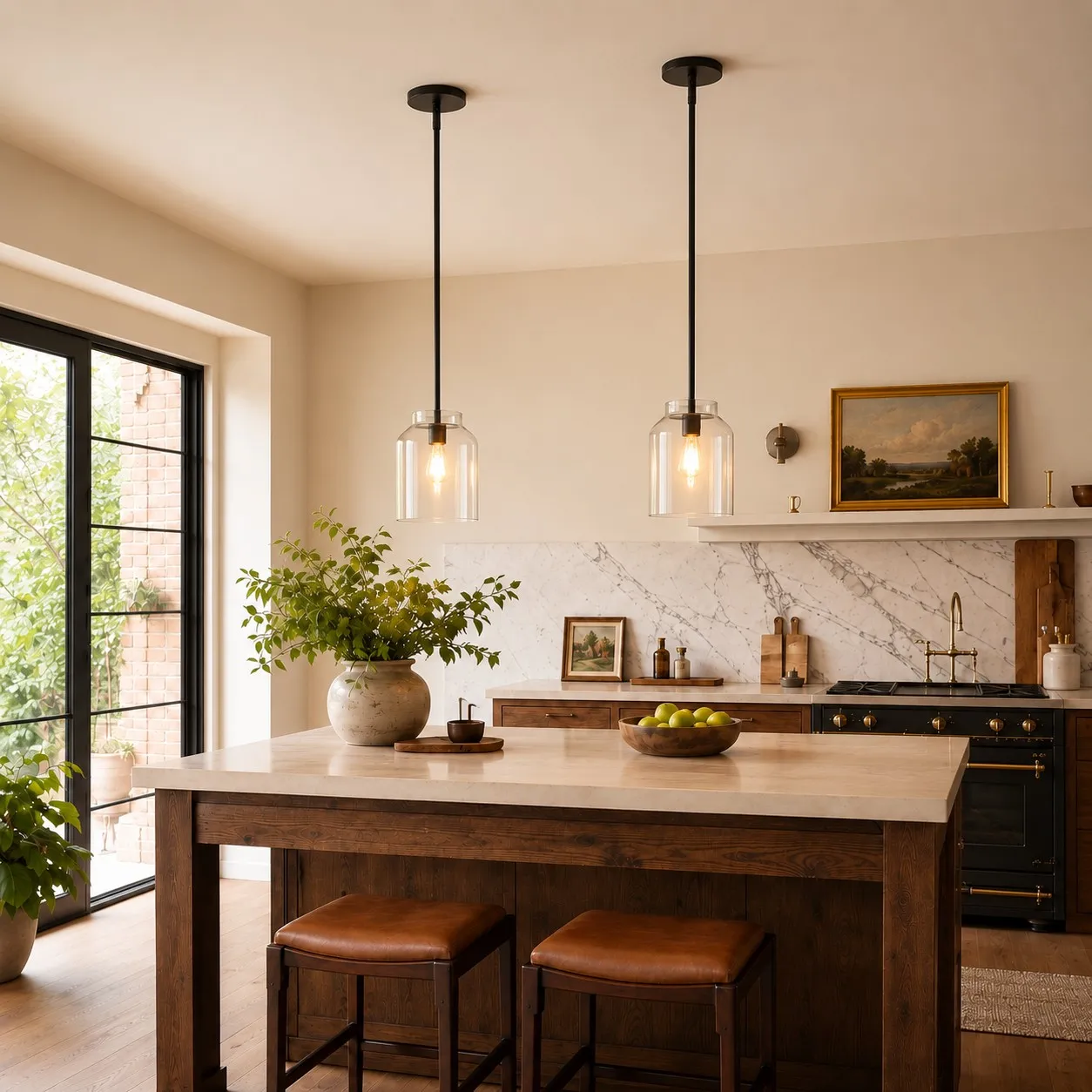
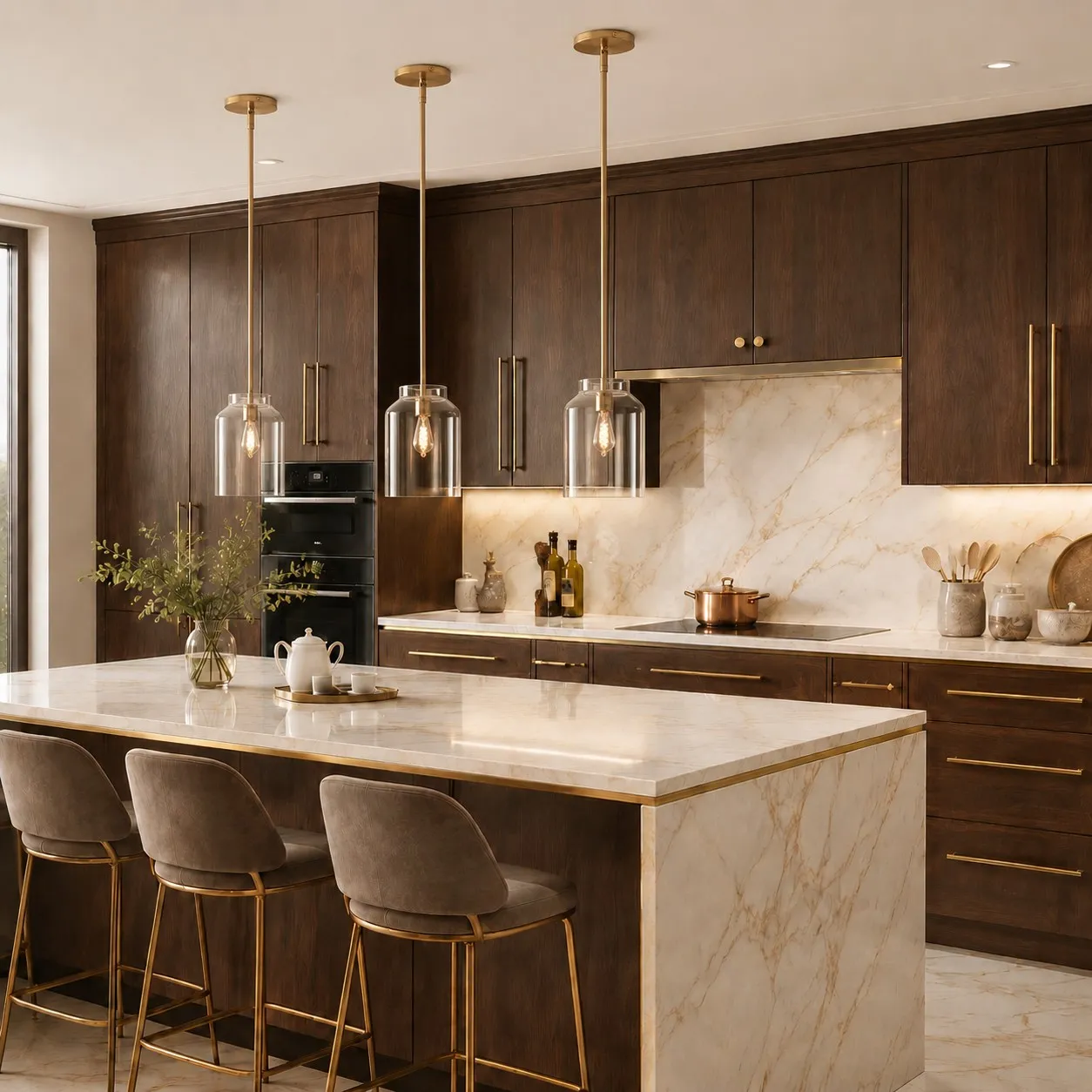
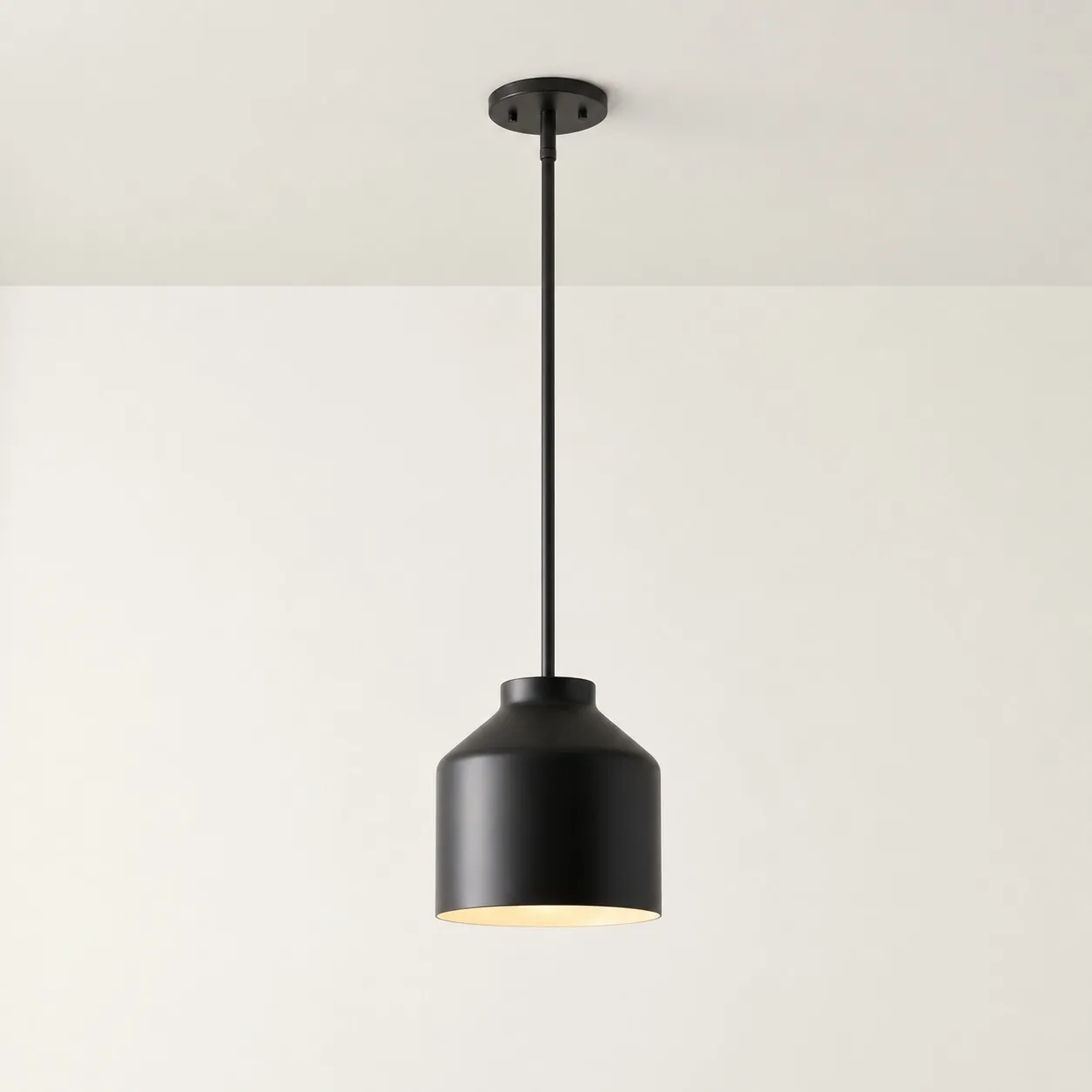
Color is one route, but shape, scale, contrast, and repetition matter just as much. A single generously scaled pendant can center an island. A row of smaller lights can give a long countertop rhythm. The right arrangement depends on the island’s proportions and where usable light is needed; fixture count alone does not settle the question.
A focal point should have a purpose. It can make the island legible from the living area, balance a long room, or introduce one controlled accent into a restrained kitchen. A fixture that merely competes with every other strong feature is working harder than the room needs.
Try the three-view test
- From the entry: Does the pendant help you understand where the island sits, or does it hide the feature you most want to show?
- At the island: Does its size feel proportionate while you stand and work beneath it?
- From the dining or living area: Does it cooperate with the other light fixtures in the same view?
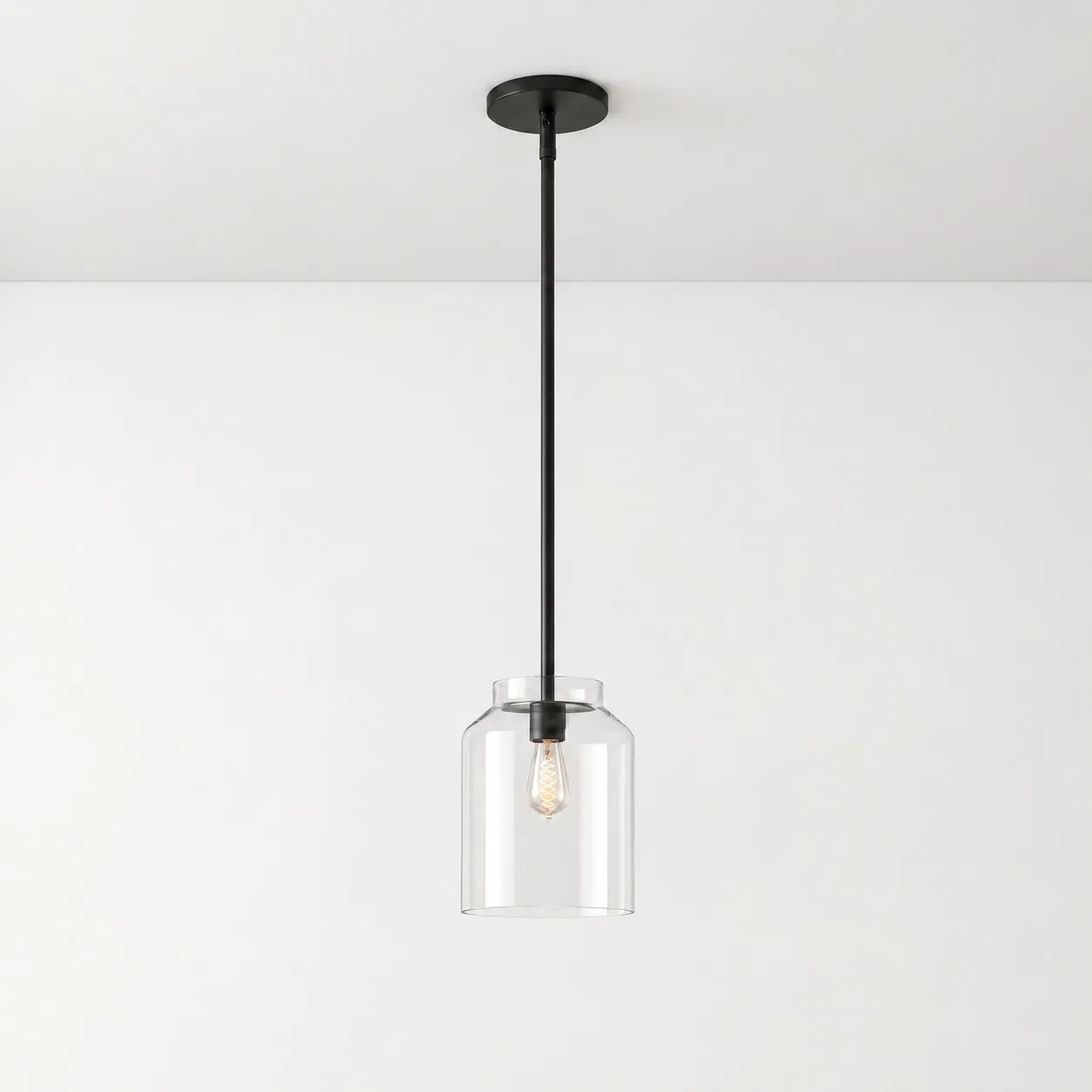
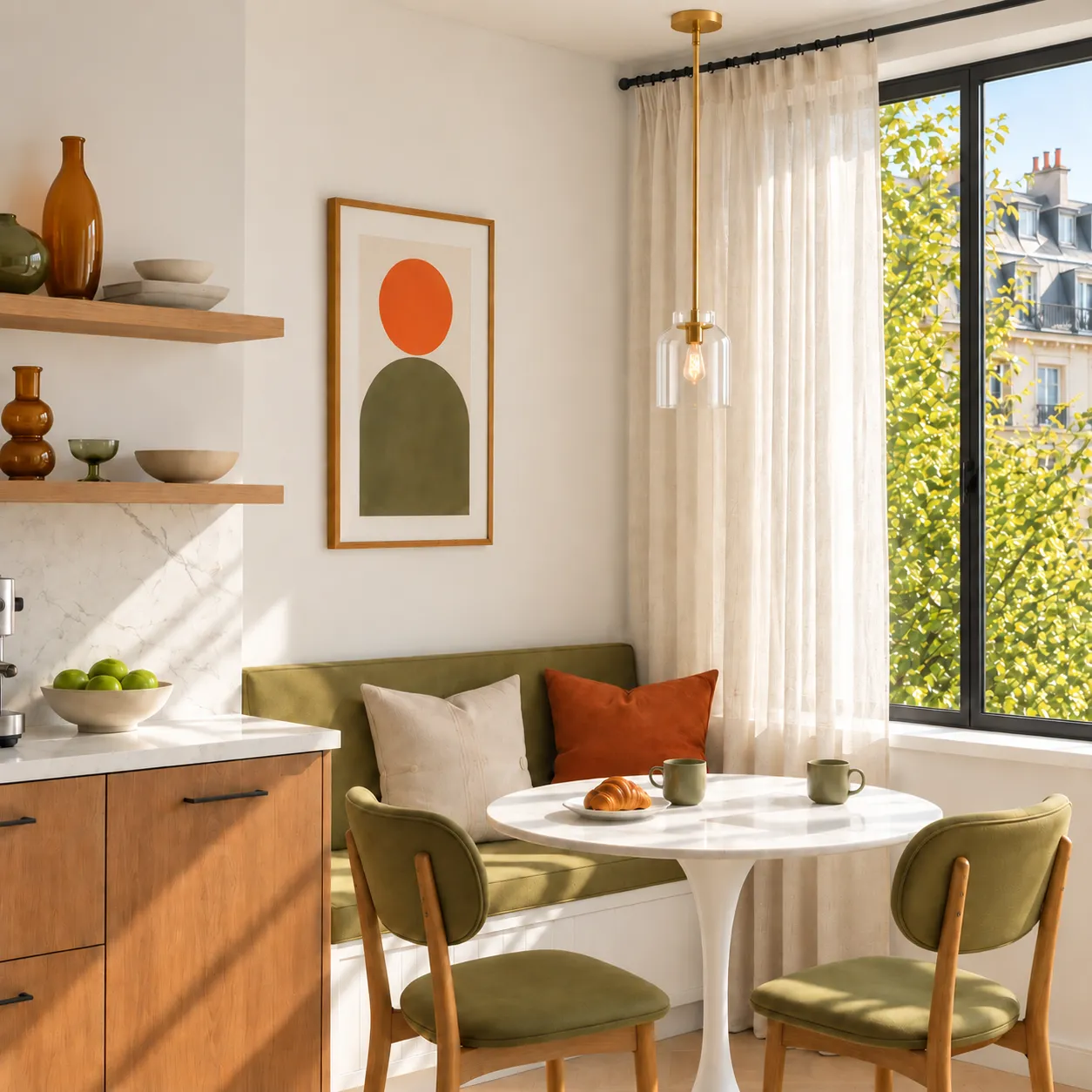
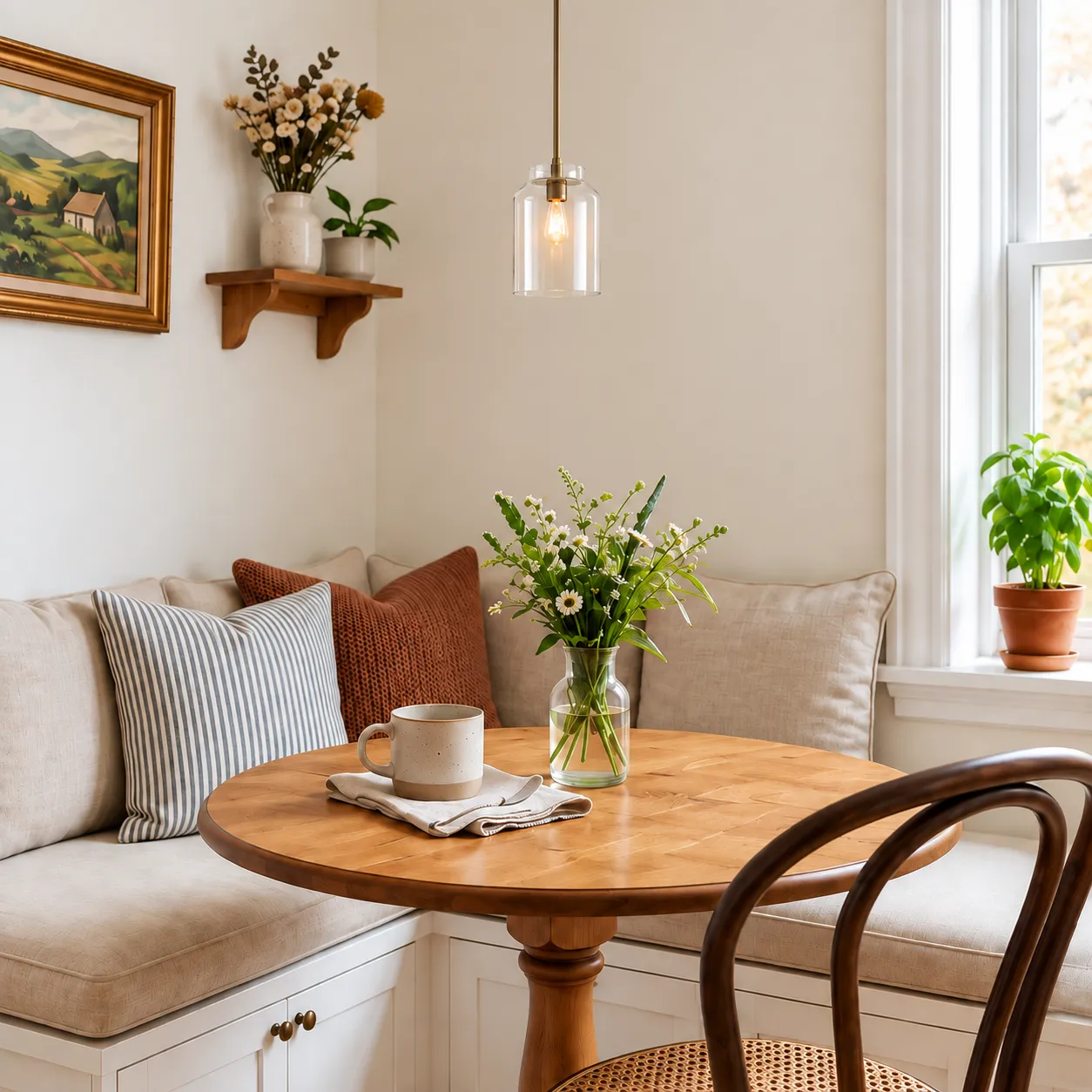
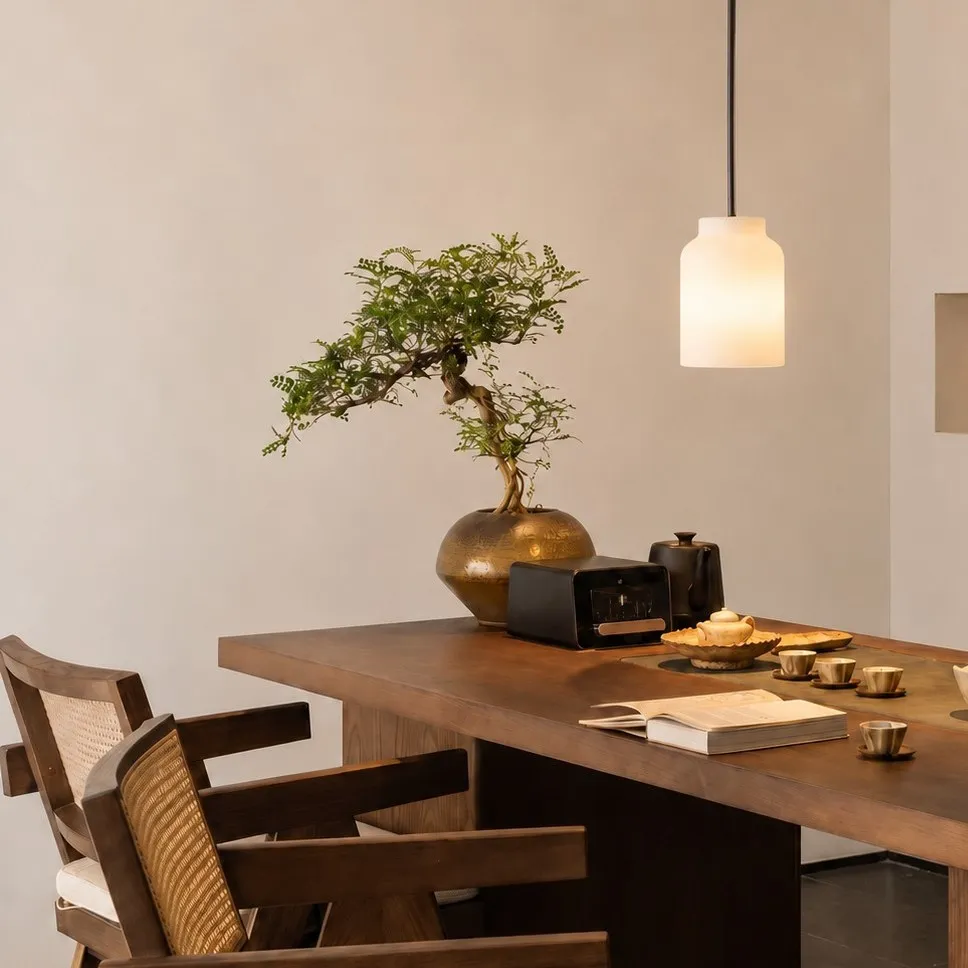
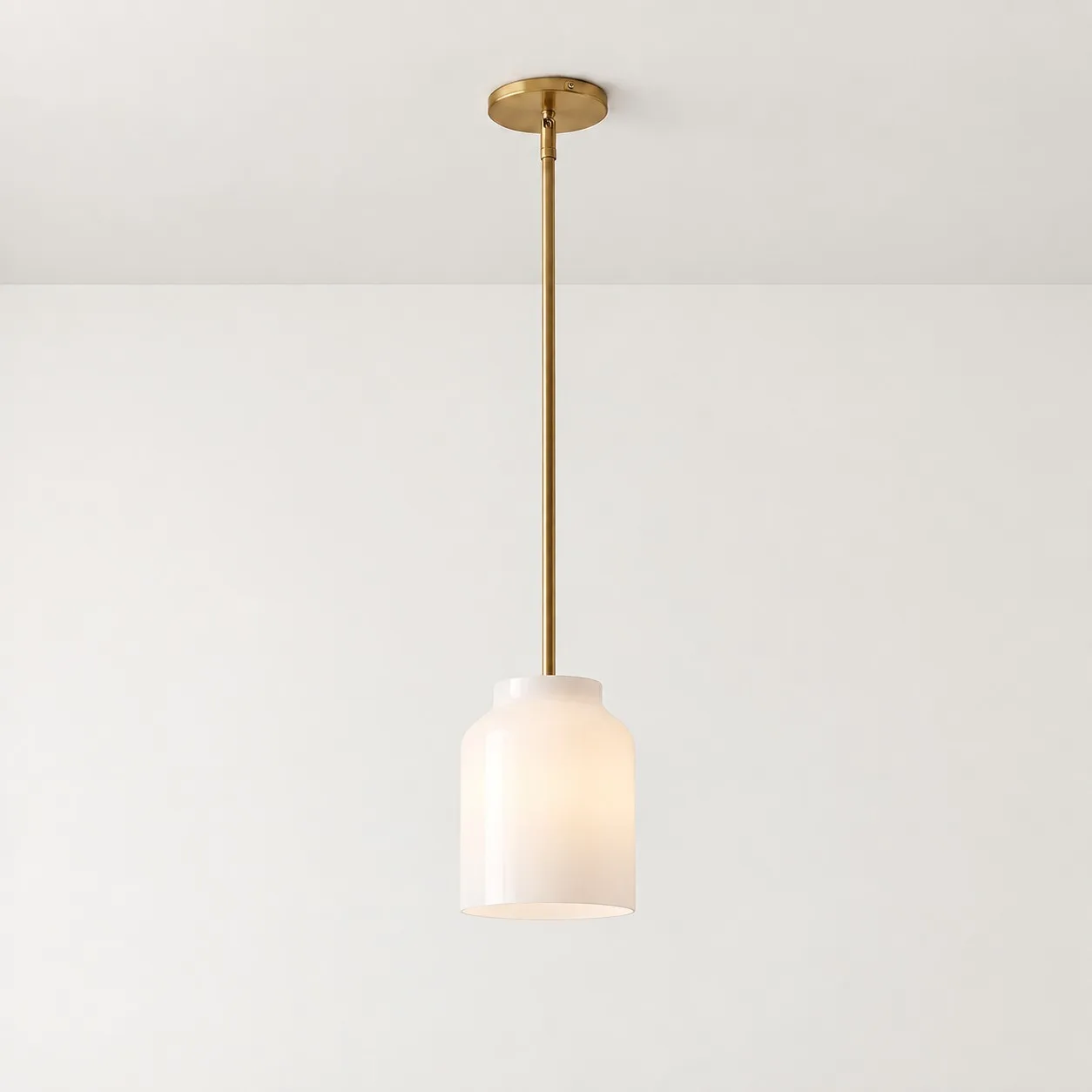
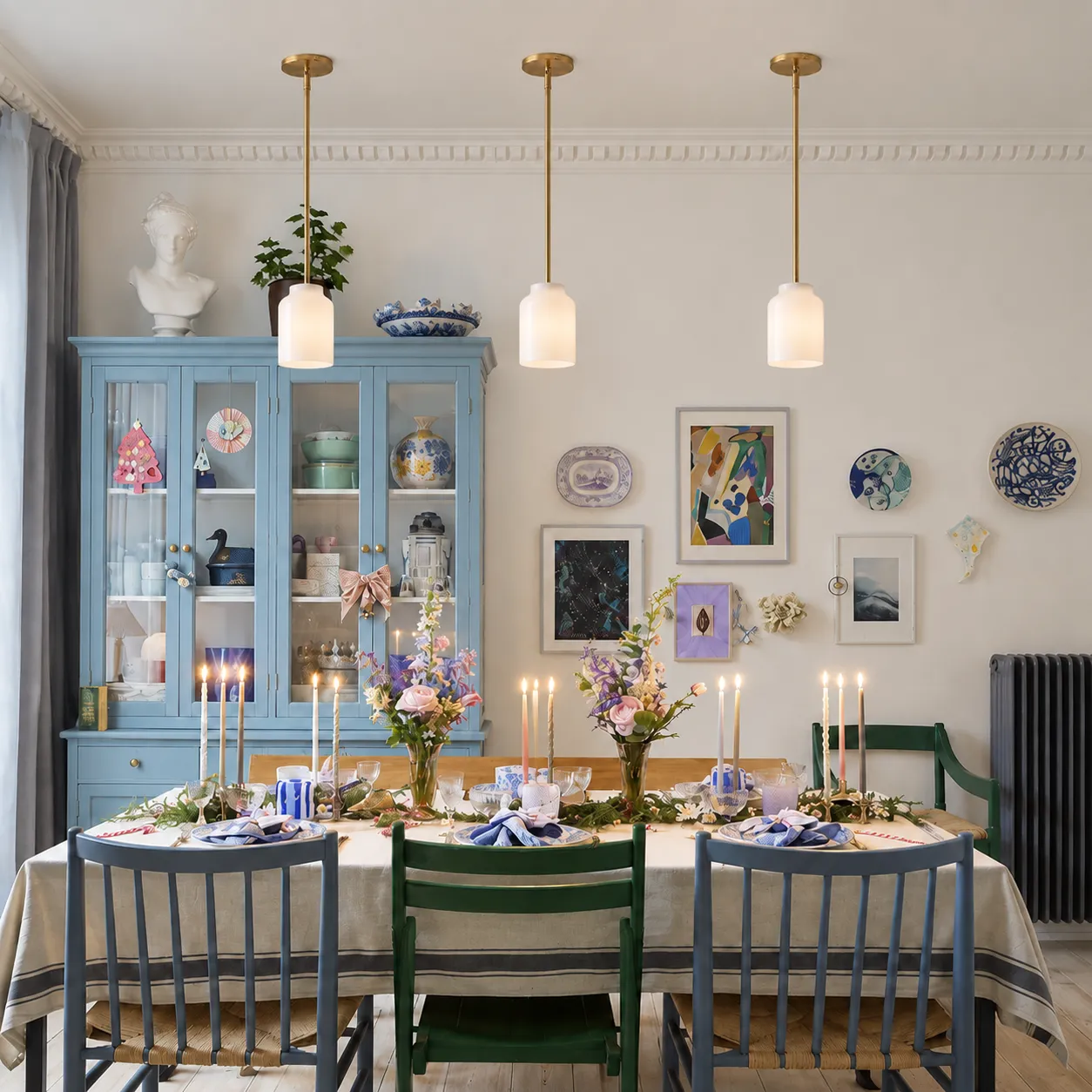
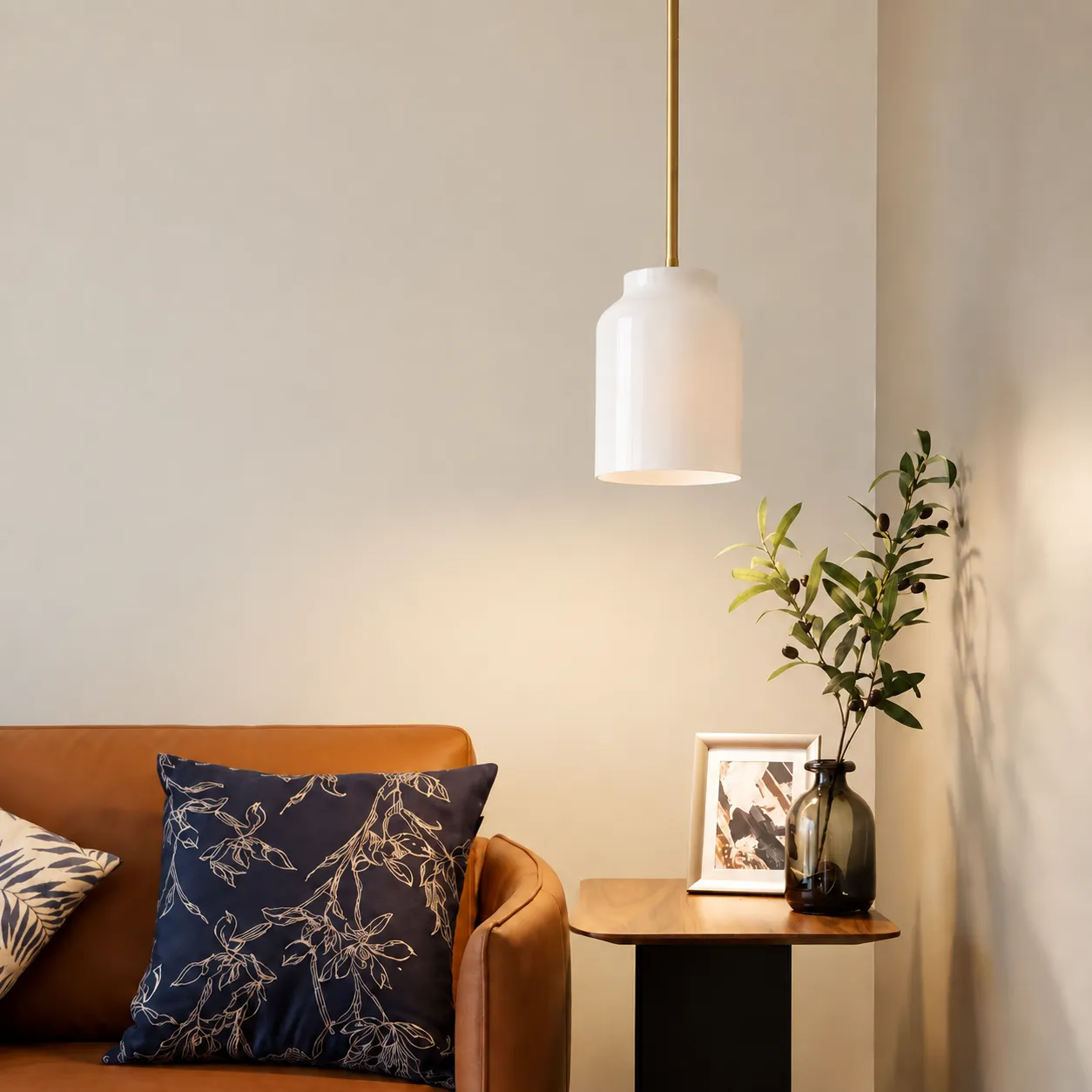
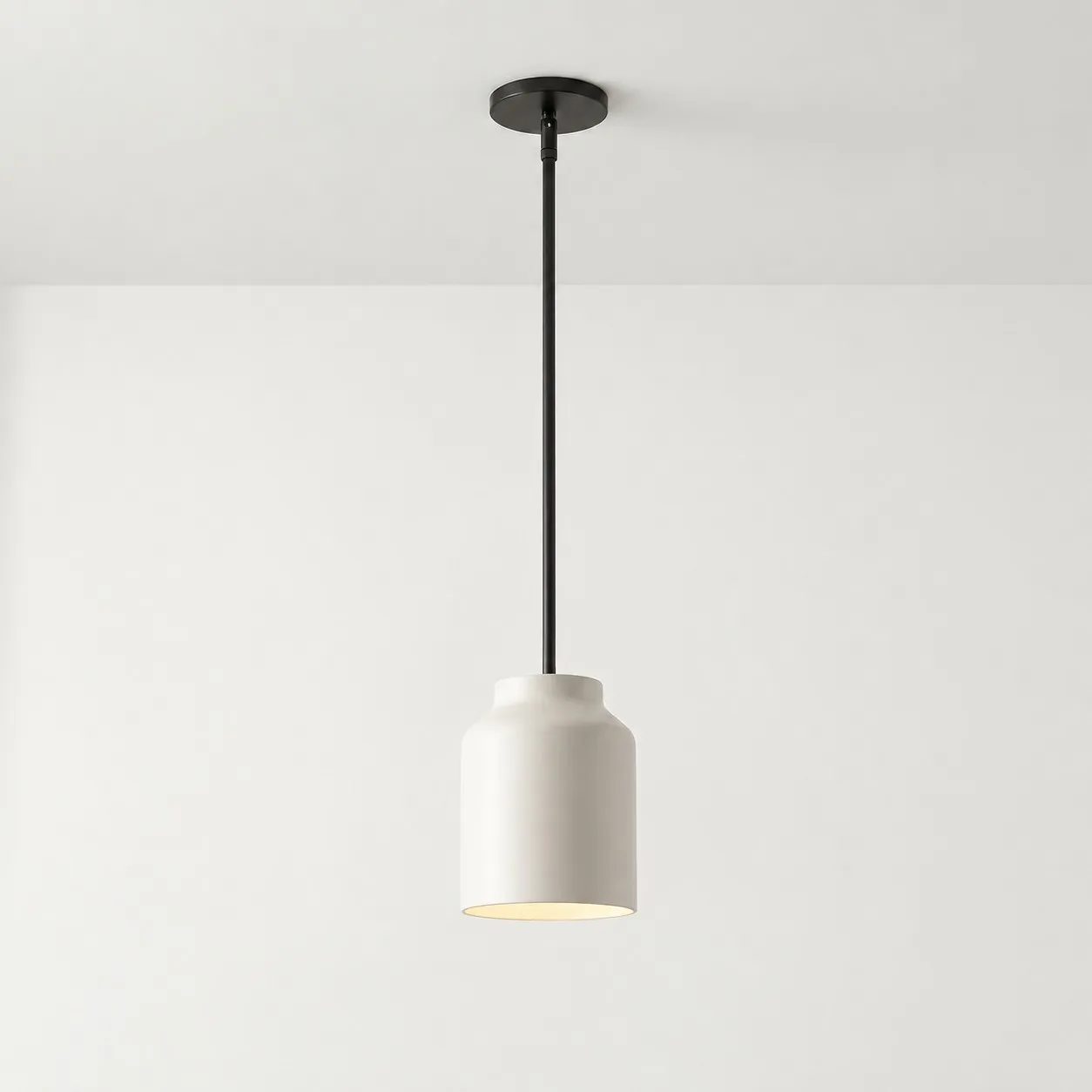
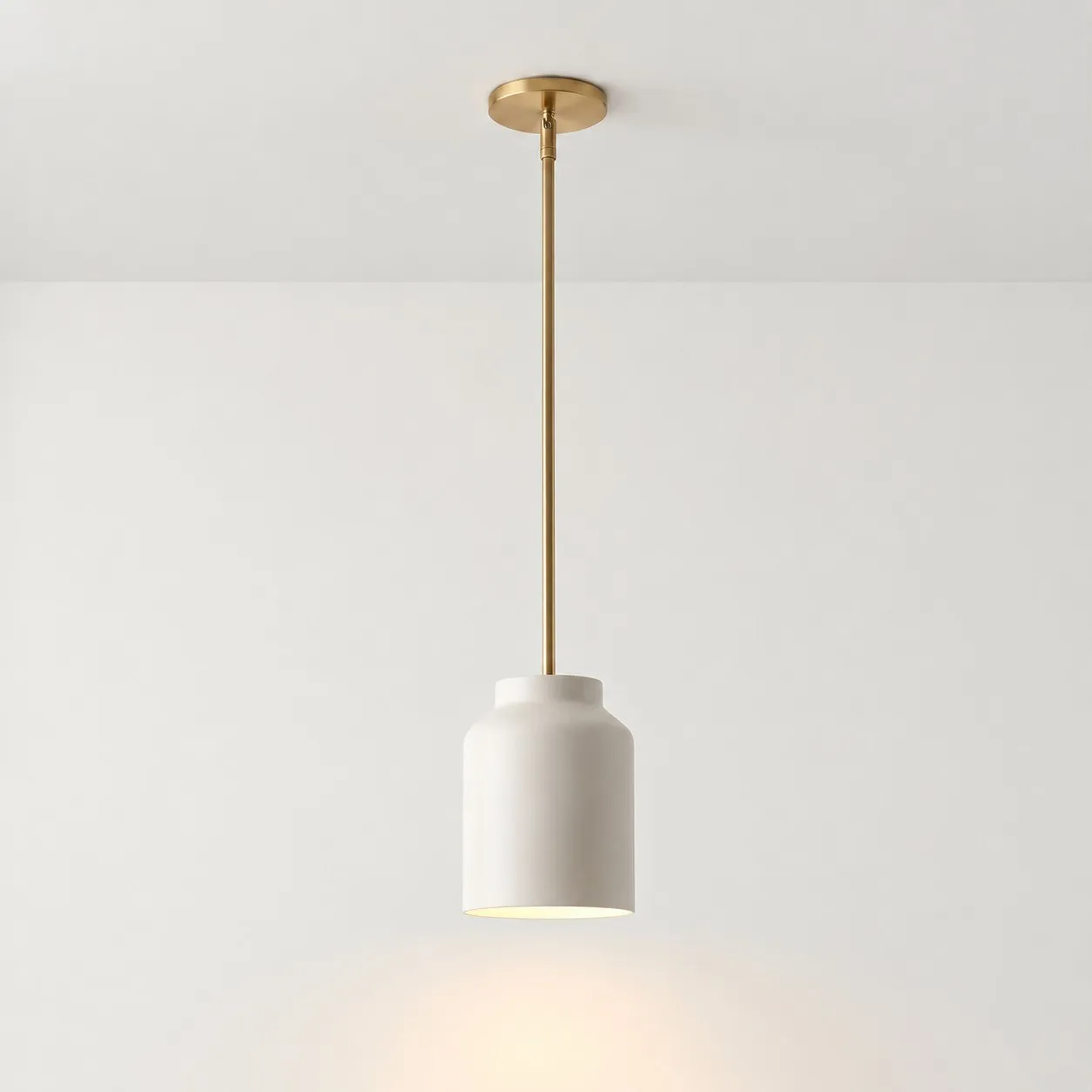
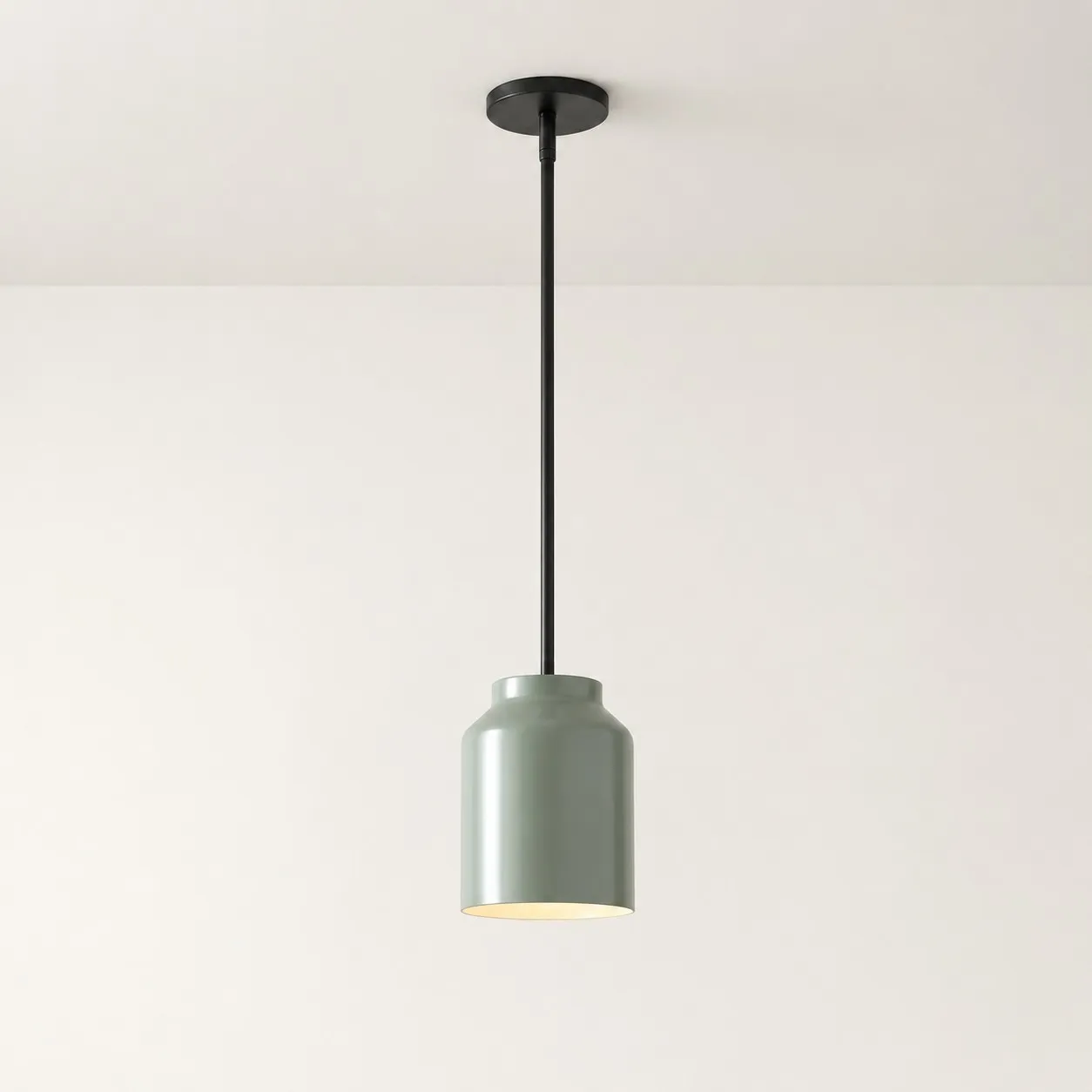
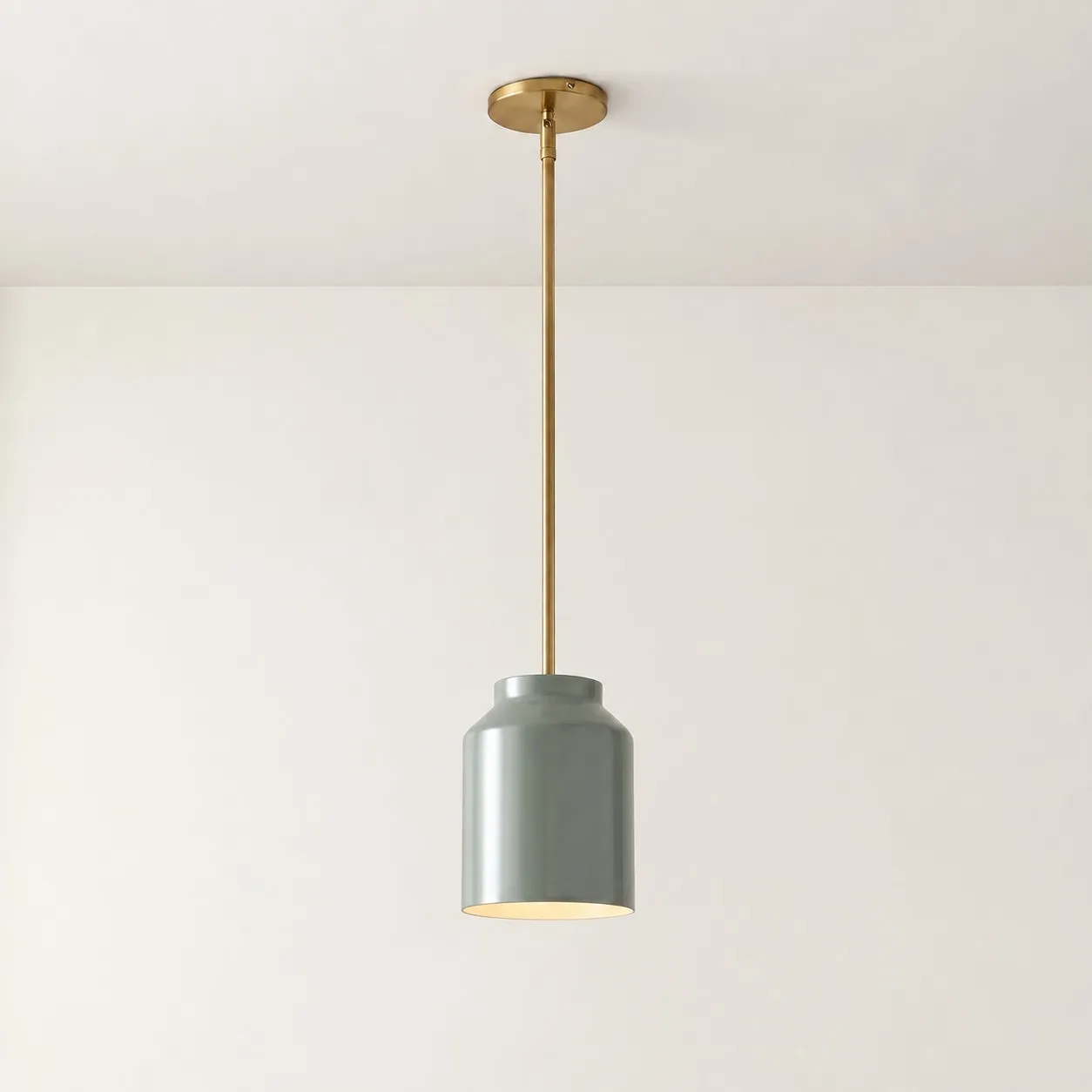
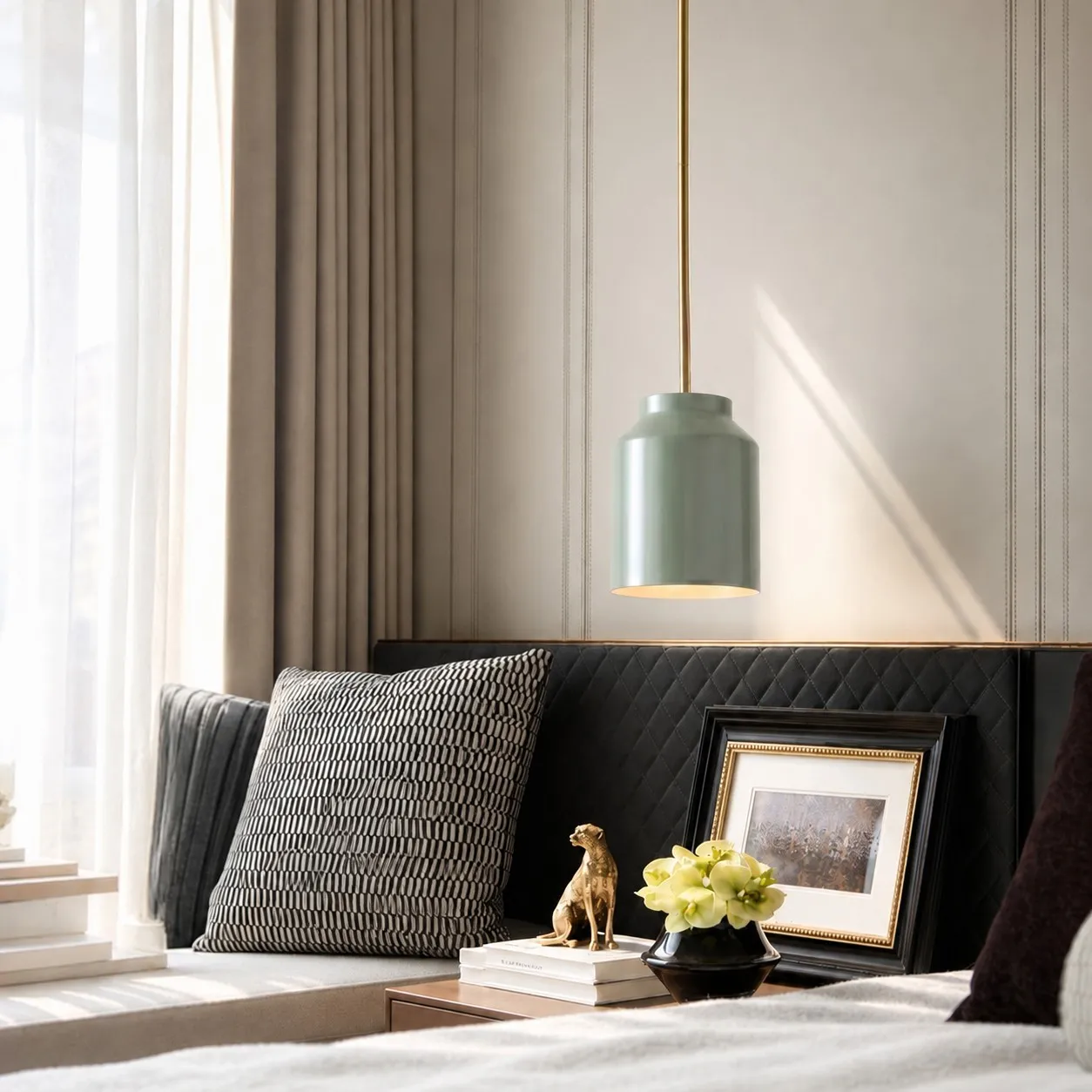
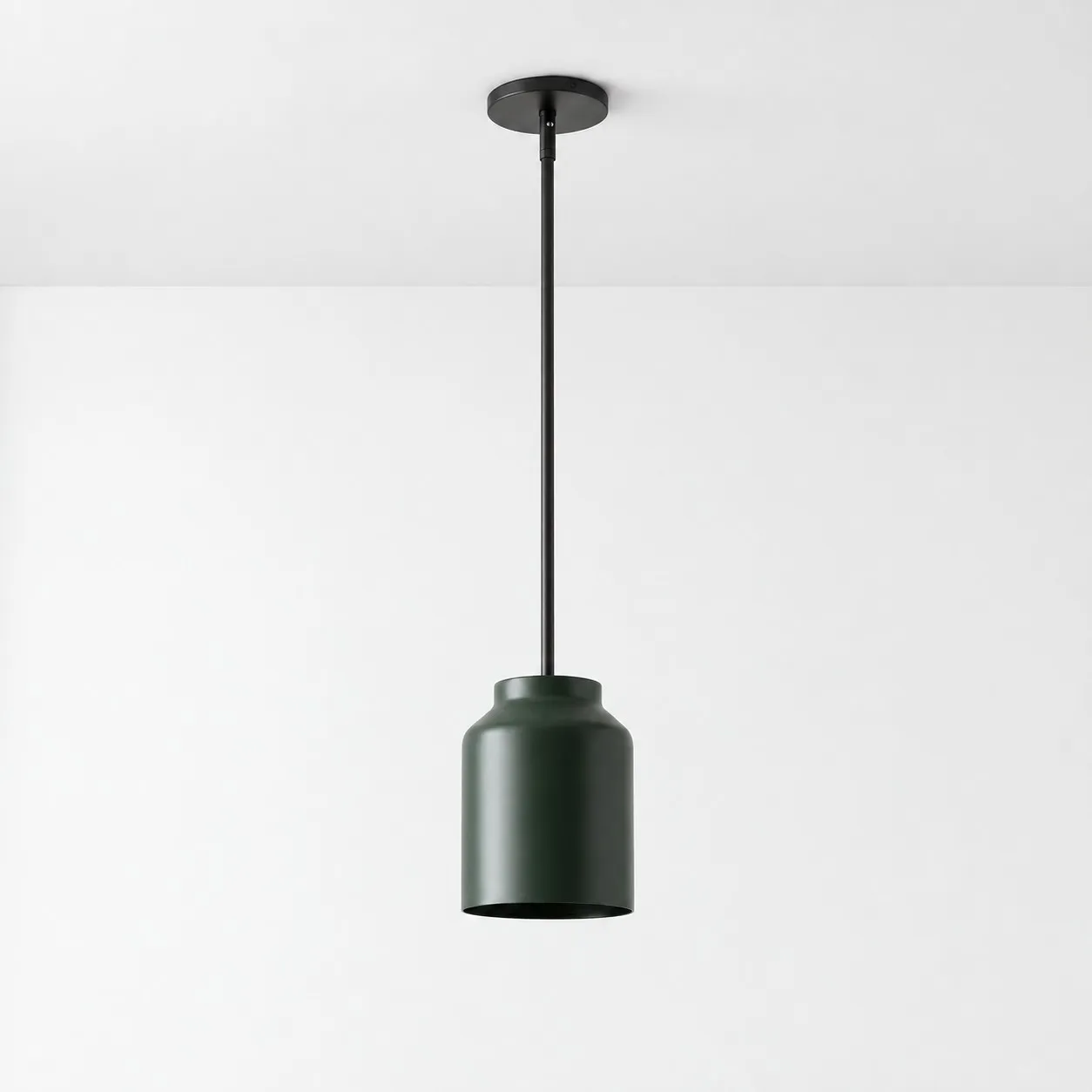
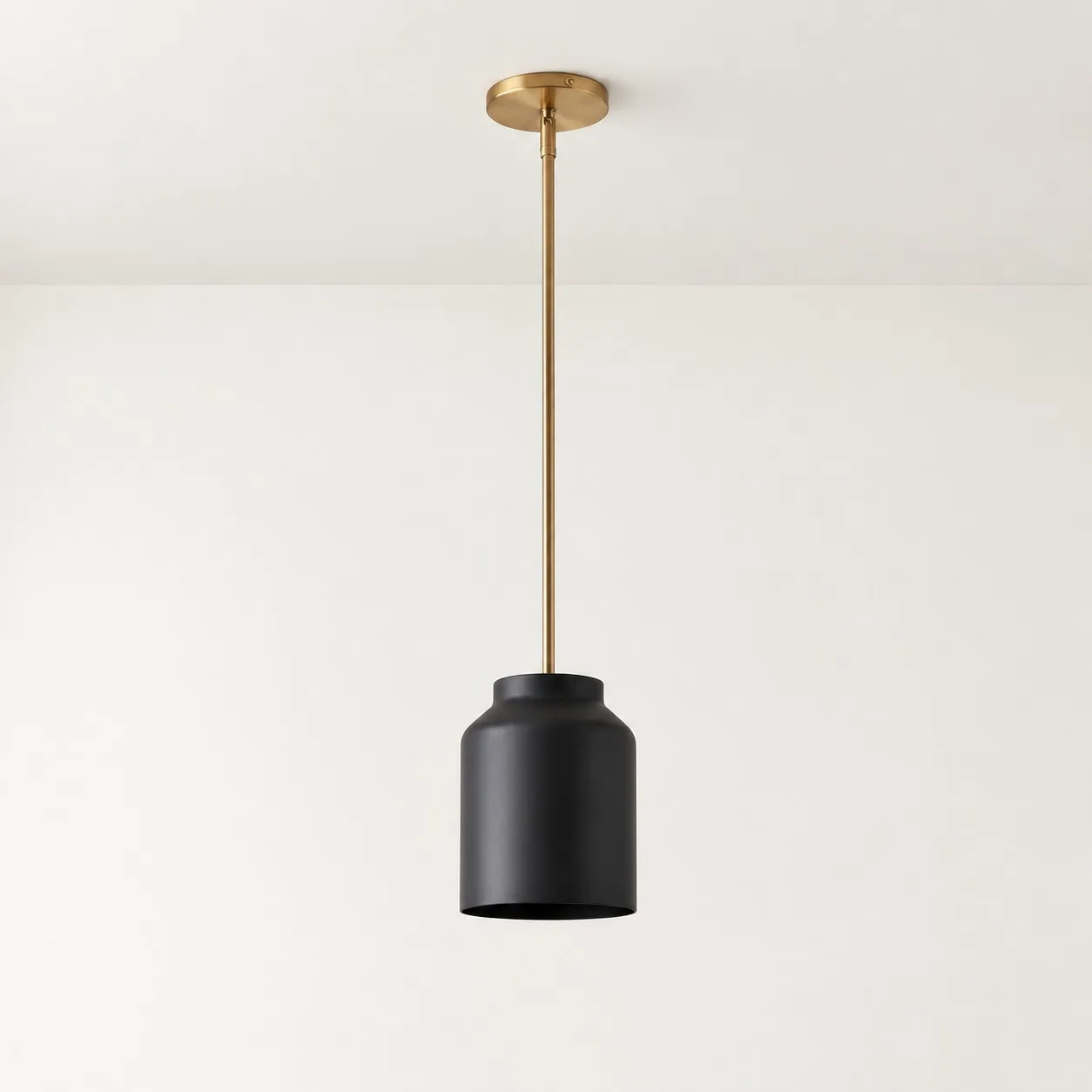
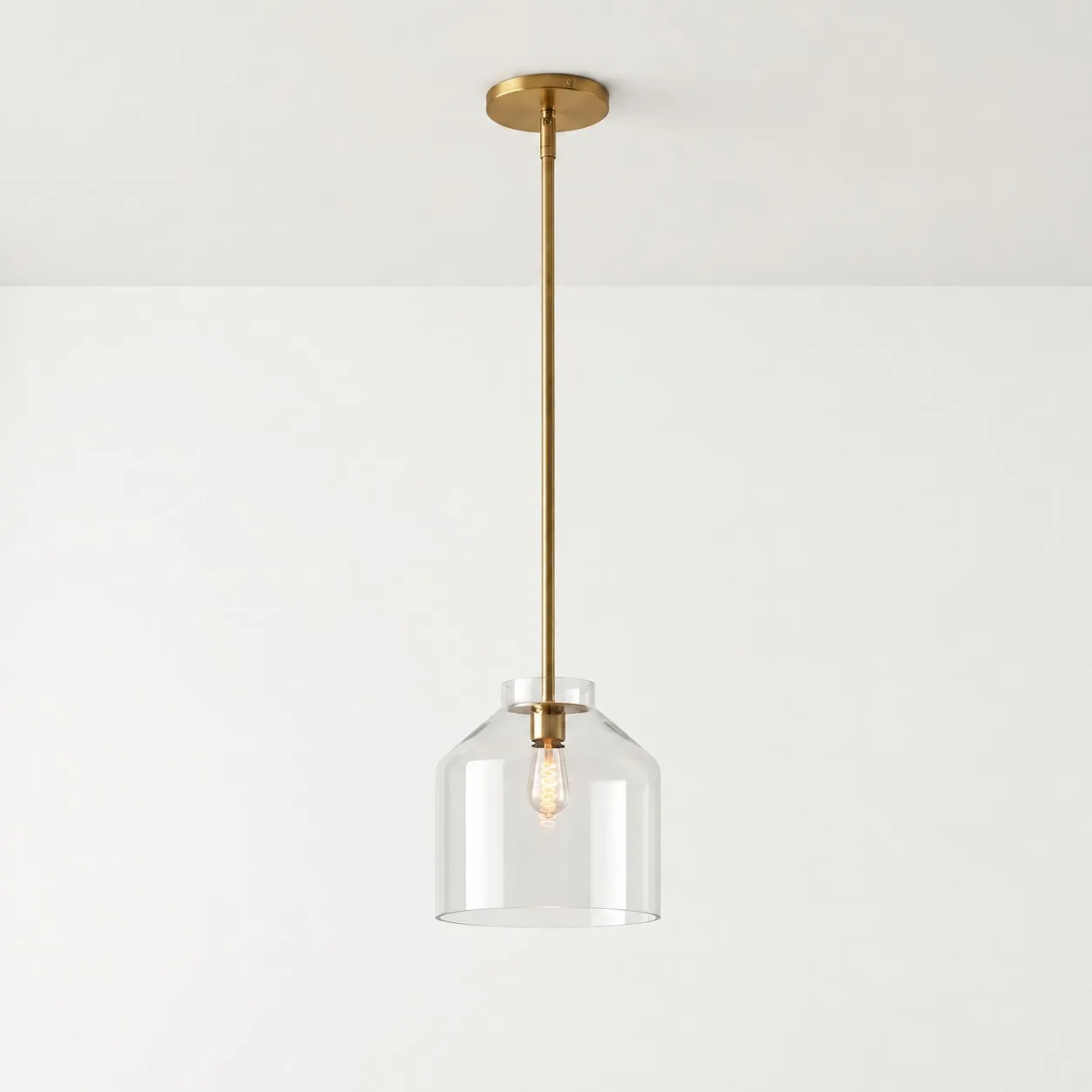
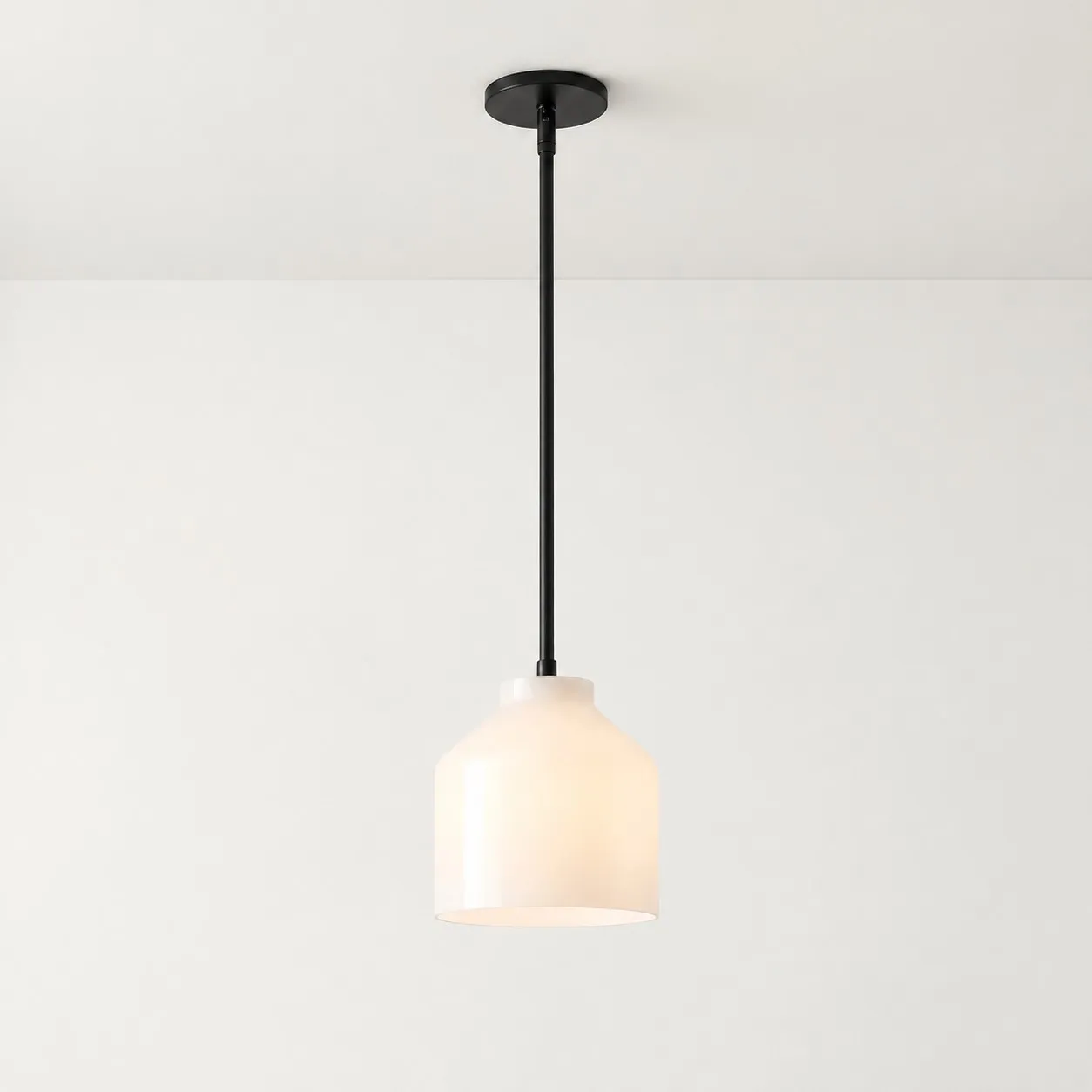
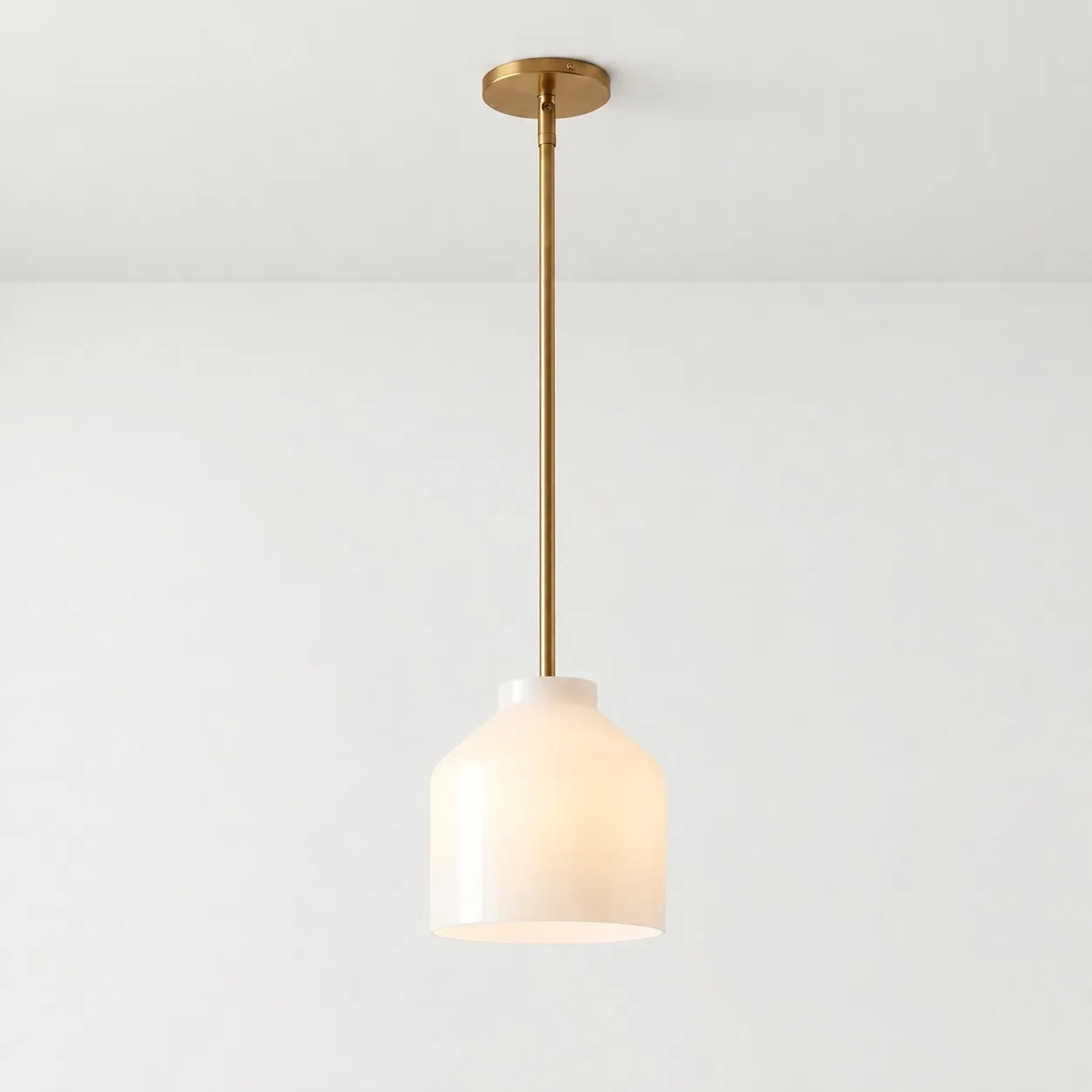
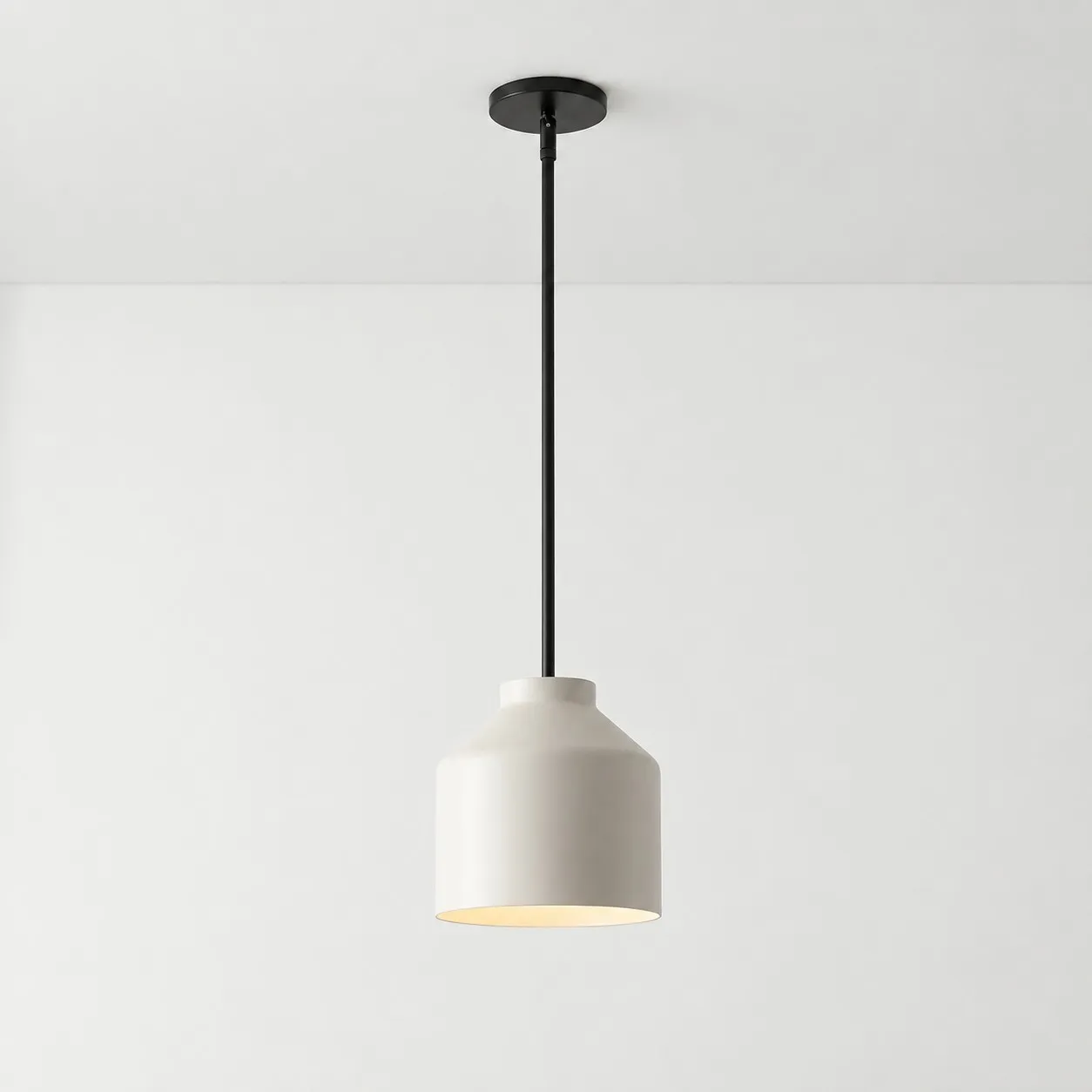
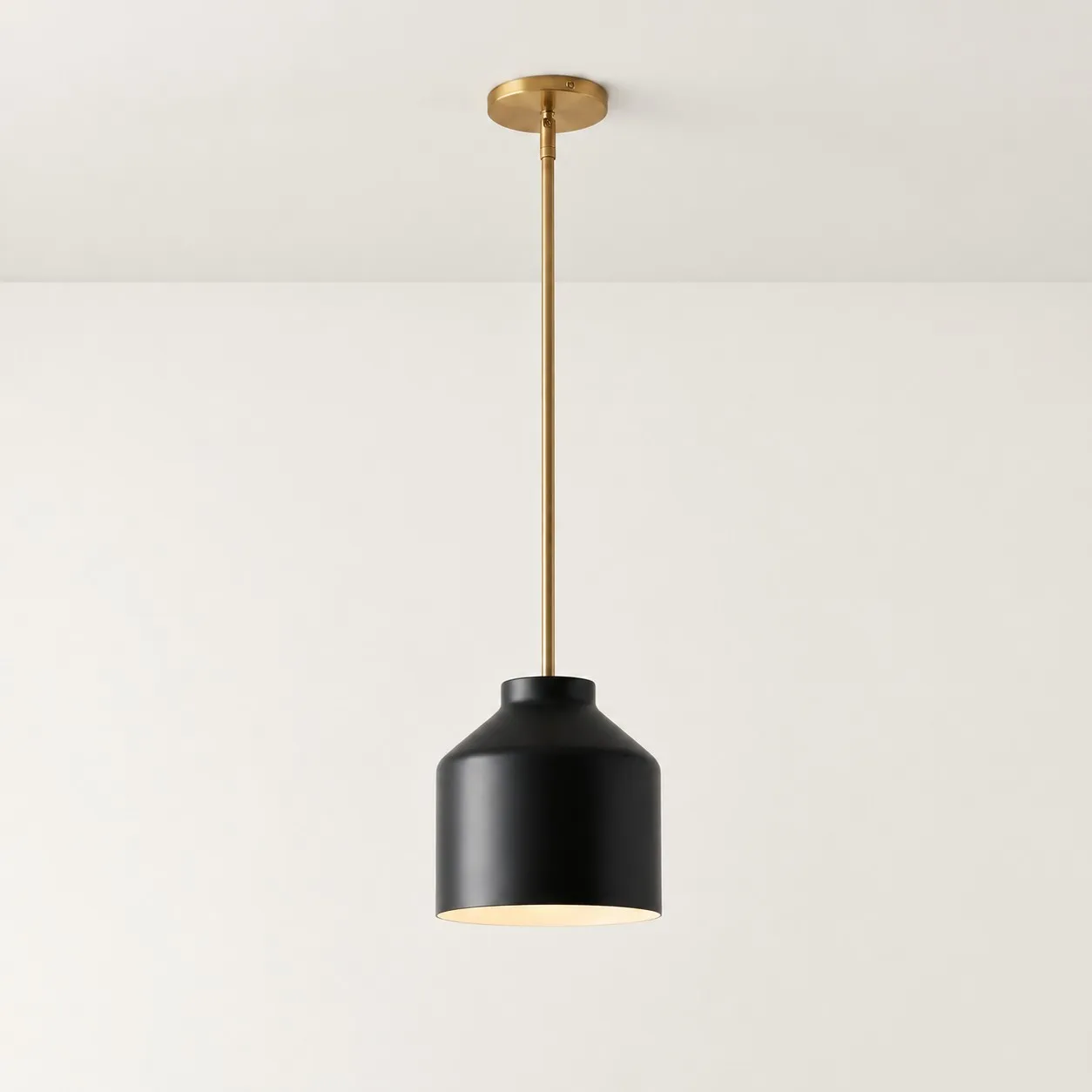
If you want a flexible example to compare, the Hanton pendant light lists three shade diameters and multiple color choices. Use its actual dimensions and your island measurements when judging whether a quiet color or a more noticeable treatment would fit the space. An attractive close-up cannot answer that question for your room.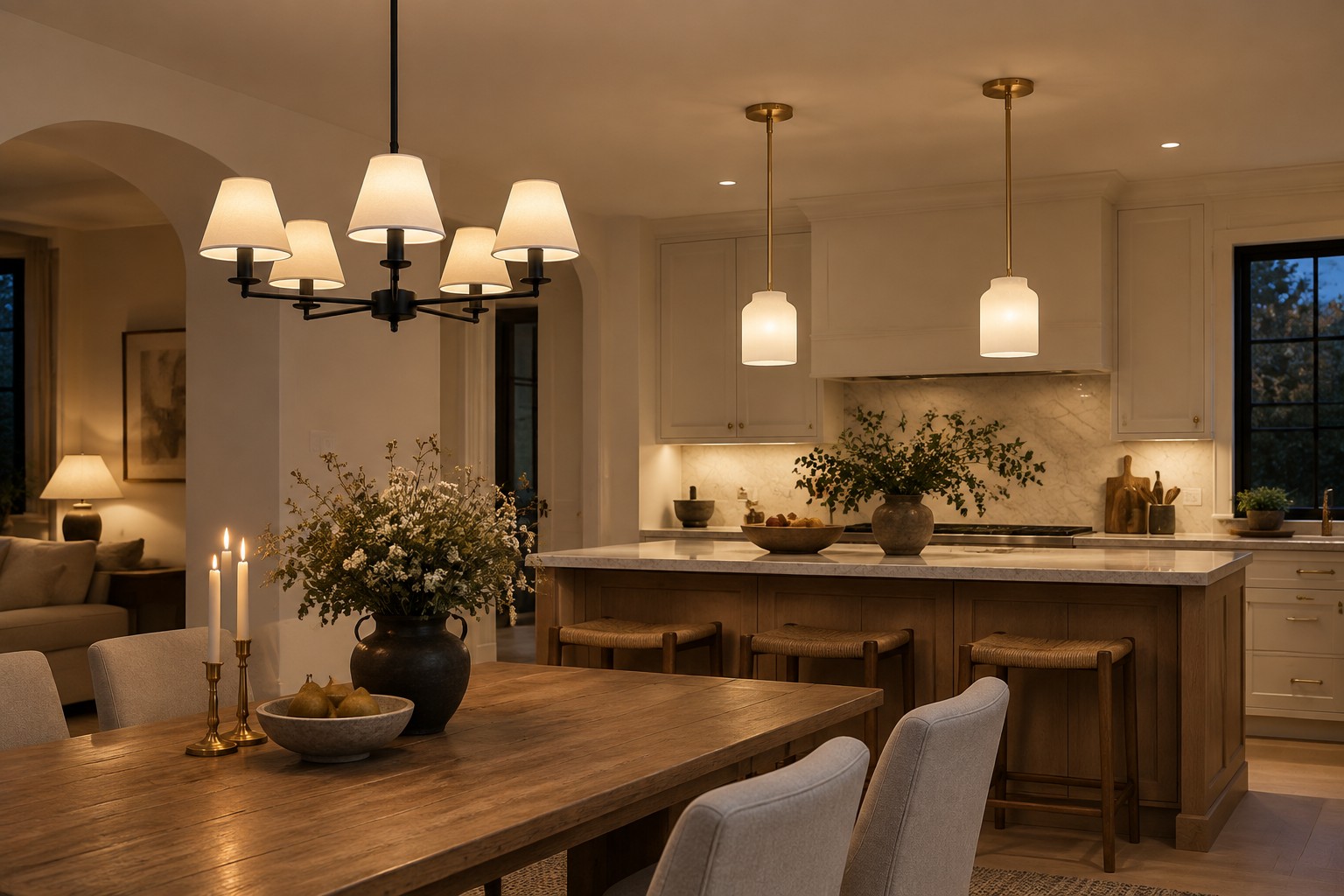
The decision in one sentence
Let the pendant blend in when the kitchen already has a clear star. Give it focal-point status when the island needs a visual anchor. In both cases, check its scale and the way it looks from the places where people actually spend time.